Understand any stock in simple English
Enter a ticker to learn what the company does and how it makes money.
Asian Oilfield Services Limited
Asian Oilfield Services provides seismic data collection and drilling support services to oil and gas companies, mostly in India.
Asian Oilfield Services is a small Indian company that does the gritty, physical work of finding oil and gas. It runs seismic surveys — sending sound waves into the ground to map what's buried below — and provides drilling support services to exploration companies. Most of its business comes from India, where state-owned oil companies hire it for onshore and offshore projects.
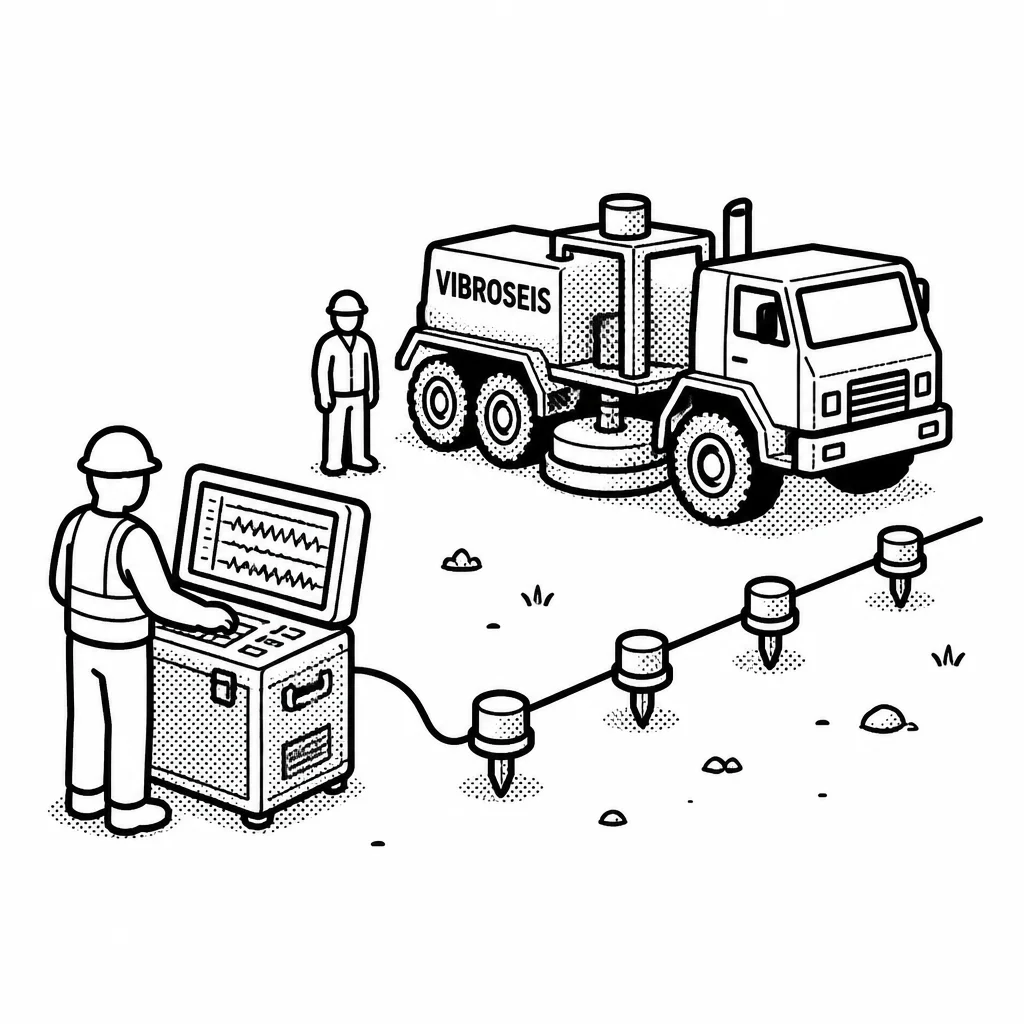
The company's bread and butter is seismic data acquisition. Oil companies need to know where to drill before spending millions on a well, so they hire firms like Asian Oilfield to shoot seismic waves into the earth and build a picture of underground rock formations. It's labor-intensive, equipment-heavy work in remote locations, and the company owns specialized trucks and gear for the job. It also offers drilling support services, such as providing equipment and personnel to help wells get drilled. The business is tiny and volatile. Revenue swings wildly with the pace of oil exploration spending in India, and the company has struggled with profitability over the years. It's dependent on a handful of large customers, mostly government-linked oil companies, which means contract wins and losses move the needle dramatically. There's little recurring revenue — each project is a new bid.
Asian Oilfield serves a niche that matters for India's energy ambitions, but it operates in a tough spot: capital-intensive, cyclical, and dominated by bigger global players. The company has faced financial stress, including losses and debt concerns, and its survival depends on continued exploration spending by Indian oil companies. It's not a business with a moat — it's a contractor competing on price and availability of equipment.
Saved answer · last researched 9 Nov 2026
Timeline
Professionals Build an Oilfield Services Firm
In 1992, a group of professionals in Gujarat started Asian Oilfield Services with a simple idea: instead of making oil companies hire many separate contractors, they would offer one integrated service for oil and gas exploration and drilling, working for big names like ONGC and OIL. They began as an operator of work-over rigs, the rigs that go back into older wells to fix them and get them producing again. A few years later they added shot hole drilling, a small but essential part of seismic data acquisition — the work of mapping what lies underground before anyone drills.
A Public Issue to Fund Expansion
To grow faster, the company raised money from the public in 1995, with the plan of expanding its workover rig services, partly funded by a foreign currency loan. The company was still small and the business was capital-hungry — rigs and equipment cost a lot, so access to money mattered.
Samara Capital Takes Control
In 2010, Samara Capital bought a controlling stake in the company and set out to turn it into a fuller services organisation. That same year, the company completed its first 3D seismic job for a private client in Gujarat — a step up into a more sophisticated part of the seismic market than shot hole drilling.
A World Record for Gazprom
The company's new seismic skills paid off in a big way at the Shakal field site, where it set a seismic world record for Russian giant Gazprom. The team acquired data using a spread of more than 6,200 live channels with real-time transmission, setting a new standard for cable-free seismic acquisition. This was a calling card: proof the company could compete at the top of the global seismic game.
Oilmax Energy Becomes the Promoter
In 2016, Oilmax Energy took a controlling stake and became the company's promoter. The new owners repositioned the business from a pure seismic data acquisition player into an integrated energy services provider — a broader identity that would shape everything that followed.
Into Coal and Maintenance
The company entered the coal sector with its first contract in 2019. It also diversified into operations and maintenance work, a deliberate move to de-risk from the seasonality of seismic work — seismic jobs come and go with the seasons and with oil companies' budgets, so steady maintenance contracts gave the business a steadier base.
Renamed Asian Energy Services
In October 2020, the company rebranded from Asian Oilfield Services to Asian Energy Services. The new name reflected its widened scope — it was no longer just an oilfield company but an energy services company.
Buying Kuiper Group
In August 2025, the company bought 100% of the UAE's Kuiper Group from Gulf Capital for about USD 9.3 million in an all-cash deal. Kuiper provides integrated manpower solutions for the energy sector across the Middle East and Southeast Asia and brought in about USD 68 million in revenue — giving the company a global operations and maintenance platform and entry into Middle East and Southeast Asia energy markets it could not reach before.
Reverse Merger with Oilmax Energy
In September 2025, the management announced a reverse merger of Oilmax Energy into the company, combining Oilmax's upstream oil and gas assets with its services business. The merger was expected to simplify the corporate structure and create a unified energy platform, with promoter stake falling from 54.8% to 47.3%. The company's order book stood at about Rs 19.0 billion as of Q3FY26, including an ~Rs 8.7 billion Vedanta contract and an ~Rs 4.6 billion Mahanadi Coalfields coal handling plant contract.