Understand any stock in simple English
Enter a ticker to learn what the company does and how it makes money.
Amprius Technologies, Inc.
Amprius makes silicon-anode lithium-ion batteries that pack more energy into less weight, mainly for aircraft, drones, and other electric vehicles.
Amprius makes batteries that hold more energy per pound than the standard lithium-ion cells most of us carry around. Its specialty is the anode — the negative side of a battery — where it swaps out the usual graphite for silicon. Silicon can soak up far more lithium, so for the same weight a battery can store noticeably more energy. That matters most for things that fly, because every extra kilogram a drone or plane carries is a kilogram of range or payload it gives up.
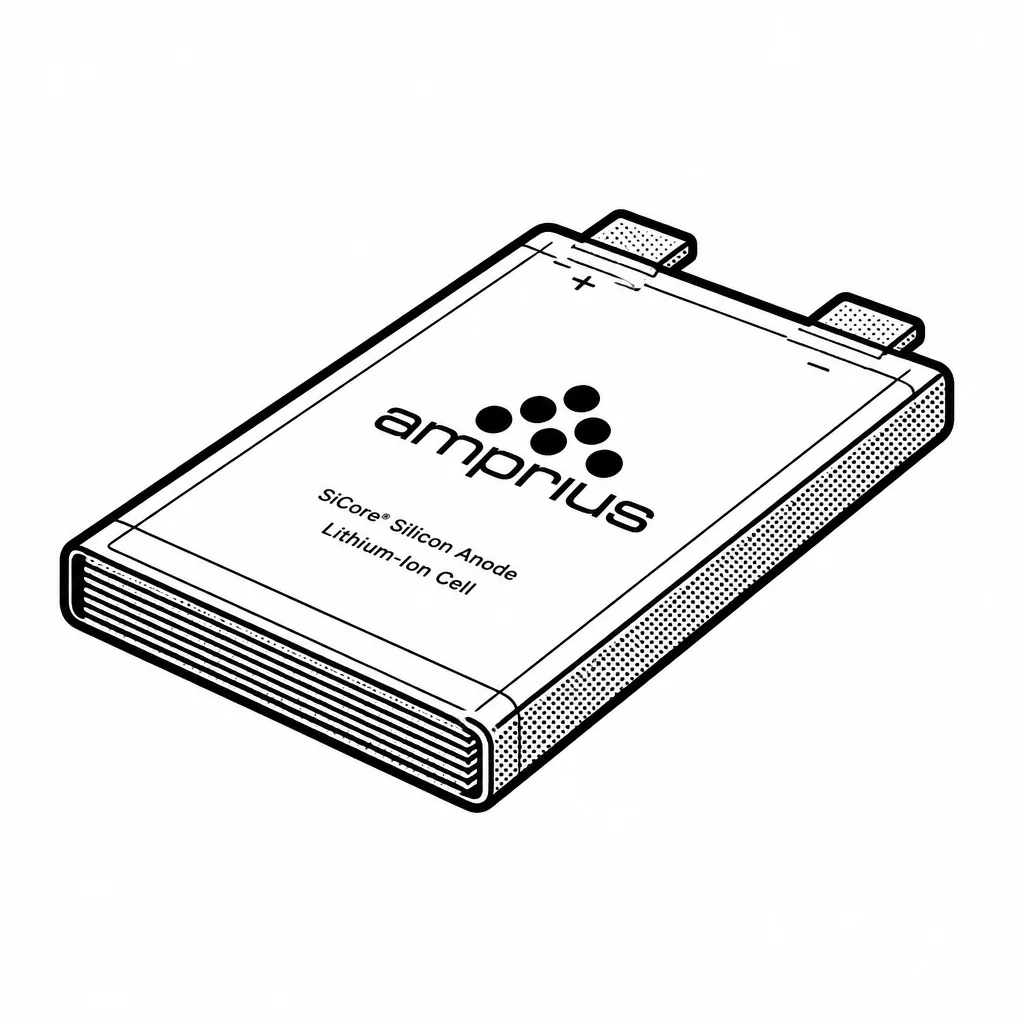
Its customers are mostly in aviation and electric vehicles. The company sells small cells into drones and high-altitude aircraft, and it is working toward bigger markets: electric planes and eventually electric cars. The pitch to those buyers is simple: if you need the longest possible flight or drive from a given battery pack, or you need to cut weight, Amprius offers cells that do more with less. Batteries are a crowded, price-obsessed business, though, and most of the volume is made by giant Asian manufacturers. Amprius competes on performance at the high end rather than on price, which keeps its customers specialized but also limits how large the business can grow quickly. The company is based in Fremont, California, in the heart of the region that gave us modern lithium-ion batteries. Its roots trace back to Stanford research on silicon nanowire anodes — the founding idea that silicon could be engineered to survive the swelling and cracking that normally destroys silicon anodes after a few charge cycles. That technical bet is the whole company. If silicon anodes work reliably and at scale, Amprius has a real edge; if they don't, it is just another small battery maker.
Amprius is a small, money-losing company spending heavily to scale up manufacturing and win design contracts with aircraft makers. That means its finances depend on raising capital and on landing customers whose products take years to certify — aviation in particular moves slowly because safety rules are strict. The upside is enormous if electric flight takes off, but the path there is long, and investors are effectively betting on a technology and a market that are both still proving themselves.
Saved answer · last researched 16 Nov 2026