Understand any stock in simple English
Enter a ticker to learn what the company does and how it makes money.
Alight, Inc.
Alight runs the software and services that help big employers manage their workers' benefits, payroll, leaves, and financial wellbeing.
Alight is the back office for your benefits at work. When you get a job at a large company and sign up for health insurance, a retirement account, or paid family leave, there is a good chance Alight's software and call centers are handling the paperwork behind the scenes — enrolling you, answering your questions, and making sure the right money goes to the right place.
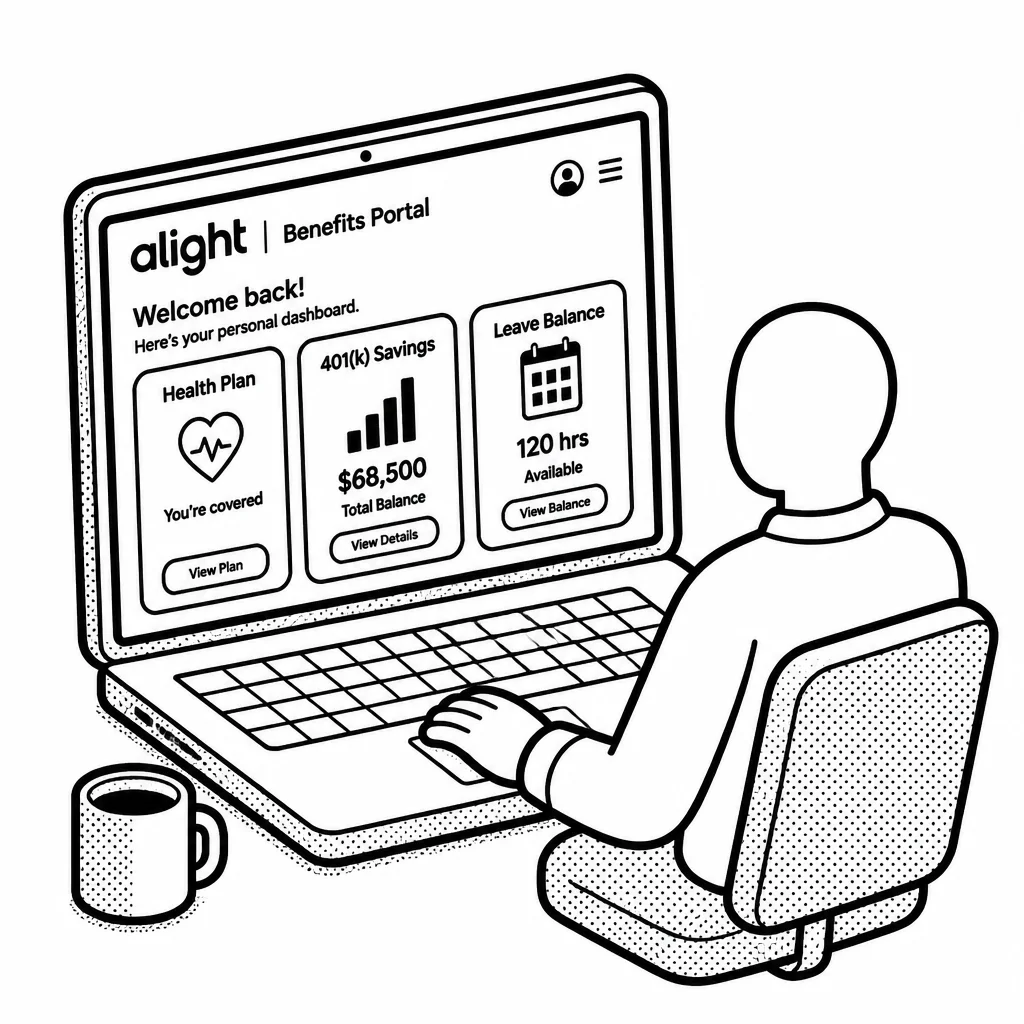
The company sells to employers, not to you. Big organizations pay Alight to administer benefits for their workers because doing it themselves is expensive and tedious: it means connecting payroll systems, insurance carriers, and government leave rules, and staffing people to answer "why was my claim denied?" at 9 a.m. on a Monday. Alight bundles that into cloud-based platforms, plus human support when employees need help navigating a confusing healthcare system. It also offers financial wellbeing tools and leave management, and its payroll and human-capital software business rounds out the offering. The business is sticky. Once a company's HR systems are wired into Alight, ripping them out is painful, so customers tend to stay for years. But it is also a competitive, price-sensitive market — rivals include big benefits administrators and payroll players like Automatic Data Processing and Paychex, alongside newer software upstarts — and Alight has had to work hard to keep growth going. The company went public in 2021 through a merger with a blank-check company, and its shares have had a rough ride since, as investors worried about slow growth and debt.
Alight has been reshaping itself to fix that. It sold off its payroll and professional services outsourcing arm to a private equity buyer and has focused on its core benefits administration and cloud software. Management has also been buying back stock, a sign it thinks the shares are cheap. The story now is simple: can Alight make a mature, necessary service grow faster than its costs, while carrying a hefty debt load? That is the question investors are watching.
Saved answer · last researched 16 Nov 2026