Understand any stock in simple English
Enter a ticker to learn what the company does and how it makes money.
Enogia SAS
Enogia makes small machines that turn waste heat into electricity and compressors for hydrogen fuel cells, selling them to industrial customers around the world.
Enogia builds small turbines that squeeze useful electricity out of heat that would otherwise drift away into the air. Factories, ships, and power plants throw off a lot of hot exhaust and hot water, and Enogia's machines — called ORC systems, short for organic Rankine cycle — capture that heat and spin it into power. The same core skill, making tiny, fast-spinning turbomachinery, also lets the company build air compressors for hydrogen fuel cells. So it sells to two kinds of customers: industrial operators who want to cut their energy bills and emissions, and fuel-cell makers who need clean, reliable air supply.
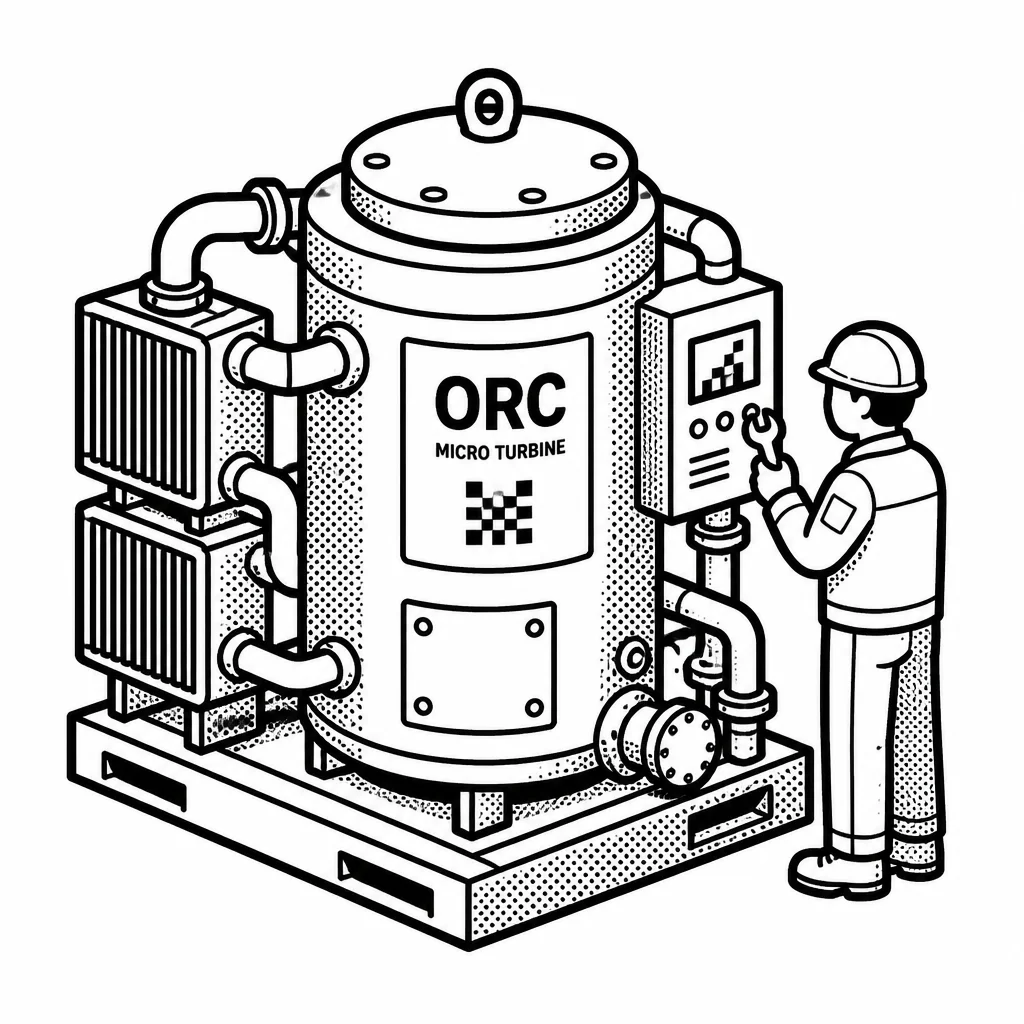
Here is the basic idea in plain terms. Instead of burning fuel to make electricity, an ORC system takes an existing heat source and uses it to boil a fluid that turns a turbine. That turbine spins a generator, and out comes electricity — essentially free power from heat you were already making and wasting. It is a bit like putting a small water wheel in a stream that was already flowing past your factory. The appeal to a customer is straightforward: lower energy costs and a greener footprint, often with government incentives helping to pay for the kit. Enogia is a small company, headquartered in Marseille, France, and listed on Euronext Growth Paris, the lighter-touch market for smaller firms. It sells internationally and has pushed into hydrogen, where its compressors feed air into fuel cells that generate power for trucks, buses, and backup systems. That hydrogen bet is the growth story investors tend to focus on, because fuel cells are getting serious attention as a cleaner alternative to diesel in heavy transport. But it is also a young, cash-hungry business competing against much larger industrial players, so the risk is real: orders can be lumpy, projects take time to convert into revenue, and scaling manufacturing is expensive.
The honest picture is of a niche engineering firm with genuinely clever technology and a big addressable market, but not yet the scale or profits of an established industrial giant. Its machines are complex and made in modest volumes, so each sale matters. Whether Enogia turns its early lead in micro-turbomachinery into a durable business depends on winning repeat orders, growing its hydrogen compressor sales, and proving it can manufacture reliably at a larger scale — all while keeping enough cash to fund the climb.
Saved answer · last researched 15 Nov 2026