Understand any stock in simple English
Enter a ticker to learn what the company does and how it makes money.
Astera Labs, Inc.
Astera Labs makes chips and software that help move data quickly and reliably between the processors inside AI and cloud data centers.
Astera Labs is a chip company for the AI boom, but not the kind that gets the headlines. It doesn't design the fancy processors that do the actual thinking. Instead, it makes the small but crucial connectivity chips that let those processors talk to each other and to memory inside a data center, plus the software that helps run them. Its customers are the giant cloud companies and the hardware makers who build servers for them.
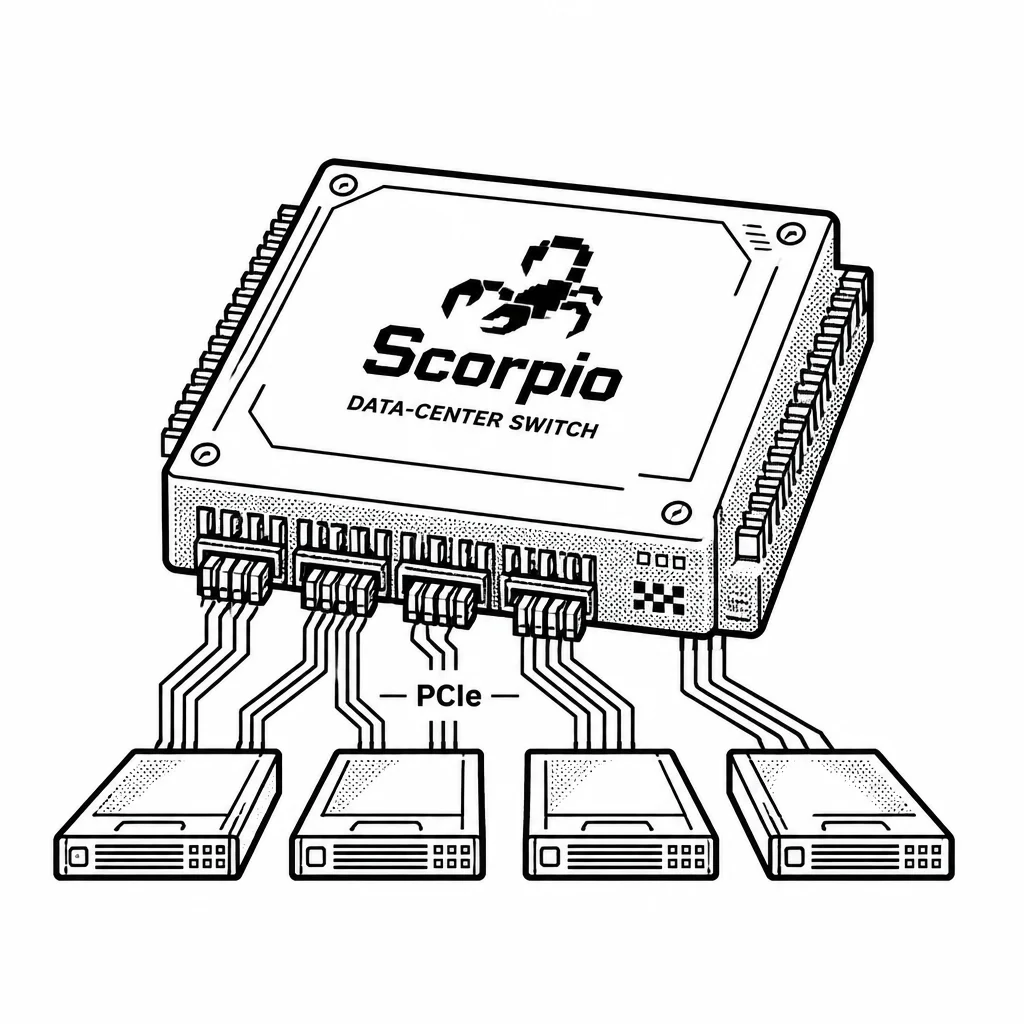
Here's the problem it solves. In an AI server, the main processor is only as useful as its ability to send and receive enormous amounts of data fast, without errors. As AI models get bigger, the wiring between chips becomes the bottleneck. Astera Labs makes specialized chips — its "Aries" line for PCIe connections, "Taurus" for Ethernet, and "Leo" for memory — that act like high-quality plumbing and traffic control, keeping data flowing cleanly over longer distances and at higher speeds than ordinary parts allow. It bundles these with its COSMOS software, which lets operators monitor and manage all these connections across a whole rack of equipment. The business is young and growing fast. It went public in early 2024, and its revenue has climbed sharply as hyperscalers spend heavily on AI infrastructure. That growth is also its biggest risk: a handful of very large customers drive most of its sales, so if one of them slows its spending or designs it out, the hurt would be real. Rivals are working on similar parts, and the big chipmakers themselves keep building more of this technology directly into their own products. Astera's bet is that staying focused on the connection layer, and being first with each new speed standard, keeps it a step ahead.
It is a picks-and-shovels story. The giants like Nvidia and Broadcom fight over the main chips; Astera sells the bits that help those chips work together, and gets paid by the cloud builders and server makers who need them. The company is headquartered in California and reinvests most of what it earns back into developing the next generation of faster parts.
Saved answer · last researched 15 Nov 2026