Understand any stock in simple English
Enter a ticker to learn what the company does and how it makes money.
Air Industries Group
Air Industries Group makes precision metal parts and assemblies for military and commercial aircraft, selling mostly to the U.S. Department of Defense and major aerospace contractors.
Air Industries Group is a small aerospace manufacturer that builds the metal guts of airplanes and helicopters — the parts that hold other parts together and keep them from shaking apart in flight. It makes precision assemblies and components: things like landing gear, flight control parts, and structural pieces that go into military aircraft. It is a prime contractor to the U.S. Department of Defense, which means the Pentagon can buy from it directly rather than only through a giant middleman.
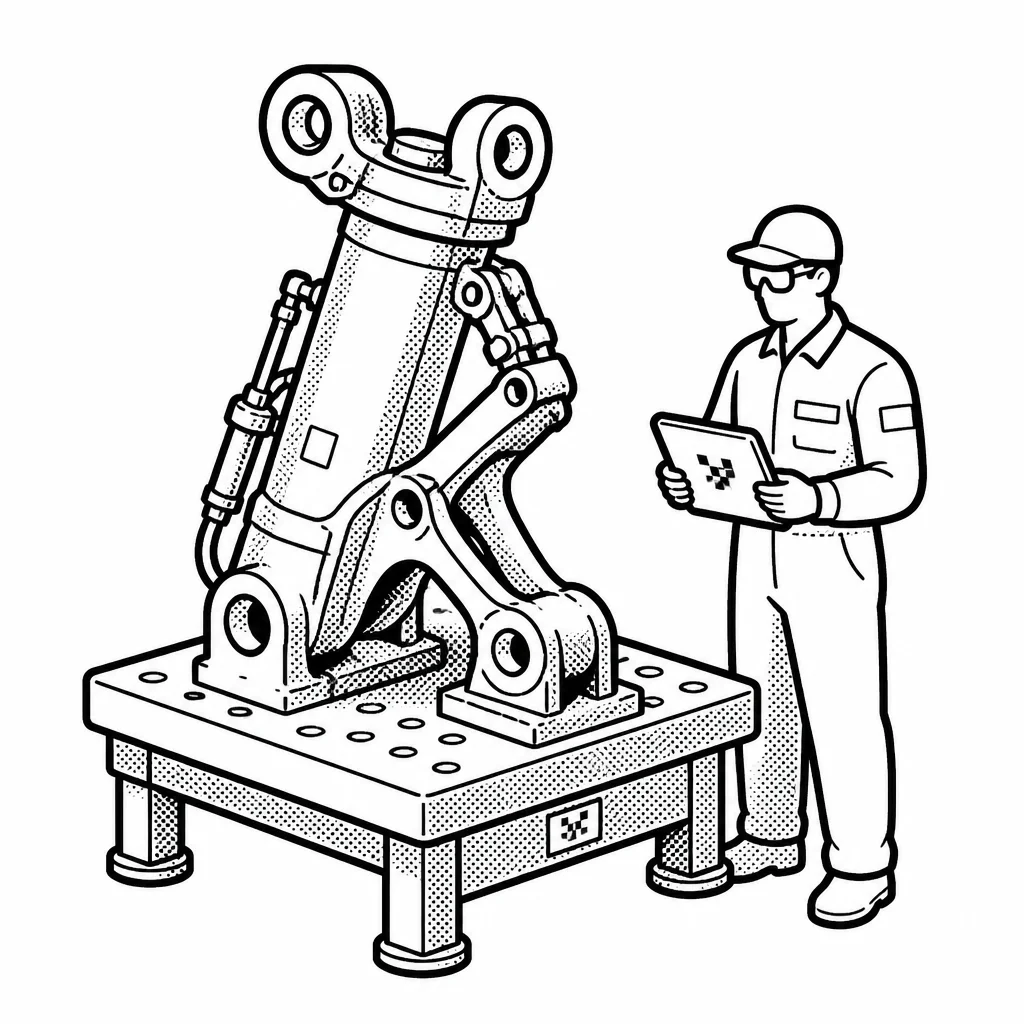
The customer list explains the business. Its buyers are mostly defense primes and the U.S. military — the companies and agencies that assemble whole aircraft and need specialized suppliers to machine and weld the pieces they don't make themselves. Two big names it has done work for are Lockheed Martin and Northrop Grumman, along with GE Aerospace for engine-related parts. Customers choose a shop like this because aerospace parts must meet brutal tolerances and pass strict certification, so once a supplier is qualified on a program, switching away is slow and expensive. That gives a small company real stickiness, but it also means the company lives or dies on a handful of contracts. Here's the hard truth about the business: it is tiny, thinly profitable, and has struggled for years. Revenue runs in the tens of millions annually, and the company has often posted losses, loaded up with debt, and leaned on its lenders. It has also sold new shares to raise cash, which dilutes existing owners. In 2024 it brought in a new chief executive and has been working to win more defense work and improve margins — the kind of turnaround story where the outcome is genuinely uncertain. For a 15-year-old, think of it as a small machine shop with big security clearances: valuable perch, fragile finances.
The company is headquartered in Bay Shore, New York, on Long Island, a region with a long aerospace manufacturing history. Its stock trades on the NYSE American exchange, a smaller venue than the major exchanges, which fits a company of its size. The core bet for investors is simple: can this little supplier turn its defense relationships into steady profit, or does it stay a perpetual cash-strapped subcontractor?
Saved answer · last researched 16 Nov 2026