Understand any stock in simple English
Enter a ticker to learn what the company does and how it makes money.
iShares Core U.S. Aggregate Bond ETF
It is an exchange-traded fund that holds a huge basket of U.S. investment-grade bonds, letting ordinary investors own a slice of the entire bond market in one cheap purchase.
This is a giant, low-cost basket of bonds that anyone can buy like a stock. It aims to own a broad slice of the U.S. investment-grade bond market: government Treasuries, mortgage-backed bonds from agencies like Fannie Mae and Freddie Mac, commercial mortgage bonds, asset-backed bonds, and corporate debt from big companies. An investor buys a share, and behind that share sits a tiny fraction of thousands of individual loans paying interest.
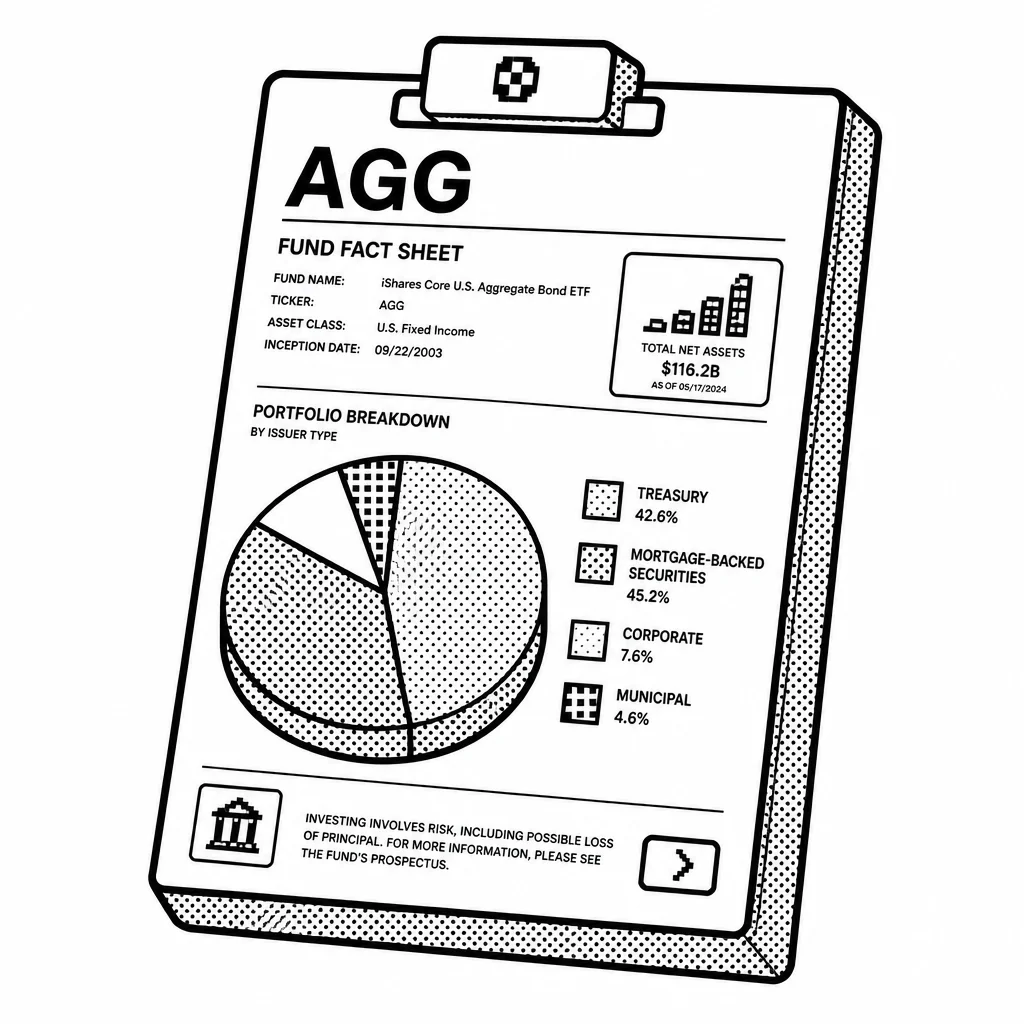
The appeal is simplicity. Instead of picking individual bonds — which is fiddly and often expensive — you get one ticker that behaves roughly like the whole bond market. When you own it, you collect the interest those bonds pay out, usually as a monthly distribution, and the share price wobbles as interest rates rise and fall. The fund is managed by BlackRock's iShares unit, which charges a very small annual fee, and that rock-bottom cost is a big part of why investors choose it over pricier rivals like actively managed bond funds. Its size and popularity make it a de facto benchmark — people use it to describe "the bond market" the same way they use the S&P 500 to talk about stocks. That cuts both ways: when rates jump, bond prices fall, and this fund feels it across its whole portfolio. It is a core building block more than a thrill ride, which is exactly the point for people who want steady income with less drama than stocks.
The fund is a tool, not a business with customers to win. Its job is to track an index closely and cheaply, so the real competition is other low-cost bond index funds, and the main risks are interest-rate swings and the credit quality of the debt it holds.
Saved answer · last researched 15 Nov 2026