Understand any stock in simple English
Enter a ticker to learn what the company does and how it makes money.
Adaptive Biotechnologies Corporation
Adaptive Biotechnologies sells tests and lab services that read the DNA of immune cells to help doctors track cancer and help researchers study the immune system.
Adaptive Biotechnologies is a diagnostic and research company built on one clever idea: your immune system's cells each carry a unique genetic barcode, and if you can read millions of those barcodes at once, you can learn a lot about what is happening inside a person's body. The company sequences immune cells for two main customers. The first is doctors treating blood cancer, who use its clonoSEQ test to check whether a patient's cancer is shrinking or has quietly come back. The second is researchers and drug developers, who pay Adaptive to sequence immune samples for their own studies and drug trials.
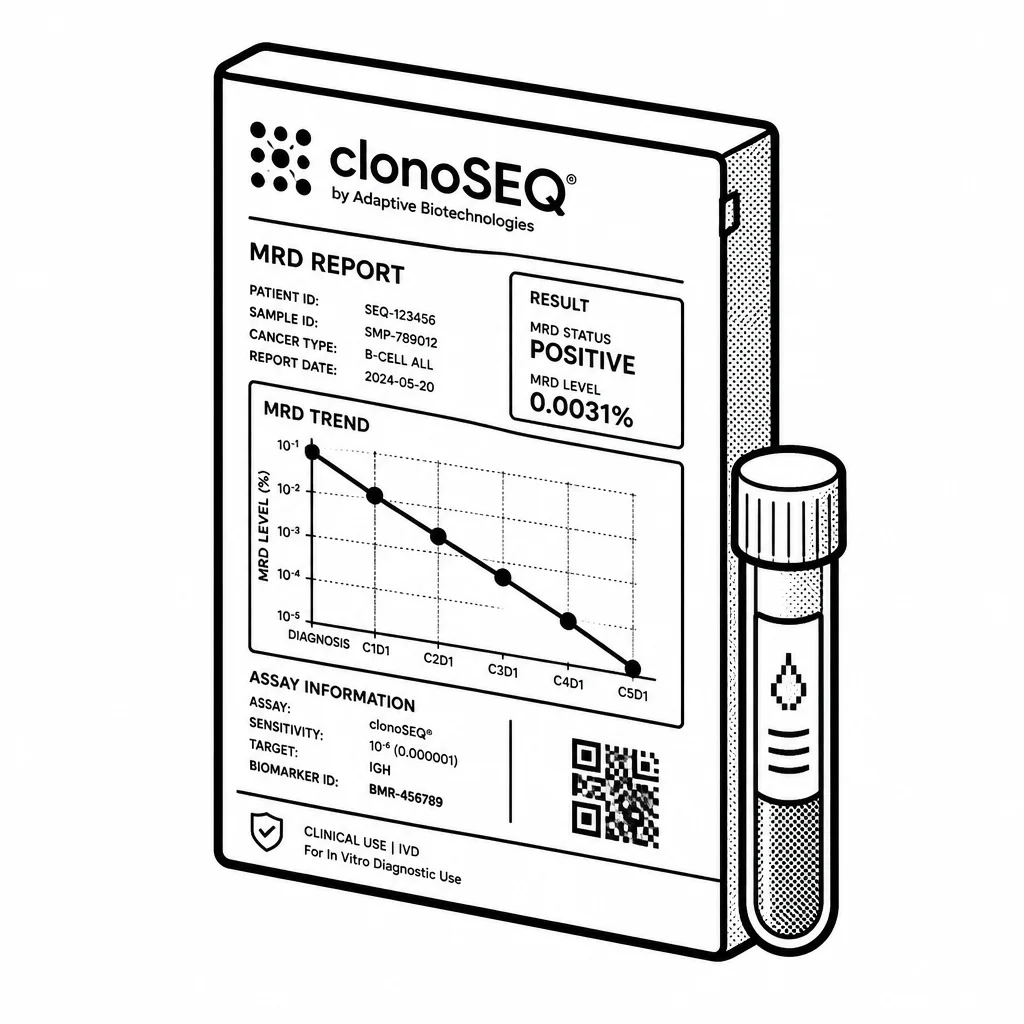
The clonoSEQ test is the heart of the business. When a patient is first diagnosed with a blood cancer like multiple myeloma or leukemia, Adaptive finds the specific genetic signature of that patient's cancer cells. Later, a simple blood or bone marrow sample can be scanned for that same signature. If the signal is vanishingly small or gone, the treatment is working. If it starts creeping back, the doctor knows before symptoms appear. This "minimal residual disease" testing is increasingly used by drug companies in clinical trials, and regulators have accepted it as a real measure of whether a treatment works. That regulatory credibility is a genuine moat: competitors must clear the same bar. The research side, called immunosequencing, is a steadier but less exciting business. Pharmaceutical companies like Pfizer and Roche-type partners pay Adaptive to analyze immune samples during drug development, and academic labs use its tools too. Adaptive also struck a big partnership with Microsoft to build a kind of search engine for the immune system, though that effort has taken longer and delivered less than the early hype suggested. The company has burned through cash for years, and management has been cutting costs and narrowing its focus toward the higher-margin diagnostics business to try to reach profitability.
The honest picture is a company with real science, a genuinely useful test, and a difficult financial record. Revenue has grown but losses have persisted, and the stock has fallen far from its pandemic-era peak when investors imagined immune sequencing could answer almost any medical question. Its main vulnerability is that clonoSEQ, while powerful, is still not routine in every oncology clinic, so growth depends on persuading more doctors and payers to adopt it. Adaptive's bet is that as more cancer drugs get approved using MRD testing, the test becomes standard practice — and the company that owns the leading test collects the rewards.
Saved answer · last researched 15 Nov 2026