Understand any stock in simple English
Enter a ticker to learn what the company does and how it makes money.
ABBYY Solutions Ltd.
ABBYY sells AI software that reads, sorts, and understands documents and business processes for large organizations.
ABBYY is a software company that teaches computers to read. Its tools take the messy paper and digital files that pile up inside big organizations — invoices, contracts, loan applications, shipping forms — and turn them into clean, structured data a computer can actually use. The company calls this "intelligent document processing," and it is the core of what ABBYY sells today, alongside a second line of software that maps how work actually flows through a company so managers can spot bottlenecks and fix them.
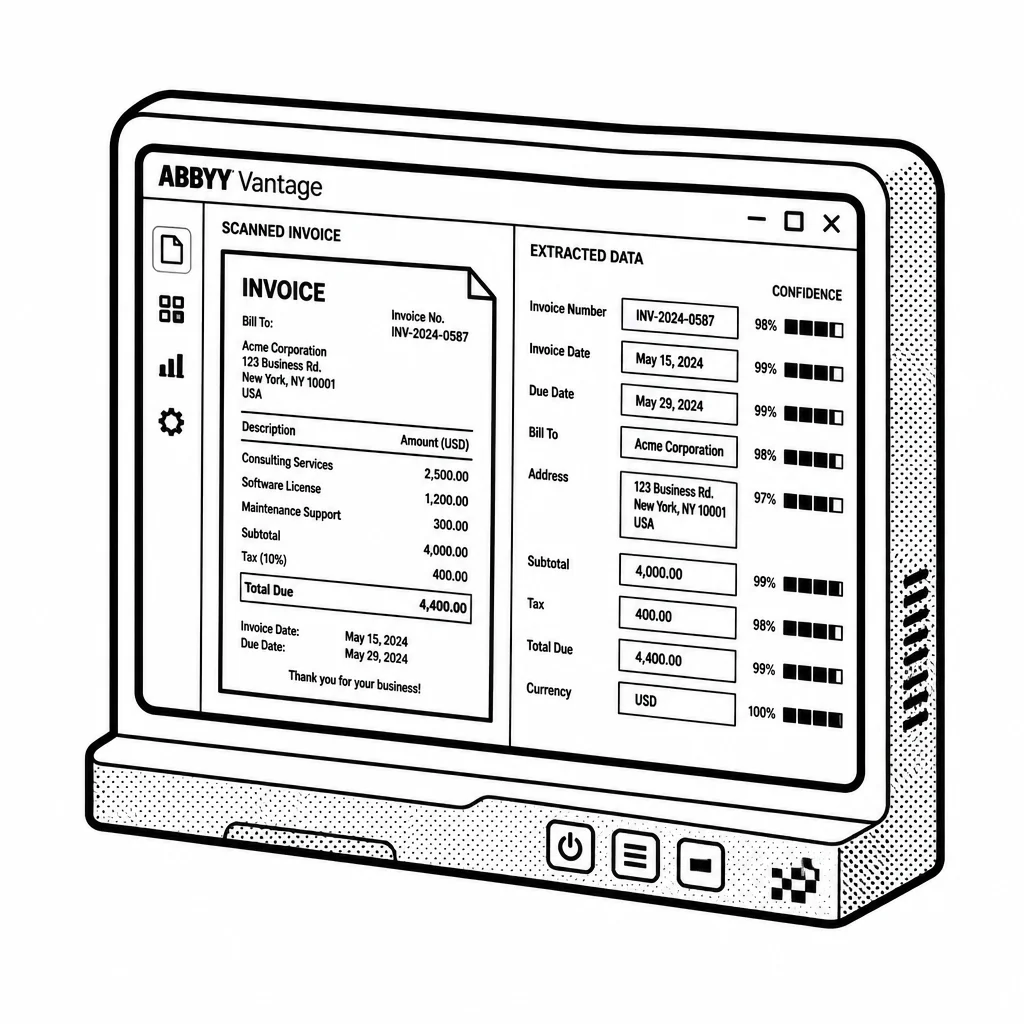
The customers are mostly large enterprises and government agencies: banks drowning in loan paperwork, insurers processing claims, logistics firms handling customs forms, and back offices buried in invoices. They pay ABBYY for software licenses and subscriptions, often through cloud-based plans. The pitch is simple economics — instead of hiring an army of people to retype information from documents, a customer lets ABBYY's AI pull the data out automatically and route it where it needs to go. That saves labor, cuts errors, and speeds up decisions. ABBYY's roots are unusual for a company now headquartered in the United States. It was founded in 1989 by a group of Russian developers, including David Yang, and built its early reputation on optical character recognition — the technology that turns a scanned page into editable text. Its consumer scanning apps made the brand famous well beyond the corporate world. Over time the business shifted from selling shrink-wrapped software to selling enterprise AI platforms, and the company now competes with a crowded field of document-automation vendors and the big cloud providers that bundle similar tools.
The competitive pressure is real. Giants like Microsoft and Google keep adding document-reading features to their cloud platforms, which makes life harder for a specialist. ABBYY's counterargument is depth: years of tuning its recognition engines across dozens of languages and messy real-world documents, plus a focus on regulated industries where accuracy and audit trails matter. For a private company, the fight is less about buzzwords and more about proving its tools work reliably at scale — and convincing customers that a focused expert beats a giant's side feature.
Saved answer · last researched 14 Nov 2026