Understand any stock in simple English
Enter a ticker to learn what the company does and how it makes money.
Alternative Access First Priority CLO Bond ETF
This is an actively managed exchange-traded fund that invests in top-rated, first-priority debt from pools of corporate loans, passing the interest income through to investors.
This is an exchange-traded fund — a basket of investments you can buy and sell like a stock — and what it holds is a specific slice of the corporate lending world. The fund buys the safest, top-rated pieces of collateralized loan obligations, or CLOs. A CLO is a bundle of loans made to companies, sliced into layers by risk. The safest layer gets paid first when the loans perform, and takes losses last when they don't. That first-priority layer is what this fund owns, and those slices carry the highest AAA credit rating.
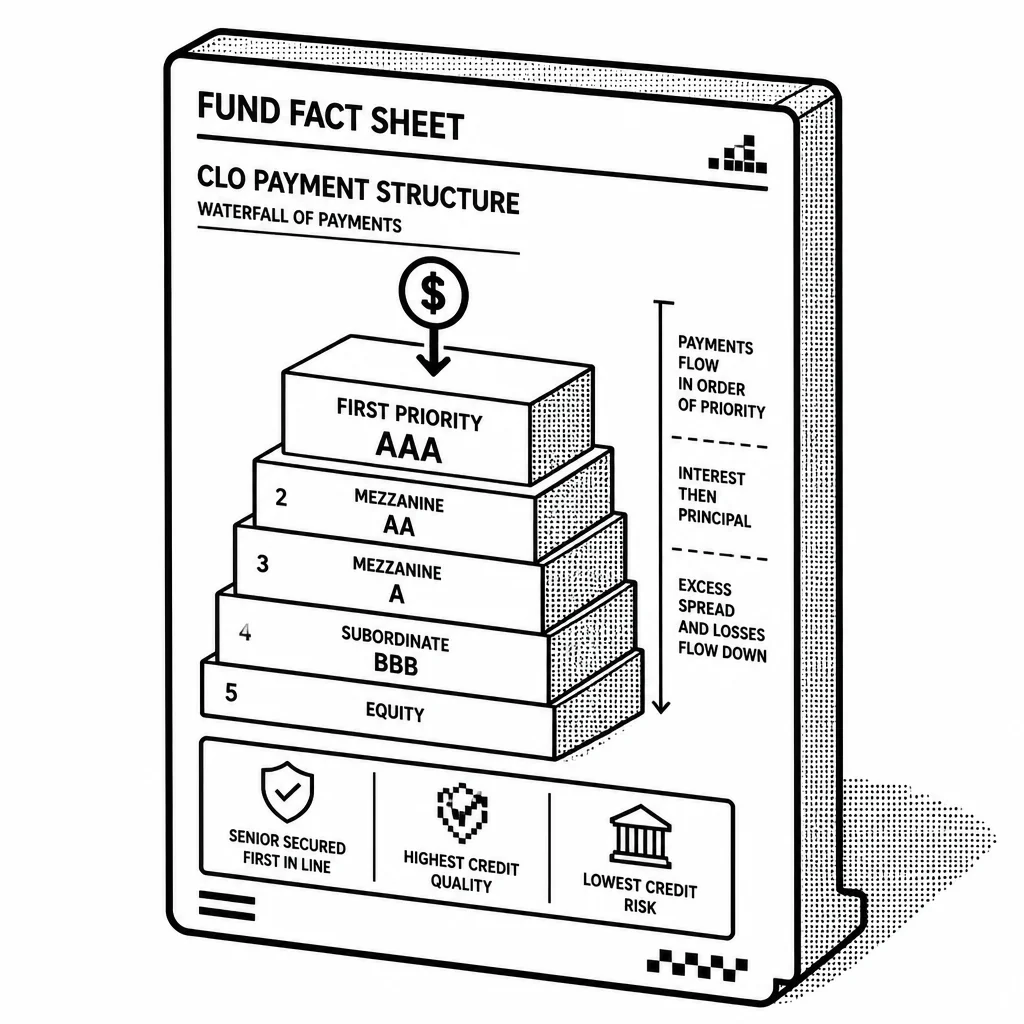
So what does an investor actually get? Steady interest income from companies paying back their loans. It works like this: banks lend money to hundreds of businesses, then package those loans into a CLO. The CLO sells different layers to investors, and the AAA layer sits at the front of the line for every interest payment. The companies behind the loans are mostly mid-sized businesses with junk-level credit ratings, which is exactly why the safest layer of their bundled debt can still earn a healthy yield while carrying a top rating. An investor in this fund is essentially a very conservative lender to a big, diversified pile of companies, collecting the interest without holding the riskiest parts.
The fund is actively managed, meaning a manager picks the CLO slices rather than tracking an index, and it trades on NYSE Arca. It earns its keep through a management fee, which comes out of the fund's assets and quietly trims the return an investor keeps. The appeal is straightforward: a way to earn bond-like income from floating-rate loans, which tend to pay more when interest rates rise, without buying the riskier CLO layers. The trade-off is that "AAA" here doesn't mean government-bond safe — it means the top slice of a risky loan pool, and a deep recession could still stress the companies doing the borrowing.
Saved answer · last researched 15 Nov 2026