Understand any stock in simple English
Enter a ticker to learn what the company does and how it makes money.
Trip.com Group Limited
Trip.com is an online travel agency that helps people book hotels, flights, trains, and package tours, mostly across Asia and increasingly around the world.
Trip.com is the travel booking site you turn to when you want to book a hotel, a flight, a train, or a whole vacation without talking to a travel agent. It runs a family of apps and websites that let travelers search, compare, and pay for trips in one place, and it earns money mainly by taking a commission on each booking plus fees from hotels and airlines who want their rooms and seats sold.
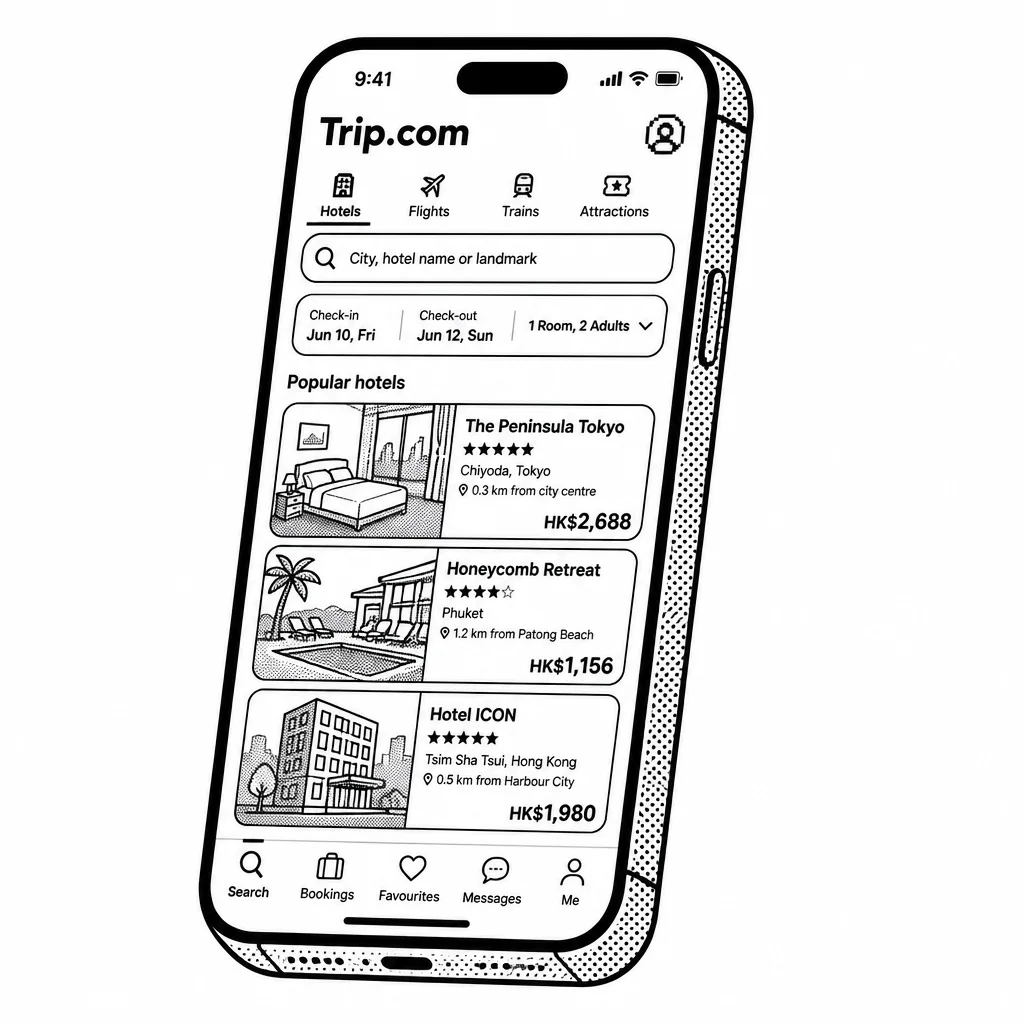
The company is a collection of brands. Its namesake app, Trip.com, chases international travelers with flights, hotels, and packaged trips in many languages. In China, its Ctrip app is the household name for domestic and outbound travel, and it also runs Skyscanner, a flight-search engine it bought in 2016 that compares prices across many airlines and sends customers off to book. Together these give it a big slice of the Chinese travel market and a growing foothold abroad. The business is a two-sided marketplace, which is why it works so well. Travelers come for prices and choice, and hotels and airlines come because that is where the customers are. The more suppliers join, the better the deals look, which pulls in more travelers, and so on. That flywheel means Trip.com can spread its fixed costs across a huge number of bookings, so extra bookings drop a lot of profit to the bottom line.
The trouble is that travel is an extreme business: it booms when people feel rich and safe, and it collapses when they don't. During the pandemic, China's strict travel curbs hammered the business, and Trip.com had to cut and wait. It has since recovered, with international travel growing faster than the domestic Chinese market, and it competes with global giants like Booking Holdings and Expedia, plus regional rivals. Its main edge is deep knowledge of Asian travel and a huge base of Chinese customers, though rule changes in Beijing and a weak Chinese consumer can hit it hard.
Saved answer · last researched 12 Nov 2026