Understand any stock in simple English
Enter a ticker to learn what the company does and how it makes money.
Bilibili Inc.
Bilibili runs a Chinese video and entertainment platform where young people watch videos, play games, and pay for digital perks.
Bilibili is a Chinese video and entertainment platform built for young people. It started as a place where fans of anime and games could gather, and it grew into a sprawling site where users watch videos, follow creators, catch live streams, and play games. The company is headquartered in Shanghai, and its core audience skews young — a fact that shapes almost everything about the business.
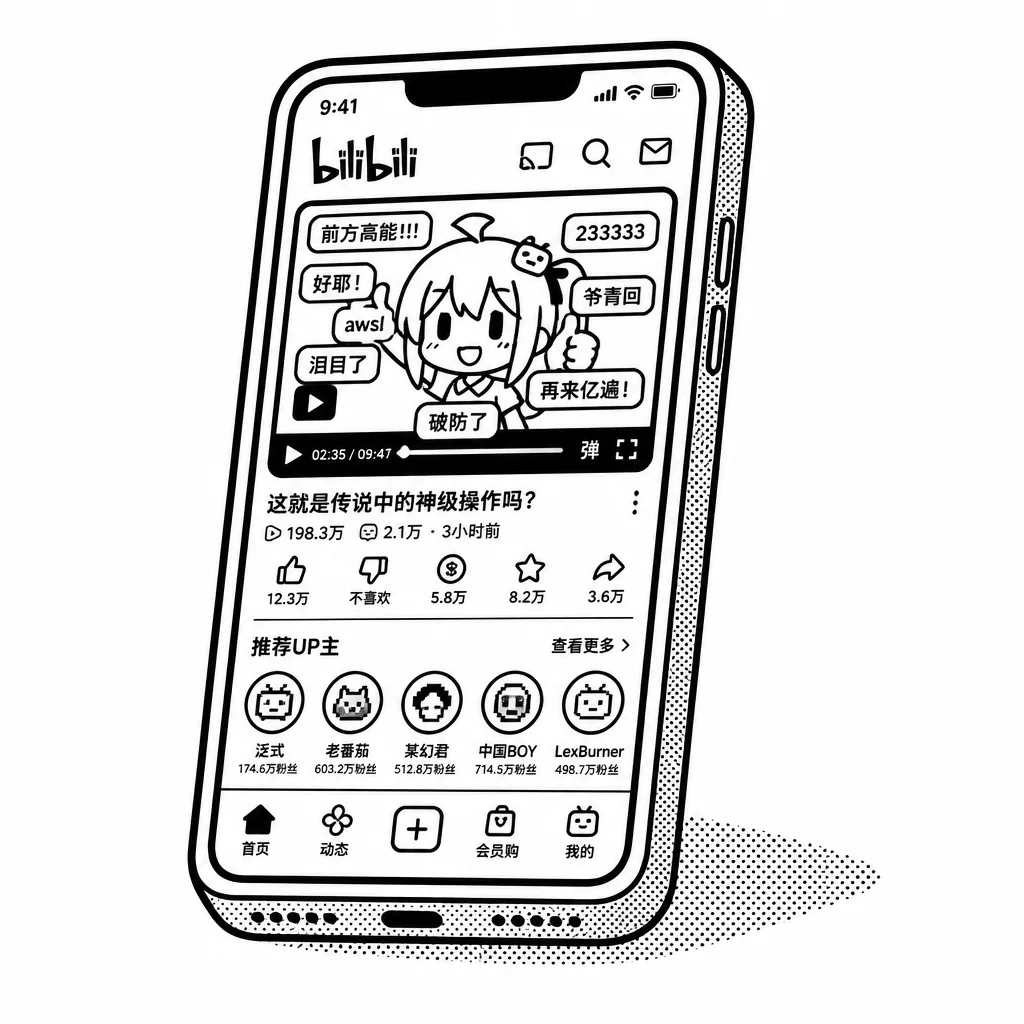
What makes Bilibili unusual is that a huge share of its content is made by its own users. Anyone can upload a video, and the site's culture pushes people to comment, remix, and riff on each other's work. This community feeling is the company's real moat. Competitors can copy a player or a feature, but they can't easily copy a culture that took years to build. The company's "bullet chat" — comments that fly across the screen as a video plays — is a signature part of that culture. On top of that content, Bilibili layers several ways to earn money. Mobile games were long the biggest source of cash: the company publishes and operates games, and players spend money on in-game items. It also sells virtual gifts during live broadcasts, runs an advertising business, and offers a paid membership with extra perks. Over time, the mix has shifted, with advertising and live broadcasting growing into serious contributors alongside games and the premium membership. The business has a tricky economics problem. Bilibili pays a lot to creators, licensors, and game studios, and it spends heavily on the technology to stream video to millions of people. For years it poured money into growth, running losses while chasing users and content. Management has pushed to close that gap, and the company has worked to shrink its losses and move toward profitability. The core bet is that a young, loyal audience eventually becomes a valuable one — for advertisers, for game publishers, and for the platform itself.
Competition in China's video market is fierce. Bilibili fights for attention against giants like ByteDance, the private owner of Douyin and TikTok, and against other platforms in gaming and live streaming. Its strength is the depth of its community and the quality of its niche content; its weakness is that making money from a community that expects free, ad-light video is genuinely hard. That tension — a beloved product that must become a profitable business — is the story to watch.
Saved answer · last researched 16 Nov 2026