Understand any stock in simple English
Enter a ticker to learn what the company does and how it makes money.
ispace, inc.
ispace designs and builds lunar landers and rovers, selling payload transport and lunar data services to space agencies, universities, and companies.
ispace is a Japanese space company that builds lunar landers and rovers — the hardware that carries things to the Moon and then drives around once it gets there. Its customers are space agencies, universities, and private companies that want to put experiments, instruments, or cargo on the lunar surface but don't want to build their own spacecraft from scratch. Instead of running a full space program, they buy a ride.
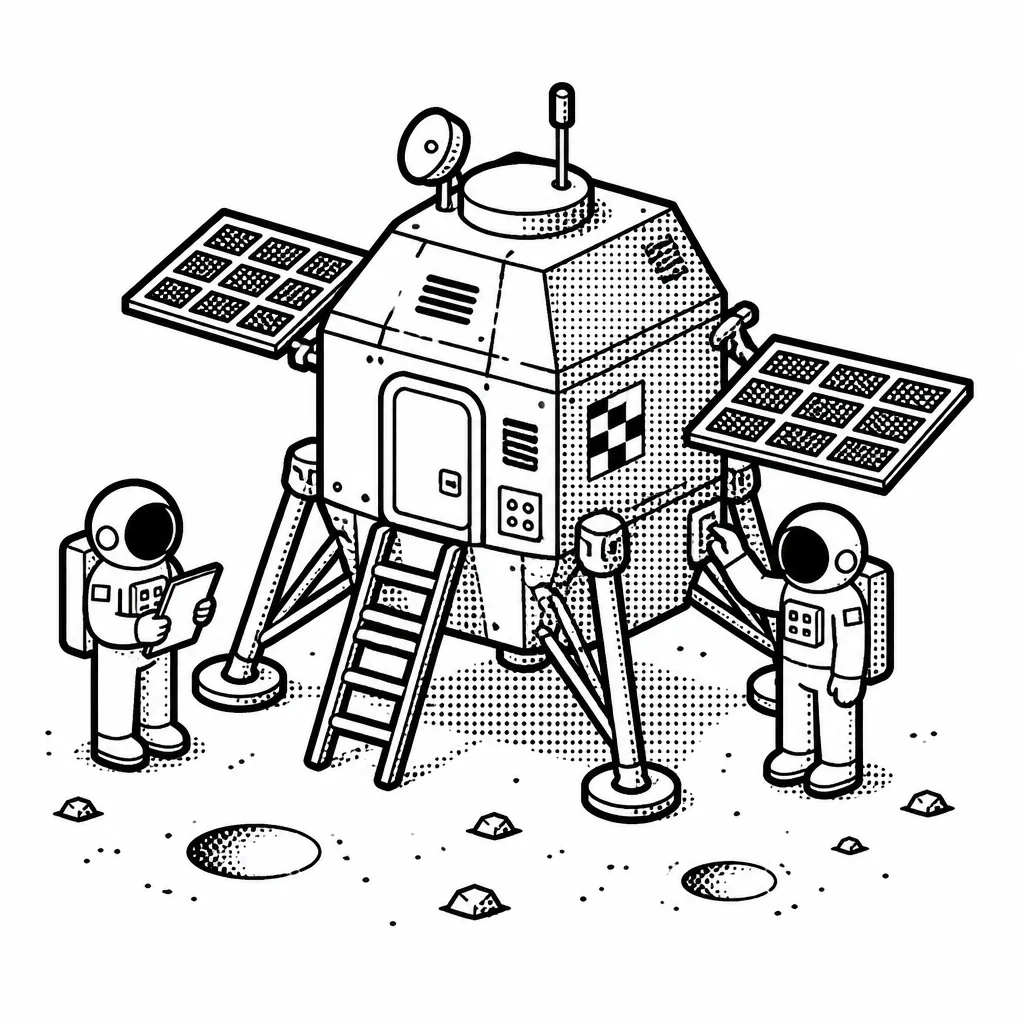
The core product is a lunar lander: a spacecraft that flies to the Moon, slows down, and touches down softly so its payload arrives intact. ispace also builds rovers that roll off the lander and explore the surface. On top of the hardware, the company sells what it calls lunar data services — essentially, the information and imagery gathered by its missions, sold to clients who need Moon data without operating their own equipment. It aims to be a delivery service for the Moon, not a science lab. The business is young, and investors should know it is a money-losing, high-risk venture. A lunar landing is one of the hardest things in engineering — there is no room for a small mistake, and a crash wipes out years of work. ispace has already learned this the hard way: an early landing attempt failed, and a later mission also ended in failure. Each mission costs a fortune to design, build, and launch, and the company must win enough customer contracts to cover those costs. That makes the business jagged: revenue and cash flow swing with mission schedules rather than coming in steadily.
The appeal for customers is simple. Sending something to the Moon used to require a national space agency and a giant budget. ispace offers a smaller, more flexible path — buy a spot on a lander, send your payload, get your data. If the company can reliably land on the Moon, it becomes a toll road for a new lunar economy, with demand from governments, researchers, and eventually companies chasing resources or science. If landings keep failing, customers have little reason to pay for the next attempt. Everything hinges on the engineering working, again and again.
Saved answer · last researched 12 Nov 2026
BIG PICTURE
ispace's bosses see only about a fifth of the lunar cargo market as theirs to chase
- 20% Medium-class payloads ispace can target
- 80% Other lunar transport work like crewed flights, heavy cargo and rockets
The company's own reading of the moon transport market puts medium-sized payloads at roughly a fifth of the total. The rest, from people to heavy freight to rockets, sits outside what ispace builds. That is why a market projected at about 620 billion yen in 2030 shrinks to something closer to 120 billion yen of work the company can actually bid for. Source: Yahoo! Finance (ispace forum post citing company market estimates), data from 2026
Timeline
A Japanese Team for a Moon Prize
In 2010, Takeshi Hakamada — an aerospace engineering graduate who had worked as a consultant — started a small Japanese company with a big target: the Moon. It joined a European team chasing the Google Lunar XPRIZE, a contest that promised money to the first private group to land a rover on the Moon. The Japanese arm brought rover technology from Tohoku University's robotics lab. The plan was simple to say and very hard to do: build a machine that could drive on the Moon.
The Team Goes Out on Its Own
Then the European side quit the prize, leaving the Japanese group suddenly alone. So in 2013 the company reorganized, changed its name to ispace, and entered the contest by itself as HAKUTO — Japan's only team. What had been a branch office now had to stand on its own feet.
A Record Raise Changes the Plan
A funding round running from late 2017 into early 2018 brought in 10.35 billion yen — a Japanese record at the time, and the largest early-stage raise the space sector had seen anywhere. That kind of money changes what a company thinks it is. Instead of just building rovers for a prize, ispace started building its own lunar lander, the vehicle that carries things down to the surface. It was no longer a contest team; it was a commercial lander company.
Hakuto-R Replaces the Prize Plan
Demand for delivering payloads to the Moon was growing, so in 2019 ispace reorganized its program under the name Hakuto-R. It scrapped a planned demonstration orbiter and aimed straight at an actual landing. The reasoning was blunt: skip the practice run, get to the real thing faster.
A NASA Contract for Lander Design
In 2022, NASA picked Draper Laboratories and its team — with ispace on board — for a CLPS contract, a program that pays private companies to carry NASA science to the Moon. The role validated ispace as a design agent for commercial lunar landers serving NASA. For a young company, it was a stamp of credibility from the biggest customer in space.
ispace Lists on the Tokyo Stock Exchange
In April 2023 ispace went public on the Tokyo Stock Exchange Growth Market. The offer price was 254 yen a share and it opened at 1,000 — a huge jump. Investors were excited because the company's first lunar landing attempt was only weeks away. The market was, in effect, betting on the landing before it happened.
Mission 1 Crashes on the Moon
Hakuto-R Mission 1 launched in December 2022 and, during its landing attempt in late April 2023, lost communication. The cause was a propellant loss in the final descent, which sent the lander down too fast into a hard landing. The first try ended in a crash — and the company had to prove it could survive one.
Mission 2 Fails Too
The second attempt, Mission 2's RESILIENCE lander, launched in January 2025 but failed to complete its landing that June, hitting the lunar surface instead. Two landings, two failures. The miss weighed on funding and on the Hakuto-R program, and the company faced the hard question of whether the Moon business could pay for itself.
ULTRA and a New Plan
ispace answered by merging its Japanese and U.S. lander designs into one machine, the ULTRA lander, and pushing the U.S. first mission back, taking an impairment of about 3.7 billion yen. It raised roughly 18 billion yen, won a place in the second phase of Japan's Space Strategy Fund, and secured ESA funding. The new pitch: build high-frequency lunar transportation — regular, flexible trips to the Moon — with Missions 3 and 4 planned for 2028 and 2029 and at least 46 billion yen in project revenue expected over four years.
A Deal with Nammo for Engines
In November 2026 ispace signed an MoU with Nammo for long-term propulsion procurement and supply-chain cooperation, choosing Nammo's LEROS engines for the ULTRA lander. Engines are scarce and take a long time to make, so locking in a supplier protects the schedule and cuts costs. Cheap, reliable engines are exactly what frequent lunar landings depend on — the plan from the year before now needed a supply chain to match.