Understand any stock in simple English
Enter a ticker to learn what the company does and how it makes money.
Bookoff Group Holdings Limited
Bookoff buys used books, games, and DVDs from people and resells them in bright, bargain-filled stores across Japan.
Bookoff is Japan's biggest chain of secondhand book and media stores. Picture a bright, clean shop packed floor to ceiling with used manga, novels, DVDs, video games, and CDs, all sold at low prices. People walk in with bags of stuff they no longer want, the staff grade it on the spot, and the seller walks out with cash. Then other shoppers come in and buy those same items for a fraction of what they cost new. It is a simple treadmill: buy cheap, tidy up, sell cheap, keep the difference.
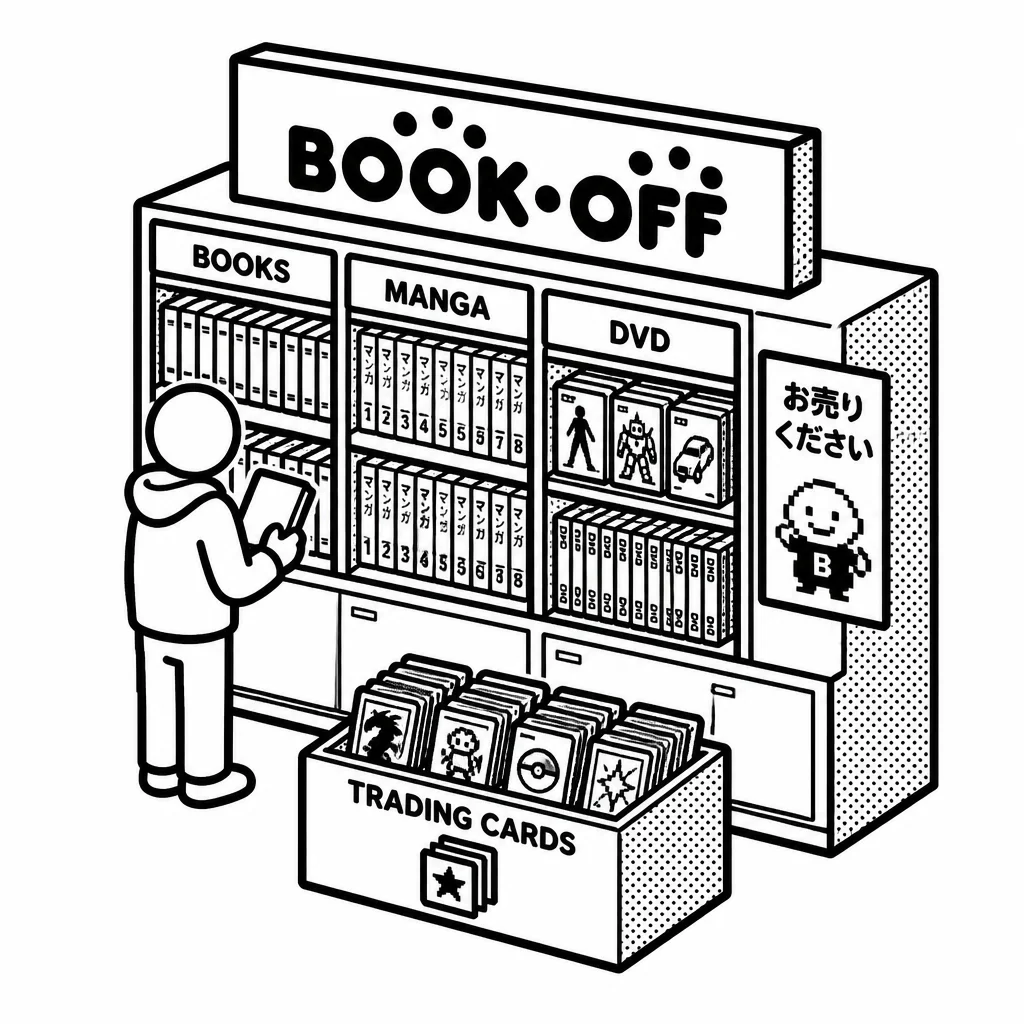
The engine of the company is its grading system. Staff quickly judge each item's condition and pay the seller a set price, which lets Bookoff handle huge volumes without haggling. That standard applies across its stores, so a customer in Tokyo roughly knows what to expect in Osaka. The chain also runs smaller formats and has expanded into selling online, which matters because used media is heavy, cheap per item, and increasingly bought through apps and marketplaces rather than only in person. Japan's shrinking population and the shift to digital media are real headwinds. Fewer people read physical manga and fewer buy CDs than a decade ago, so Bookoff has leaned into games, trading cards, and other collectibles to keep shelves interesting. It also faces competition from online resale platforms and from general secondhand chains like Mercari in the flea-market app space, which lets individuals sell directly to each other without a store in the middle.
Bookoff is a low-margin, high-volume business, and it is honest about that: the money comes from turning over inventory fast, not from fat markups on any single book. The company has used its cash to keep opening and remodeling stores and to return some money to shareholders through dividends. Its real advantage is scale and trust—sellers know they will get a fair, immediate price, and buyers know the shelves are stocked and organized. That is a modest but durable moat in a country that still loves physical media.
Saved answer · last researched 16 Nov 2026