Understand any stock in simple English
Enter a ticker to learn what the company does and how it makes money.
Mitsui O.S.K. Lines, Ltd.
Mitsui O.S.K. Lines is a Japanese shipping giant that moves raw materials, energy, cars, and containers across the oceans, and also runs ferries, cruise ships, and a real estate business.
Mitsui O.S.K. Lines is one of Japan's big three shipping companies—a century-old giant whose core job is moving the world's heavy stuff across oceans. Its fleet carries dry bulk like iron ore, coal, and grain; energy cargoes like liquefied natural gas and oil; finished cars on huge car carriers; and containers packed with everyday goods. It also runs domestic ferries and a small cruise business, and owns real estate in Tokyo. The customer is anyone who needs something moved between ports—steelmakers, power plants, carmakers, trading houses, and retailers—and they choose a shipping line over a competitor mostly on price, route coverage, and the reliability of having a ship where they need one, when they need it.
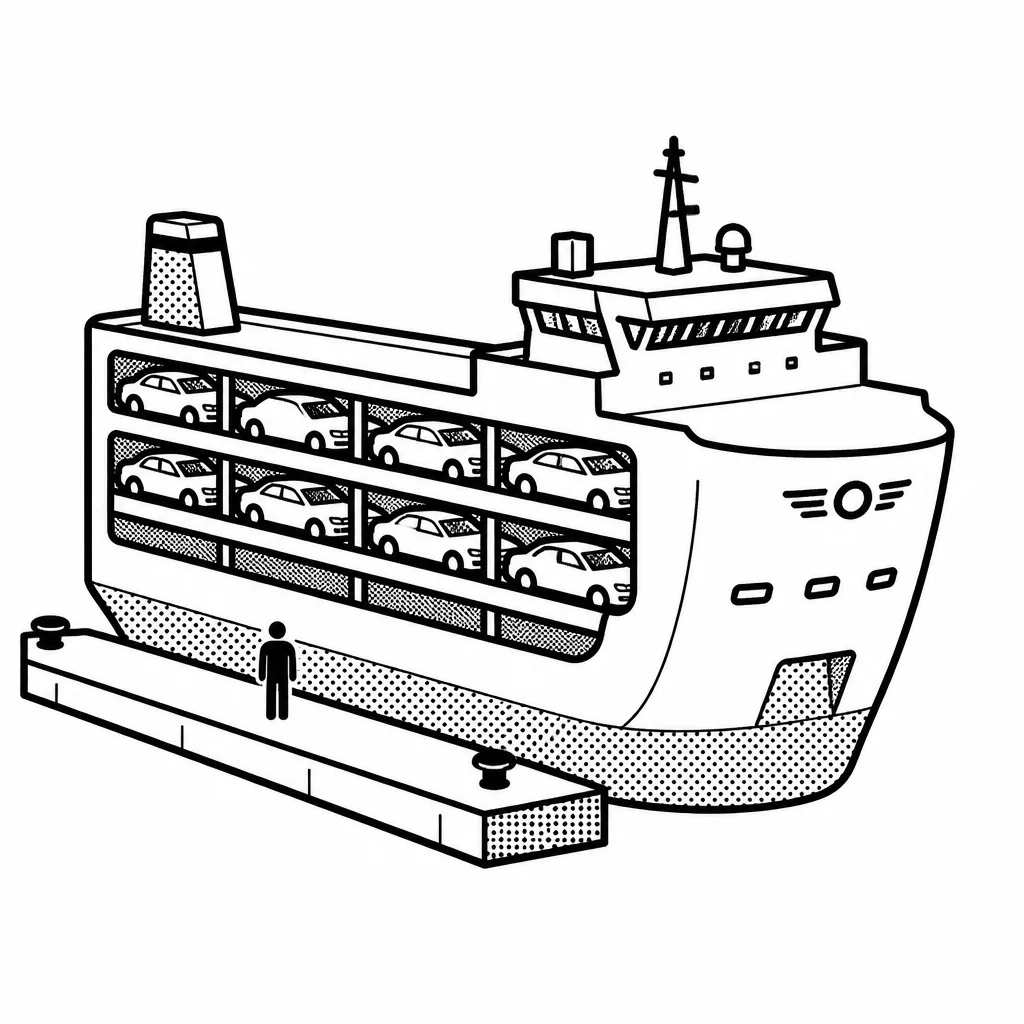
The business is brutally simple at its heart: ships earn daily charter rates and long-term contracts, and the company pays for fuel, crews, maintenance, and the cost of building or buying the vessels. But those rates swing wildly with global trade, and that is the real story of the profits. When demand for iron ore or LNG is high, charter rates soar and shipping lines make enormous money; when trade slows, rates collapse and the same ships barely cover costs. MOL smooths this by signing long-term contracts—especially in LNG, where it has a big fleet locked into multi-decade deals—so a chunk of its revenue behaves more like a utility than a spot market. That steady base is why the company can afford to keep ordering expensive new ships even in rough years. One thing that makes MOL unusual is how it has started to think about the future of fuel. Shipping burns some of the dirtiest oil products on the planet, and regulators are pushing the industry to clean up. MOL has been an early mover on alternative fuels, putting money into ammonia- and methanol-powered vessels and backing projects to produce cleaner fuels at scale. It has also invested in wind-assisted propulsion—huge rigid sails that cut fuel burn—and in autonomous ship technology, where it has tested crewless operations on real voyages. These are bets that the rules will tighten and that whoever owns the cleaner, more efficient fleet will win the contracts of the 2030s.
The company sits inside a tight Japanese industry: its main rivals are Nippon Yusen and Kawasaki Kisen Kaisha, together known as the big three, and they compete hard on the same routes. MOL's edge is scale and diversity—bulk, energy, cars, and containers all under one roof—plus those long-term LNG contracts that give it a steadier floor than a pure spot-market operator. It is also a big payer of dividends and has spent heavily on buying back its own shares in recent years, returning cash to shareholders when shipping profits are strong. The ugly side is that this is still a cyclical, capital-hungry business: ships cost hundreds of millions each, trade wars and recessions can gut rates overnight, and a wrong bet on new vessels can hang over the balance sheet for decades.
Saved answer · last researched 12 Nov 2026