Understand any stock in simple English
Enter a ticker to learn what the company does and how it makes money.
Yamato Holdings Co., Ltd.
Yamato runs Japan's biggest door-to-door parcel delivery network, picking up and delivering packages for people and businesses at home and abroad.
Yamato Transport is the company behind the black cat logo on delivery trucks all over Japan. If you live in Japan and order something online, or send a gift to a relative in another city, there is a very good chance a Yamato driver in a green-and-black uniform will be the one who rings the doorbell. Its core product is Takkyubin, a next-day-ish parcel service that lets individuals and small businesses ship packages at convenience stores and pickup points, with careful handling and reliable timing that Japanese customers have come to expect. It also moves freight for corporate clients and runs international logistics, and it has expanded into home-delivery-adjacent services like payment on delivery and even small errands.
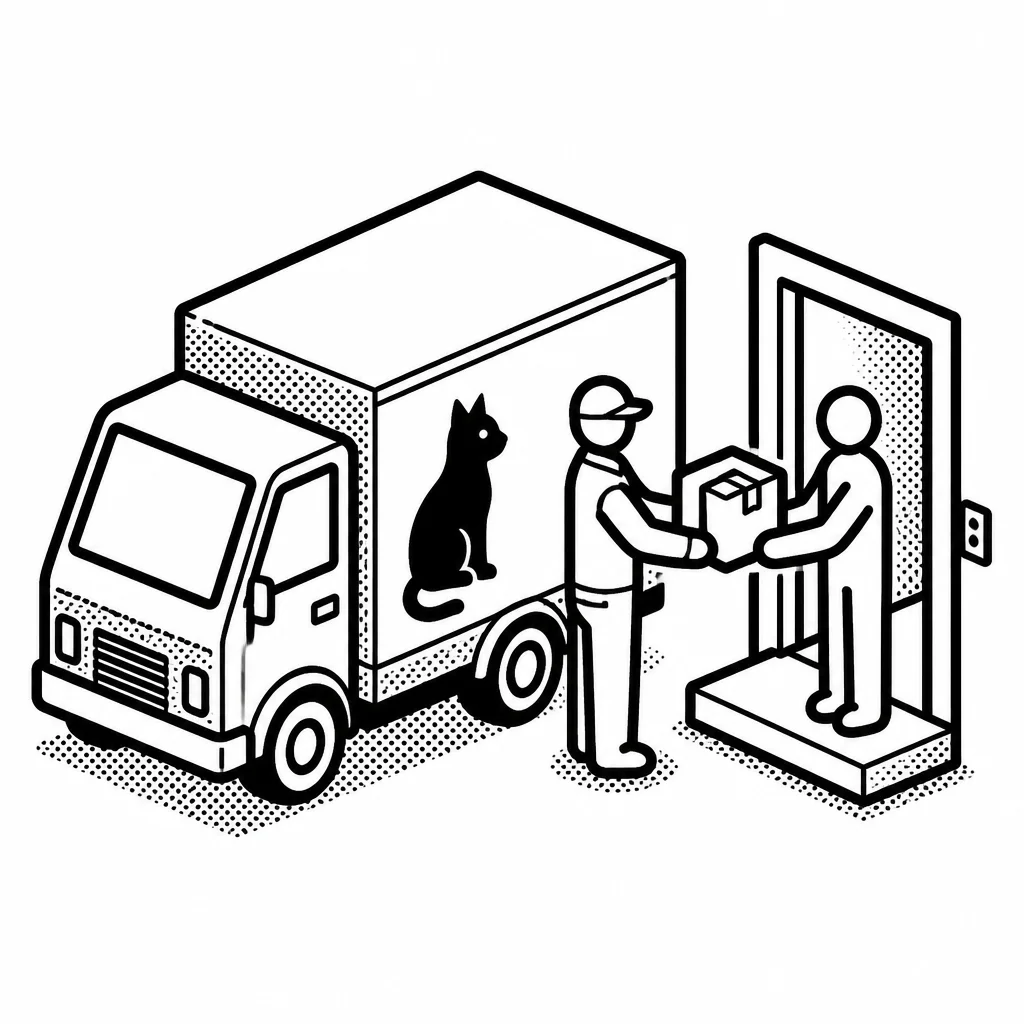
The business is simple on its face: you pay a fee per parcel, and Yamato charges more for faster delivery, cash-on-delivery handling, or bulky items. Volume is everything. Fixed costs — sorting hubs, trucks, IT systems, and a huge network of drivers — are spread across millions of packages a day, so the company lives and dies on route density. The famous black cat mark (a mother cat carrying her kitten) is one of the most recognized brands in Japan and a big reason customers trust it with fragile or important shipments. The hard part is that parcel delivery is a brutal, low-margin business, and Japan's shrinking population and chronic driver shortage make it harder every year. Yamato famously struggled with the boom in e-commerce: more parcels meant more work, but not necessarily more profit, and in 2017 it had to renegotiate terms with its biggest customer at the time, Amazon, to stop losing money on cheap, high-volume deliveries. It has since pushed automation in sorting centers, raised prices, and leaned on its convenience-store drop-off network to keep costs down. Competition comes from SG Holdings, which runs the Sagawa Express network, and from Japan Post's parcel arm.
Yamato is also a company with a social conscience streak — it has been a pioneer in hiring women drivers and people with disabilities, and its founder's family still shapes its culture. For investors, the appeal is a dominant, trusted brand with steady cash flow and a decent dividend, but the risk is that the delivery business stays a grind: volume growth is slow, labor is scarce, and margins are thin. The company's future depends on whether it can keep raising prices and automating faster than its costs rise.
Saved answer · last researched 14 Nov 2026