Understand any stock in simple English
SPARX Group Co., Ltd.
SPARX Group is a Japanese asset manager that runs investment funds and advises big institutions like pension funds and banks on where to put their money.
SPARX Group is a Japanese money manager. It runs investment funds and gives advice to big institutions — pension funds, banks, and other professional investors — rather than to ordinary individuals saving for retirement.
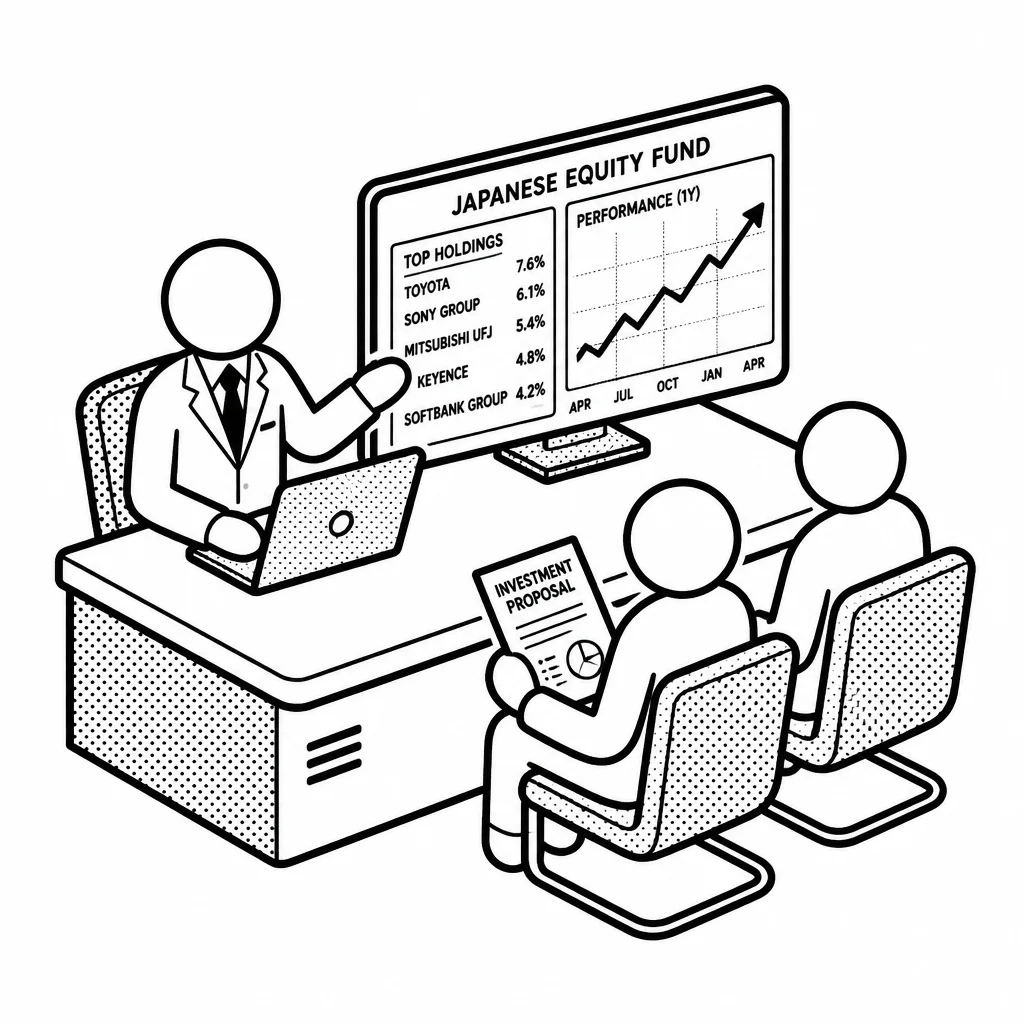
Its main job is to pool money from these institutions and invest it, mostly in Japanese and Asian stocks and in smaller growth companies. It is probably best known for its "Mirai" funds, which focus on promising but undervalued Japanese companies, especially smaller ones. Investors pay SPARX a management fee based on the money it looks after, and sometimes a share of the profits when its funds do well. That fee stream is how the firm makes its money. The appeal to a pension fund is simple: SPARX knows parts of the Japanese market that are hard to research in-house, and it has a long track record of finding growth stories. The risk is equally simple: performance comes and goes with the stock market, so if its funds fall, clients get nervous and money can flow out. Fee pressure from cheaper index products is a constant worry across the whole asset-management industry.
SPARX was founded in 1989 by Shuhei Abe, who built it into one of Japan's better-known independent asset managers. It is a small company by global standards, so its fortunes tend to swing with market conditions and the success of a handful of flagship funds.
Saved answer · last researched 20 Nov 2026
Timeline
An Independent Starts SPARX
In Japan in the late 1980s, almost everyone managing big money worked for a bank or a brokerage — the big, safe institutions. Shuhei Abe had left Nomura Securities and already started his own research firm, and he saw room for something different: a firm that managed investments without being owned by a giant. So in 1989 he set up SPARX Investment Advisory to manage money and give investment advice, making it one of the rare independent Japanese equity firms of its time. The bet was simple: independence would let it invest on its own judgment, not a parent company's.
SPARX Lists on JASDAQ
By the early 2000s the firm wanted a public scorecard and public money to grow, so it listed on the JASDAQ market. It calls itself Japan's first publicly listed asset management holding company — a small milestone that told the market independent money managers could stand on their own.
Buying Into Hong Kong
Japan alone was a small pond, so SPARX bought a Hong Kong-based alternative investment manager and turned it into SPARX Asia Investment Advisors. That gave the group a foothold for investing across Asia, not just at home.
Becoming SPARX Group
The company reorganized into a pure holding company and took the name SPARX Group, with the operating business handed to a new unit, SPARX Asset Management. In plain terms, it built a clear roof over its growing collection of businesses.
Moving Up to the First Section
SPARX moved its listing from JASDAQ to the First Section of the Tokyo Stock Exchange. It was a step up in status and visibility — the kind of move that puts a company in front of bigger investors.
Record Results and a 25-Year Mark
Years of building paid off in a big way: SPARX reported record interim profit and revenue, with assets under management hitting a record high on strong Korean and Indian stocks and private equity gains. It also marked 25 years since its listing, and management said out loud what it was chasing next: three trillion yen in assets.