Understand any stock in simple English
Enter a ticker to learn what the company does and how it makes money.
Toyota Tsusho Corporation
Toyota Tsusho is a giant Japanese trading house that buys, sells, makes, and moves everything from metals and cars to food and chemicals, earning money on the goods and services it trades and produces.
Toyota Tsusho is one of Japan's big general trading companies, a sogo shosha. These firms sit in the middle of huge flows of goods and money, connecting factories, mines, farms, and shops across the world. Toyota Tsusho buys and sells metals, machinery, chemicals, food, and consumer goods, and it also manufactures and provides services. It runs across seven business segments, so it is less one business than a bundle of many.
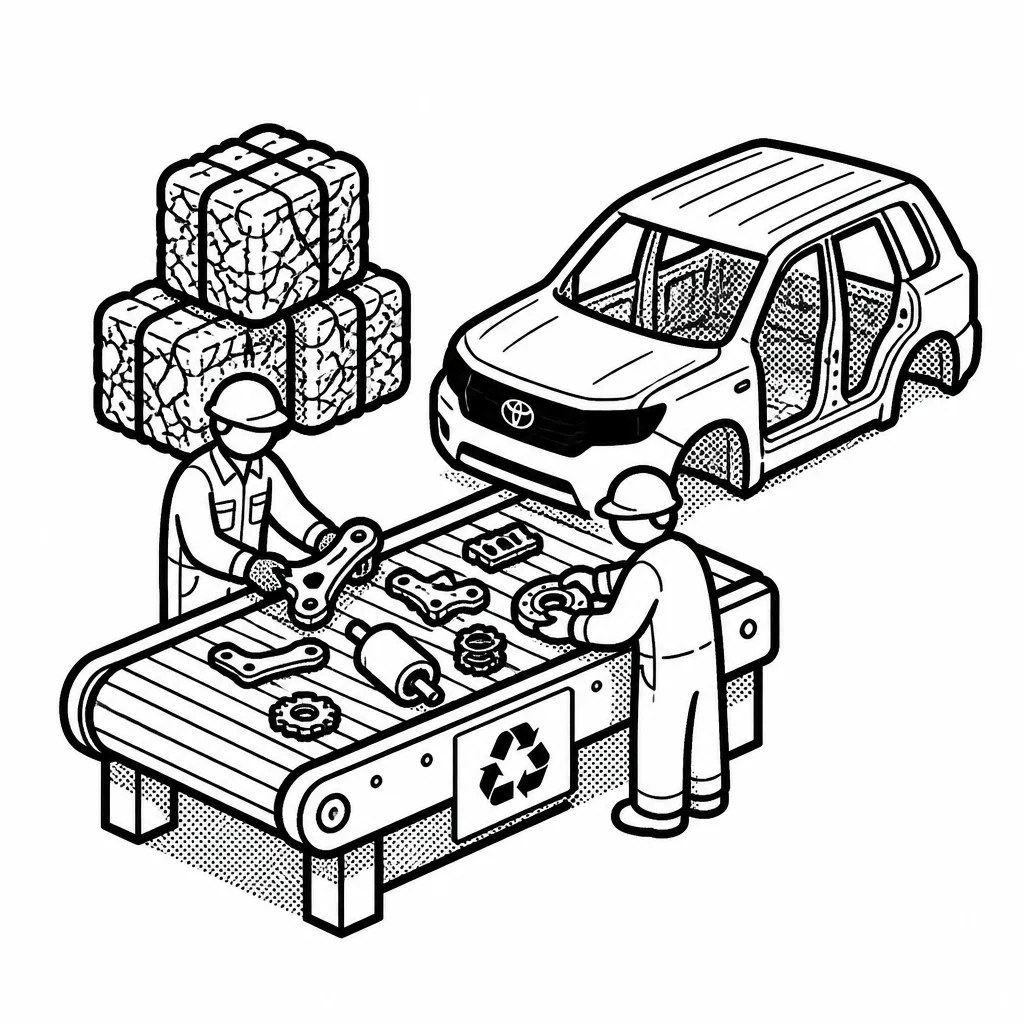
The company grew up around the Toyota galaxy. Its roots trace to the trading arm of the Toyota group, and that relationship still shapes what it does. It supplies parts and materials, helps move vehicles, and supports Toyota's manufacturing network, including Toyota Motor. One big piece of its business is mobility — selling cars and parts and financing them in markets from Africa to Asia. Another is metals and machinery tied to manufacturing. Others cover chemicals and electronics, food and consumer goods, and energy and infrastructure projects. The key to understanding a trading house is that it rarely just flips goods for a quick markup. It invests in mines, plants, dealerships, and distribution networks, then earns from the whole chain — trading profits, manufacturing margins, service fees, and returns on those investments. That is why the segments matter: each one has its own customers, its own risks, and its own way of making money. Customers choose firms like this because they bring capital, local knowledge, and a network that a single factory or retailer could not build alone.
The obvious weakness is that a trading house is deeply exposed to the world economy. When commodity prices swing, currencies move, or car sales slow, the results wobble. Its strength is diversification and the Toyota relationship, which gives it stable, high-quality business. That steady cash lets it keep investing in new areas and returning money to shareholders, which is the quiet engine of the whole thing: patient capital, spread widely, compounding over time.
Saved answer · last researched 12 Nov 2026