Understand any stock in simple English
Enter a ticker to learn what the company does and how it makes money.
BANDAI NAMCO Holdings Inc.
Bandai Namco makes and sells toys, video games, and entertainment products and services to fans around the world.
Bandai Namco is a Japanese entertainment giant that sells toys, video games, and experiences to fans worldwide. If you have ever collected tiny plastic figures, played a fighting game in an arcade, or watched a cartoon about monsters that battle and evolve, there is a good chance the company was involved somewhere. It runs two big engines under one roof: a toys and hobby business that makes figures, models, and trading cards, and a games business that develops and publishes video games for consoles, PCs, and arcades.
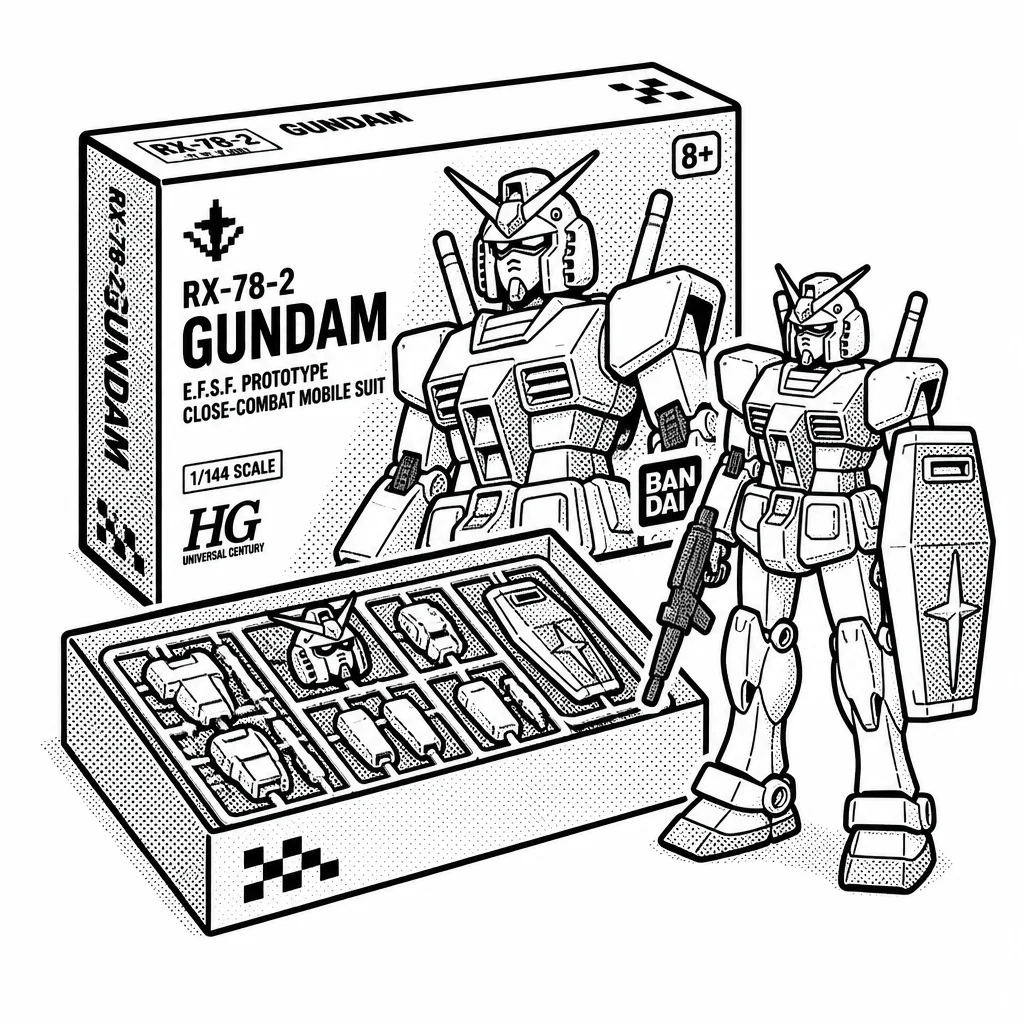
The toys side is the quieter moneymaker and the part people often overlook. Bandai's Gashapon capsules — those little plastic balls you crank out of a machine for a few coins — have become a global craze, and the company has been opening dedicated capsule-toy stores in the United States and elsewhere to ride the demand. It also sells collectible figures and model kits, including the Gunpla lineup tied to the Gundam robot franchise, which has a devoted following built up over decades. These are cheap, repeat purchases that fans make again and again, which makes the business remarkably steady. The games side is where Bandai Namco is most famous. It publishes big franchises like Tekken, Tales, and the anime-flavored fighting games built around licensed characters, and it has scored huge hits with games such as Elden Ring, developed with FromSoftware, a studio Bandai Namco has invested in and worked with closely. That partnership shows how the company operates: it often acts as the publisher and marketing muscle behind games made by other talented studios, taking on the cost and risk of getting a title to shelves while sharing in the upside when it sells well. What holds it all together is a portfolio of beloved characters and brands the company owns outright or licenses, from Gundam to Dragon Ball to One Piece. Those characters feed every part of the business — toys, games, arcade machines, and events — so a popular anime or game can be turned into merchandise almost immediately. That cross-selling is the real edge. The main risk is that a lot of this depends on licensed properties owned by others, and hit games are never guaranteed; a quiet year for releases can dent results quickly.
Bandai Namco is headquartered in Tokyo and is one of the larger players in the global toys and games industry, competing with giants like Hasbro and Mattel in toys and with major game publishers in software. It puts its cash back into new games, new toy lines, and its capsule-store expansion, and it also returns money to shareholders through dividends and share buybacks. For a company built on plastic and pixels, the formula is simple and durable: own the characters people love, then sell them a little bit of joy in as many forms as possible.
Saved answer · last researched 12 Nov 2026
Timeline
A Toy Wholesaler Starts Bandaiya
In 1950, Naoharu Yamashina started a small toy company in Tokyo called Bandaiya. He had been a toy wholesaler, so he knew what shops wanted to sell. The company made simple toys: celluloid toys, metal passenger cars, and rubber swimming rings. It was a modest start, but it planted the seed for something much bigger.
The Guaranteed Toy
A few years later, the company launched the first "guaranteed toy" and set up an industry-first quality assurance system. That mattered because cheap toys broke, and parents did not trust them. A guarantee told buyers they could count on the product, which helped Bandai stand out. The company also created the BC mark, building its brand identity step by step.
Bandaiya Becomes Bandai
In 1961, Bandaiya changed its name to Bandai and raised its capital. It was a simple move, but it gave the company a clean brand name that could grow with it. From here on, the toy maker had a clearer identity to build on.
Bandai Goes Public
Bandai listed on the Tokyo Stock Exchange in 1986, which gave it capital to expand. A couple of years later, it was promoted to the First Section, the exchange's main stage. Going public turned a family-style toy business into a company with public money and public expectations.
Namco's Own Path
Namco had a different beginning: it started in 1955 as Nakamura Manufacturing, running amusement facilities inside department stores. It grew into a video game company and listed on the Tokyo Stock Exchange in 1988. A few years later, it too reached the First Section. By then, two very different entertainment companies were both standing strong.
Bandai and Namco Join Forces
In 2005, Bandai and Namco merged their management into a single holding company, Bandai Namco Holdings. The new company listed on the First Section the same day. This was the big reveal of the story: a toy giant and a video game giant became one entertainment company. Toys and games now sat under one roof.
One Global Name
In 2014, the company took the name Bandai Namco Holdings and unified the whole group under one global brand. The name change was a sign that the businesses were no longer separate pieces. They were one integrated entertainment company.
A Profit Warning Shakes the Stock
In early 2024, the stock dropped sharply after the company cut its full-year operating profit forecast from ¥125 billion to ¥82 billion. The cause was painful: losses on online games and write-offs from reviewing its title lineup. The digital segment's operating profit fell by almost all of it, down 96.5% for the year to date. Growth in games had turned into a problem the company had to fix.
A Big Reorganization and Outside Investors
In 2026, Bandai Namco announced a major internal reorganization covering toys, cards, video games, anime, and theme parks. It came after more than 100 employee dismissals and project cancellations between 2024 and early 2025. At the same time, Sony bought a small stake for about $464 million, and Nintendo agreed to take 80% of Bandai Namco Studios Singapore. The company that started as a toy wholesaler was now reshaping itself with help and pressure from the biggest names in the industry.