Understand any stock in simple English
Enter a ticker to learn what the company does and how it makes money.
Tokyo Seimitsu Co., Ltd.
Tokyo Seimitsu makes machines that test and measure semiconductor chips and precision parts, and sells them to manufacturers around the world.
Tokyo Seimitsu makes the machines that check whether things made in factories are actually any good. Its two big businesses are semiconductor production equipment and precision measuring instruments. The chip side is the star: machines that slice silicon wafers into individual chips and machines that probe finished chips to see if they work before they get packaged and shipped. The measuring side makes instruments that gauge the size, shape, and surface of precision parts, the kind of gear used in cars, aircraft, and industrial machinery.
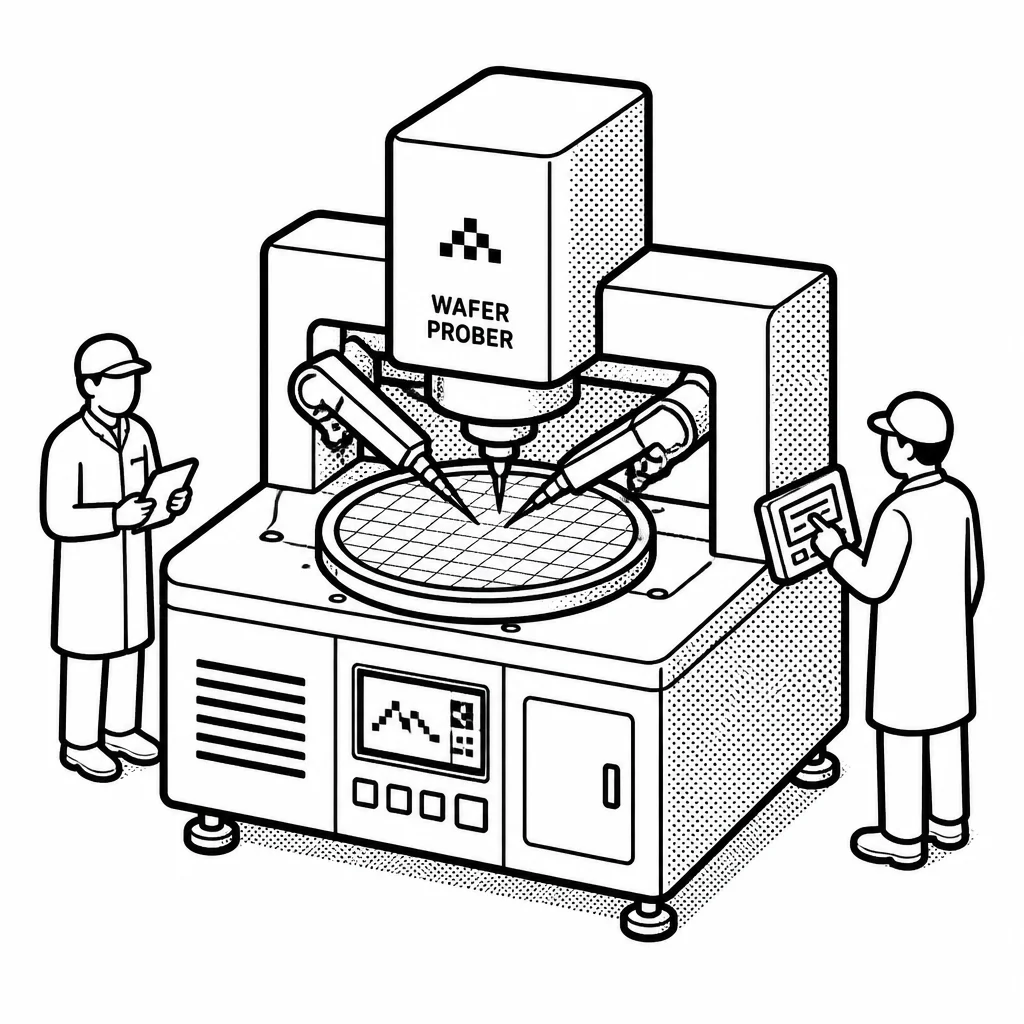
The customers are manufacturers, and they pay for accuracy and uptime. A chipmaker cannot afford a dud wafer or a missed defect, because a bad chip that slips through wastes everything done to it afterward. Tokyo Seimitsu's probers and dicing machines sit right at the point where a wafer turns into sellable chips, so its tools act as the quality gate. The measuring instruments play a similar role for mechanical parts, telling a factory whether a piece is within tolerance before it goes into an engine or a machine. The company is based in Tokyo and has been around for a long time, but the chip business is what really drives it now. Semiconductor equipment demand swings hard with the spending cycles of the big foundries and memory makers, and Tokyo Seimitsu's results swing with it. When chipmakers are building new capacity, orders for probers and dicers surge; when they pause, the equipment business cools quickly. That cyclicality is the main thing to understand about the company, and it is why the steadier measuring-instruments business matters as a ballast.
Competition is serious. On the test side it runs into big players like Advantest in chip test equipment, and on the dicing side it faces rivals such as Disco. Tokyo Seimitsu's edge comes from being a specialist that does both wafer processing and testing, and from long relationships with chipmakers who do not want to requalify tools lightly. It is a pick-and-shovel supplier to the chip industry: it does not make chips itself, it sells the equipment that decides which chips are good enough to leave the factory.
Saved answer · last researched 14 Nov 2026