Understand any stock in simple English
Enter a ticker to learn what the company does and how it makes money.
Mobile Telecommunications Company Saudi Arabia
Zain Saudi Arabia sells mobile phone plans, mobile internet, and devices to people and businesses in Saudi Arabia.
Zain Saudi Arabia is one of the country's big mobile network operators. It runs the towers, SIM cards, and network equipment that connect your phone to the internet and to everyone else's phone. Customers buy prepaid top-ups or monthly postpaid plans, add data for 4G and 5G internet, and often pick up a phone or router at the same time.
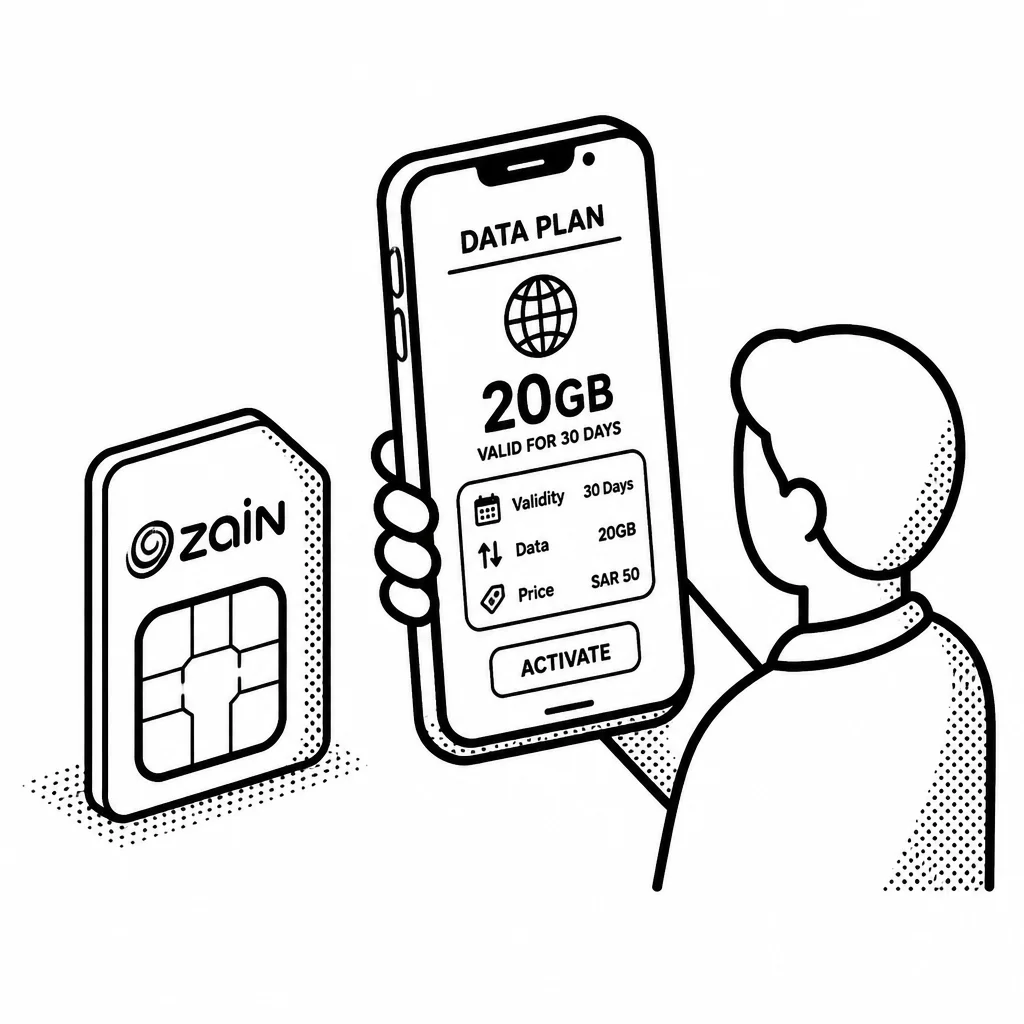
The business earns money in two main ways. Individuals pay for prepaid credit and postpaid subscriptions, which cover calls, texts, and mobile data. Separately, it sells services to companies and government customers — things like corporate phone lines, internet connections, and network services that businesses need to operate. It also sells devices, though the real engine is the recurring monthly bill: once a customer is on a plan, the money arrives again and again. People stay because switching networks is a hassle, coverage matters, and bundled deals with phones make staying easy. The Saudi market is a three-way fight. Zain competes mainly with Saudi Telecom Company and Etihad Etisalat (better known as Mobily), so price wars and aggressive data bundles are constant. The Saudi government has been pushing telecoms to build out 5G and fiber, and Zain has invested heavily in its network to keep up. That spending is the big cost of doing business: spectrum licenses and network gear are expensive, and the company carries debt from years of building.
Zain Saudi Arabia traces its roots to 2008, when it became the third mobile operator in the country and the first big shake-up in a market that had been closed to competition. Its parent is the Kuwaiti group Zain, one of the largest telecom operators in the Middle East and Africa, which holds a large stake. Like most telecoms, the company throws off steady cash and pays it out to shareholders, while also spending on its network to keep customers from defecting. It is a utility-like business with a marketing budget: reliable, cash-generating, and locked in a permanent fight for subscribers.
Saved answer · last researched 12 Nov 2026