Understand any stock in simple English
Enter a ticker to learn what the company does and how it makes money.
Hygon Information Technology Co., Ltd.
Hygon designs and sells computer chips — CPUs for general computing and DCUs for AI — to server, data center, and AI customers in China.
Hygon is a Chinese chip designer. It creates the brains that go inside servers and data centers: general-purpose CPUs that run ordinary business software, and DCUs (deep computing units, essentially AI accelerators) that train and run artificial intelligence models. Its customers are the companies that build servers, run data centers, and stand up AI systems, almost entirely inside China.
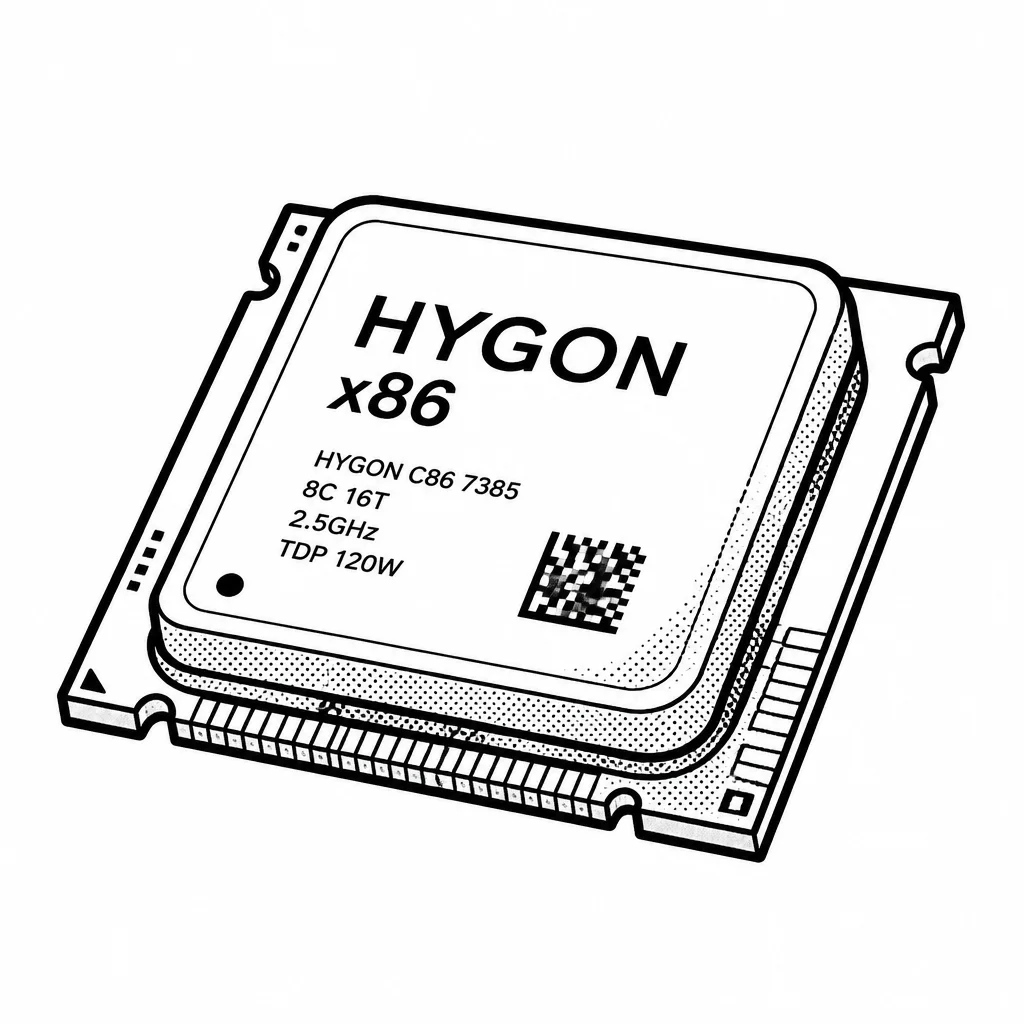
The business sits at the center of a national push. China wants its own chips so it doesn't have to depend on foreign suppliers, especially after the United States restricted exports of advanced semiconductors and the tools to make them. Hygon got a big head start from a licensing deal with AMD years ago, which gave it a foundation for its CPU designs, though that partnership was later cut off by the U.S. government. That history explains both Hygon's strengths and its biggest risk: it can design chips, but it still leans on outside manufacturing and is exposed to export rules. Demand for AI computing in China has become the engine. Companies can't easily buy top-end Nvidia chips, so domestic alternatives like Hygon's DCUs get pulled into the gap. That's a powerful tailwind, but it's also a fragile one — the company's fortunes are tied to government policy, chip fabrication capacity, and how fast Chinese AI spending grows.
The clearest way to think about Hygon is as a bet on China building a self-sufficient chip industry. The upside is enormous if domestic AI and data-center demand keeps climbing and customers are forced to buy local. The risk is that the company is small relative to global giants, depends on foundries it doesn't control, and lives under the shadow of rules written in Washington and Beijing.
Saved answer · last researched 12 Nov 2026