Understand any stock in simple English
Enter a ticker to learn what the company does and how it makes money.
Tera Probe, Inc.
Tera Probe tests semiconductor chips for other companies, checking that they work before they go into phones, cars, and computers.
Tera Probe is a chip tester. When companies like TSMC or Sony make silicon wafers — the shiny discs that get sliced into individual chips — somebody has to check whether the circuits on them actually work before those chips get packaged and shipped. Tera Probe runs those checks. It probes wafers with tiny needles, measures electrical behavior, and sorts good chips from bad ones so its customers don't waste money packaging defective silicon. It also does final testing on finished, packaged chips.
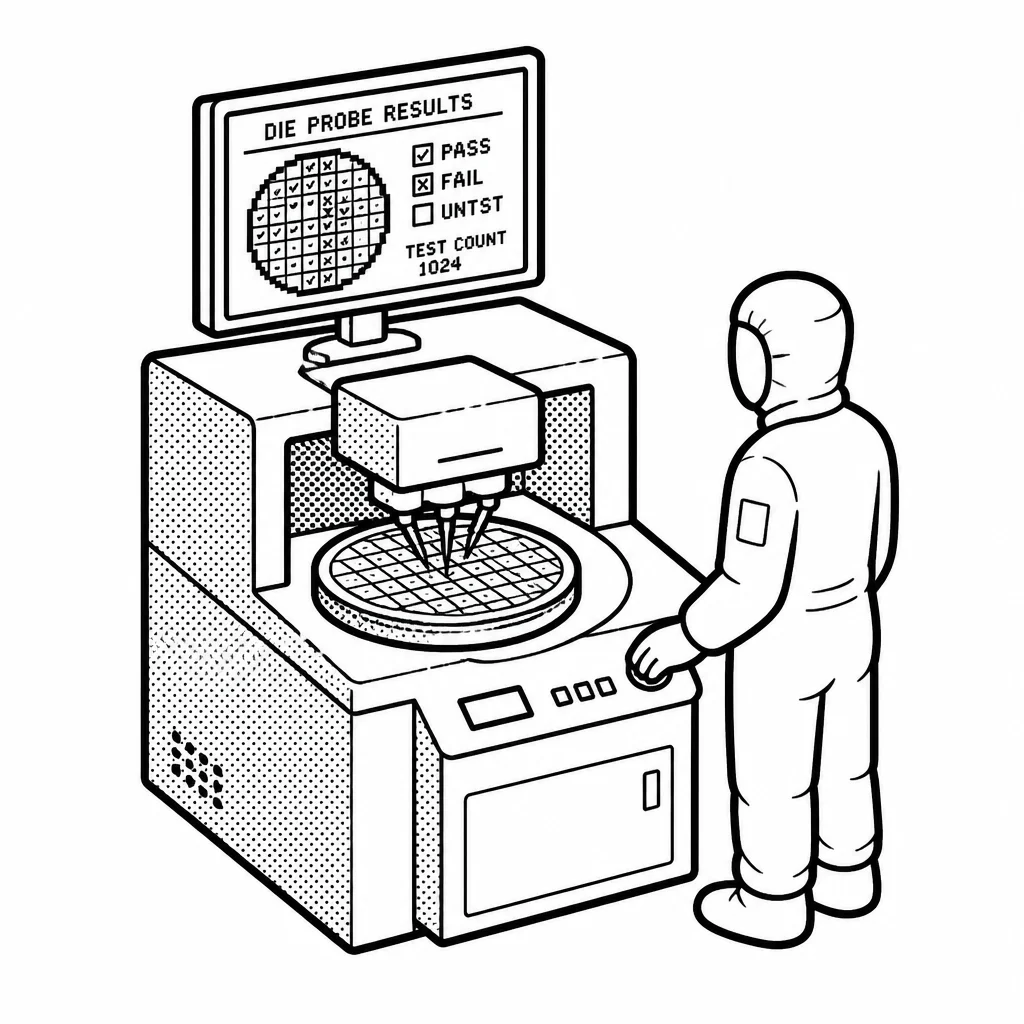
The business is a bit like a quality inspector at a factory, except the inspector is a highly specialized machine the size of a room and the products are microscopic. Chipmakers could buy their own testers, but testing equipment is expensive and gets obsolete fast, so many outsource the job. Japan is a natural base for this: the country is home to a dense cluster of chipmakers and equipment suppliers, and Tera Probe grew up serving them. Testing is a toll-road kind of business. Tera Probe gets paid per wafer or per chip tested, so revenue rises and falls with how busy its customers' fabs are. That makes it cyclical — when chip demand booms, test lines run hot; when demand slumps, utilization drops. It's also capital intensive, because each new generation of chips needs newer, pricier test gear. The upside is that once a customer qualifies a test house for a product, switching is a hassle, which creates sticky relationships.
Tera Probe is not a household name, and that's fine — it's a pick-and-shovel supplier to the chip industry rather than a chip designer. Its fortunes track the broader semiconductor cycle, especially in Japan, and its customers depend on it to catch defects before bad chips reach cars, phones, or data centers. The company's edge is precision and reliability at scale; its vulnerability is that it has little pricing power when fabs are running below capacity.
Saved answer · last researched 15 Nov 2026