Understand any stock in simple English
Enter a ticker to learn what the company does and how it makes money.
Chunghwa Precision Test Tech Co., Ltd.
It makes the tiny precision parts and test equipment that chipmakers and electronics companies use to check that their products work before they ship.
Chunghwa Precision Test Tech makes the tiny, precise hardware that helps other companies test their chips and circuit boards. When a chipmaker builds a new processor, it needs a socket that can hold the chip, connect to its hundreds or thousands of pins, and run signals through it to check for defects. That socket has to be machined to microscopic tolerances — off by a hair and the test is useless. Chunghwa Precision makes those sockets, along with probe cards, which are the delicate interfaces that press onto a silicon wafer to test chips before they get cut apart and packaged.
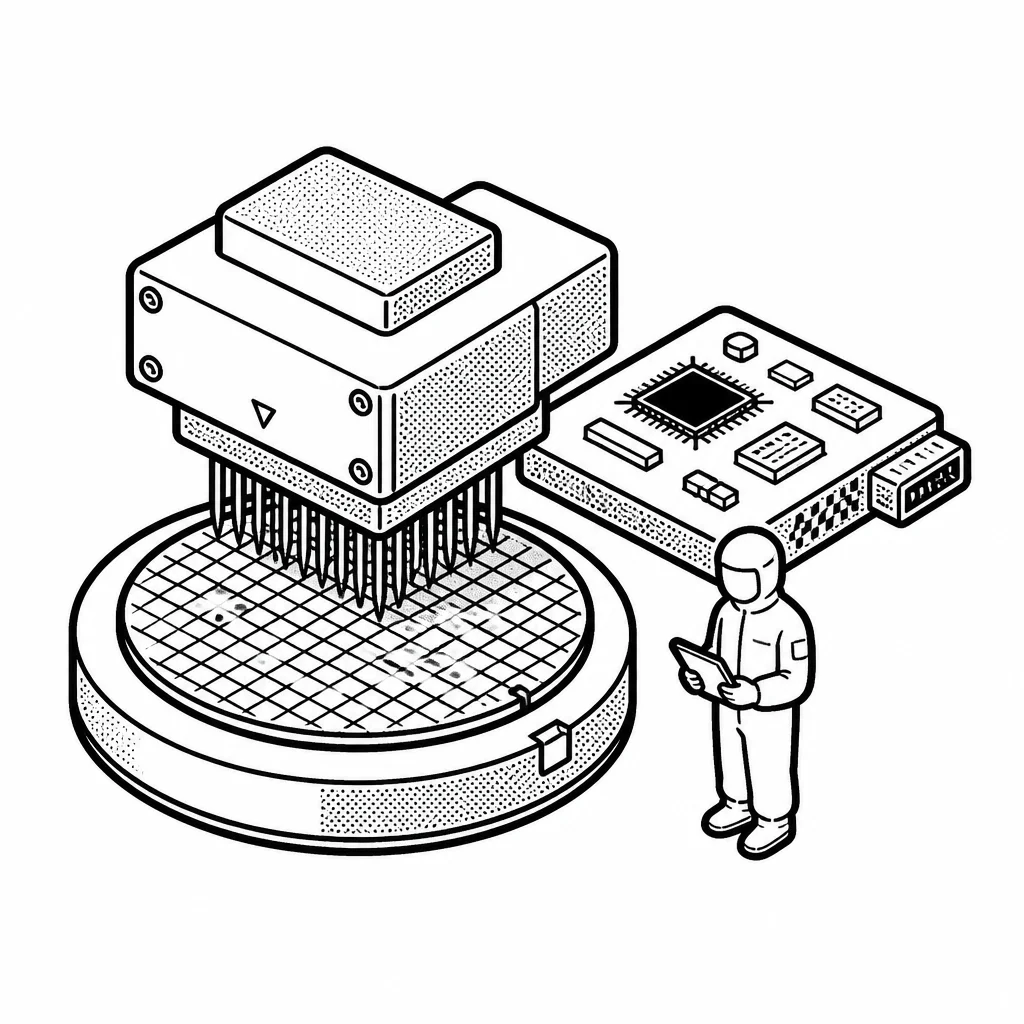
The company's customers are semiconductor and electronics makers who can't afford to ship broken parts. Probe cards and test sockets are a small fraction of what a chip costs, but they decide whether the chips work at all, so buyers care much more about reliability than price. That gives the company some pricing power and makes its business surprisingly sticky. It is headquartered in Taoyuan, Taiwan, close to the island's dense cluster of chipmakers and electronics assemblers. The business is cyclical because it rides on semiconductor capital spending. When chip demand booms, customers build new capacity and buy more test hardware; when the cycle cools, orders slow. Chunghwa Precision is also exposed to the shift toward advanced packaging and AI chips, where testing gets harder and more expensive, which can help demand for sophisticated test parts. But it competes with larger, well-funded rivals in the test interface market, and keeping its edge means constant investment in precision manufacturing.
For a sense of scale, the company is a mid-sized specialist rather than a household name — it trades on Taiwan's smaller exchange and most people outside the chip supply chain have never heard of it. That's typical for the hidden suppliers that make modern electronics possible: small, quiet, and essential.
Saved answer · last researched 9 Nov 2026