Understand any stock in simple English
THK Co., Ltd.
THK makes precision motion components — linear guides, ball screws, and related parts — that let machines move smoothly and accurately.
THK makes the parts that let machines slide and spin with almost no friction. Its core product is the linear motion guide, a rail-and-block system that lets a machine part glide in a straight line instead of scraping along metal. Inside that block are tiny steel balls that roll and recirculate, which is why the motion is so smooth and precise. The company also makes ball screws and other motion parts, and it sells them to makers of machine tools, robots, semiconductor equipment, and transportation gear. Think of THK as the joints and bearings of the industrial world: rarely seen, but nearly everything that moves precisely depends on them.
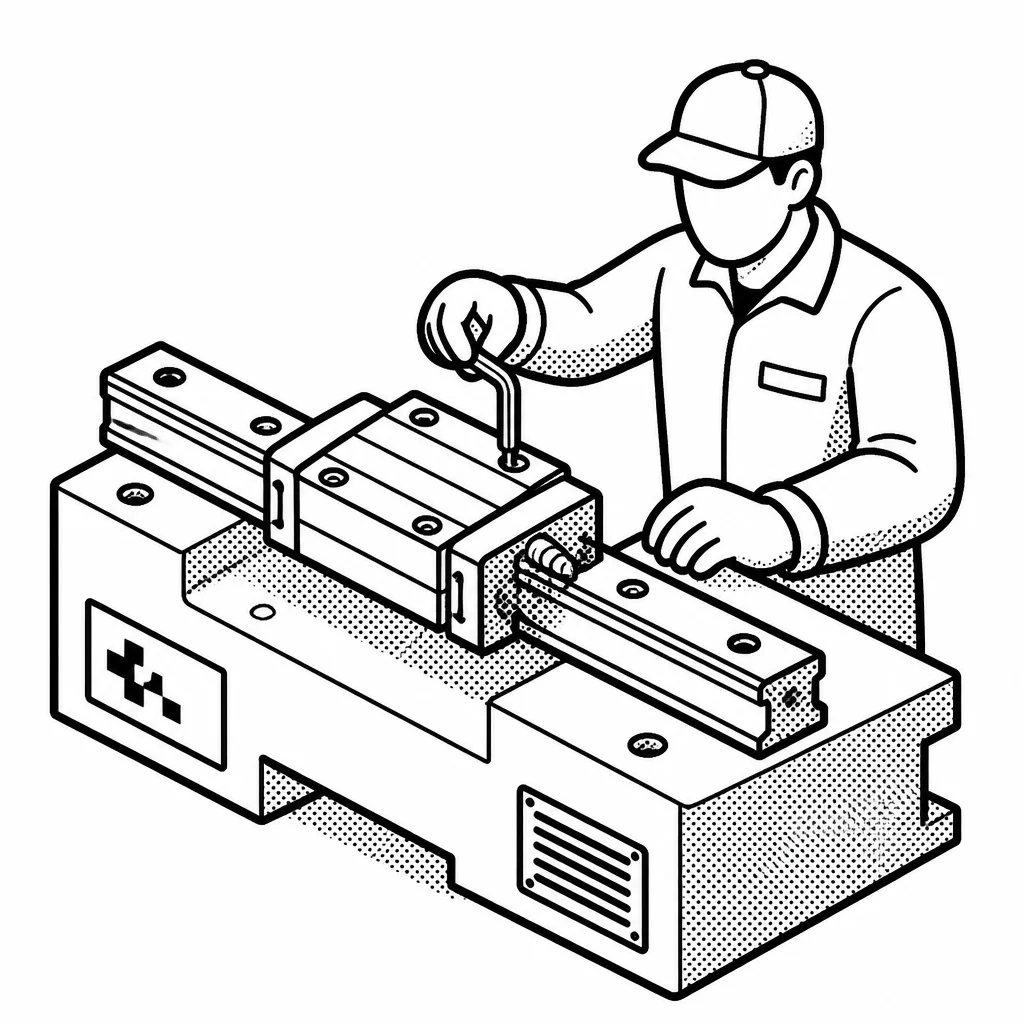
The founder, Hiroshi Teramatsu, invented the ball-recirculating linear guide in the early 1970s and named the company after his goal of creating "the highest quality" motion. Until then, machines slid on flat metal surfaces that wore out and lost accuracy. His invention turned sliding into rolling, and it became the standard for precision automation. That head start gave THK decades of engineering know-how and a reputation that customers pay for rather than treat as a commodity. When a semiconductor maker or robot builder needs motion that stays accurate for millions of cycles, the cost of the guide is small compared with the cost of a machine that fails. THK earns money by selling these components to industrial and transportation equipment manufacturers, mainly in Japan, China, Europe, and North America. Machine tool builders, robot makers, and semiconductor equipment companies are key customers, and the auto industry matters too through its steering and suspension parts. Those customers are cyclical: capital spending on factories and equipment rises and falls, and THK's orders swing with it. That has been the company's weak spot lately. Demand softened after the pandemic-era boom in semiconductor and machine-tool investment, and the auto side has been pressured by the shift to electric vehicles, which use different steering setups. THK has been cutting costs and restructuring parts of its business while building out bearings and other components for EVs to replace some of that lost work.
Where THK is strong is reliability and precision at scale. Its engineering, testing, and quality control make it a go-to supplier for machines that cannot afford to fail, and customers often design their equipment around THK parts years before a sale. Competitors include NSK and NTN in Japan, plus the German firm Bosch Rexroth and Schaeffler in Europe, though THK's grip on linear guides is tougher to break. The company's main problem is the same as its strength: it is deeply tied to industrial capital spending. When businesses stop buying machine tools and factory equipment, THK's orders slow fast. That makes it a bet on the industrial cycle as much as on its own technology.
Saved answer · last researched 17 Nov 2026