Understand any stock in simple English
Enter a ticker to learn what the company does and how it makes money.
Nabtesco Corporation
Nabtesco makes precision motion-control parts and equipment that keep trains, factory robots, buildings, and aircraft moving and working safely.
Nabtesco is a Japanese manufacturer that makes the parts and equipment that help heavy things move smoothly and stop safely. If you have ever watched a train pull into a station and wondered how the doors slide open so precisely, or seen a factory robot arm swing into place with perfect timing, there is a good chance Nabtesco made the machinery behind that motion.
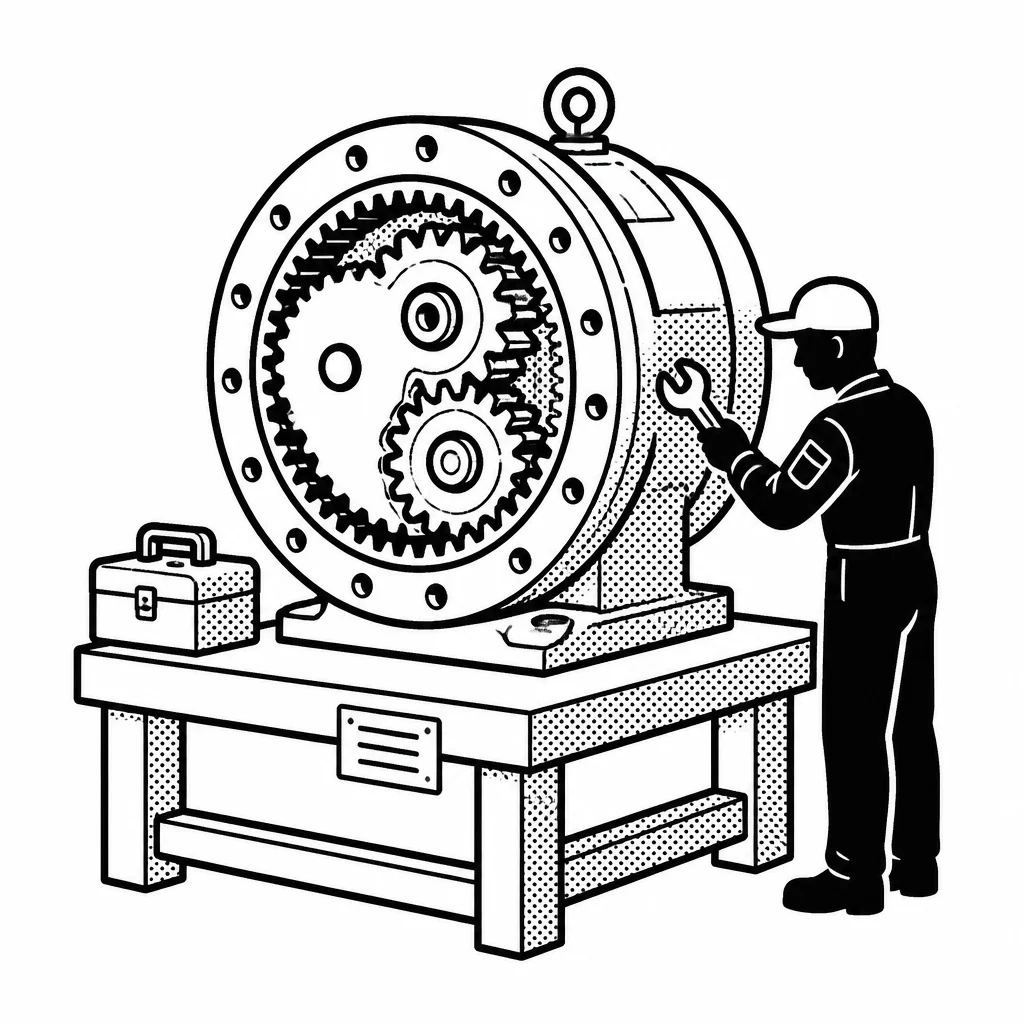
The company's biggest moneymaker is what it calls its component solutions business, which builds precision speed reducers and hydraulic and pneumatic valves. Speed reducers are the gearboxes that sit inside robot joints and let a powerful motor turn slowly and smoothly instead of jerking around. Nabtesco is one of the world's dominant suppliers of these for industrial robots, and its valves control the brakes, doors, and suspension systems on trains. That is why so many of the world's railway operators and robot builders count on it. Its other side sells finished equipment to the people who run the world's infrastructure. It makes train platform screen doors, the sliding barriers that keep commuters from falling onto the tracks. It sells automatic doors and accessibility equipment for buildings, including the systems that open doors for people, and it builds components for aircraft, such as actuators that move flight control surfaces. It also makes the heavy-duty parts that go into hybrid and electric buses.
Nabtesco started as two separate Japanese firms, one making brakes and rail equipment, the other making precision machinery, and they merged in 2003. Being an old-line industrial supplier matters less than where it sits: it quietly owns a crucial slice of the robot supply chain, so its fortunes rise when factories and automakers order more robots. It pays a steady dividend and has spent money buying back its own shares. The nice thing about a business like this is that its parts are hard to replace and easy to ignore, so customers tend to stick around.
Saved answer · last researched 14 Nov 2026