Understand any stock in simple English
Enter a ticker to learn what the company does and how it makes money.
Okuma Corporation
Okuma builds the computer-controlled machines that factories use to cut and shape metal parts.
Okuma makes the machines that turn blocks of metal into precision parts. If you have ever seen a factory floor full of large, humming machines cutting, drilling, and grinding metal into shapes, you have seen the kind of equipment Okuma sells. Its main products are computer numerical control (CNC) machine tools — machining centers, lathes, and grinders — that factories around the world use to make everything from car engine parts to aircraft components.
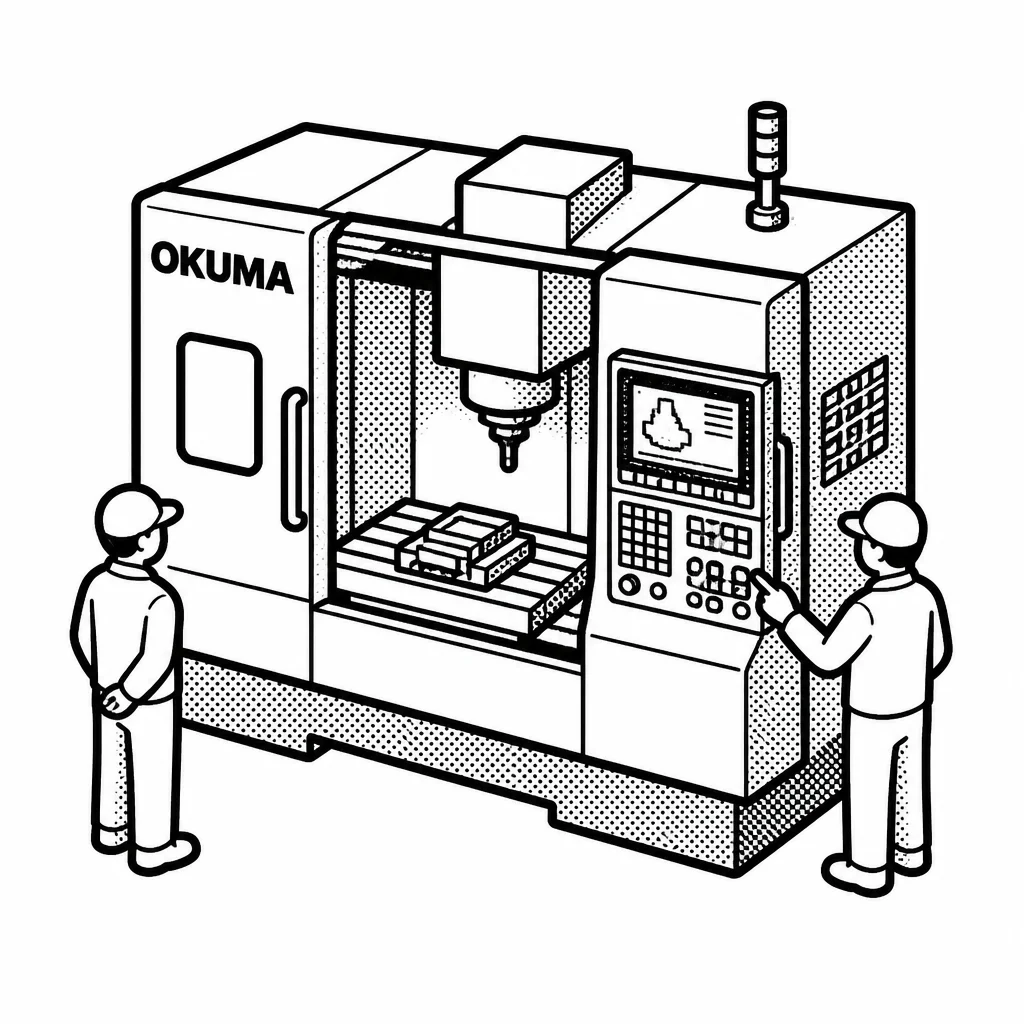
The key idea behind Okuma's business is control. A CNC machine is a tool that cuts metal, but a computer tells it exactly where to cut, how fast, and at what angle. Okuma is unusual because it builds both the machine and the "brain" that runs it — its own control system, called the OSP. Most rivals buy their controls from outside suppliers. By keeping that core technology in-house, Okuma can make its machines work more smoothly together, and it can sell customers a whole connected system rather than just a single tool. That in-house control is a big reason factories choose Okuma over competitors. Okuma sells to industrial customers worldwide — automakers, aerospace suppliers, and general manufacturers — through a mix of direct sales and distributors. Its competitors include other big machine-tool makers, and the business is famously cyclical: when factories are confident and spending, orders surge; when they pull back, orders dry up fast. That boom-and-bust rhythm is the single biggest thing to understand about the company. A big chunk of its sales come from outside Japan, so global manufacturing demand and currency swings both move the results.
The company is headquartered in Nagoya, Japan, a region with deep roots in manufacturing. Okuma has been around for over a century and built its reputation on precision and reliability. It plows money into research and development to keep its control technology and machines competitive, and it has pushed into automation and "smart factory" features that let machines monitor themselves and talk to each other. For a company this old, the bet is simple: stay at the front of the technology that makes factories more efficient, and customers will keep coming back when it is time to replace their machines.
Saved answer · last researched 15 Nov 2026