Understand any stock in simple English
Enter a ticker to learn what the company does and how it makes money.
CMOC Group Limited
CMOC is a mining company that digs up metals like copper, cobalt, molybdenum and niobium, then processes and sells them to industrial buyers around the world.
CMOC is one of China's biggest mining companies. It pulls metals out of the ground — mainly copper and cobalt, plus molybdenum, tungsten, niobium and some gold — and then processes and sells them to factories and industrial buyers. Its older business is molybdenum and tungsten, metals used to make steel tougher and tools harder. But the business that really moves the needle today is copper and cobalt, the ingredients behind electric car batteries and power grids.
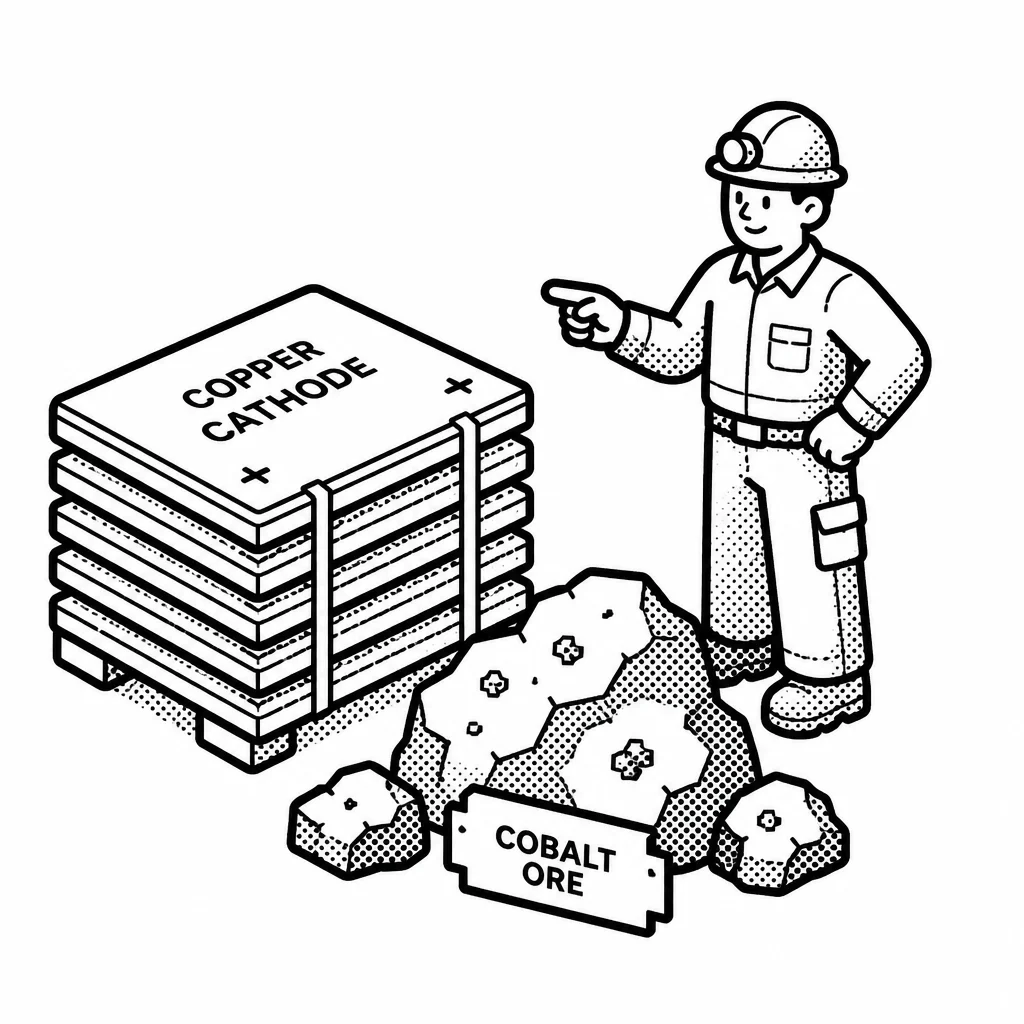
The company's most important asset is the Tenke Fungurume copper-cobalt mine in the Democratic Republic of Congo, one of the world's richest sources of cobalt. CMOC also runs the nearby Kisanfu mine and a big copper-cobalt operation in Congo's neighbor, plus niobium operations in Brazil and molybdenum and tungsten mines back home in China. In 2023, CMOC became the world's largest cobalt producer and a top-ten copper producer — a remarkable climb for a company that started out as a state-owned molybdenum processor in Luoyang. The money comes from selling metals at prices set by global markets, not by CMOC. So the company is a price-taker: when copper and cobalt prices are high, profits gush; when they slump, the balance sheet feels it fast. Cobalt has been especially painful. A flood of supply, much of it from Congo, pushed prices down sharply, and Congo's government responded by restricting exports to prop up the market. That's a real vulnerability: CMOC's biggest mines sit in a country with political risk, and its profits swing with commodity cycles it doesn't control.
CMOC's edge is scale and low cost. Its Congo operations are enormous and cheap to run, which lets it survive price downturns that crush smaller rivals. It competes with giants like Freeport-McMoRan and Glencore in copper and cobalt. The company has also been a prolific acquirer, buying assets from Freeport-McMoRan and others to build its Congo empire. Free cash flow tends to go back into expanding mines and occasional deals rather than splashy dividends, though it does pay a modest one. The bet is simple: the world needs far more copper and cobalt for electrification, and CMOC owns some of the cheapest sources of both — assuming Congo stays stable and prices eventually cooperate.
Saved answer · last researched 12 Nov 2026