Understand any stock in simple English
Enter a ticker to learn what the company does and how it makes money.
Quectel Wireless Solutions Co., Ltd.
Quectel makes small wireless modules that let machines and devices connect to the internet.
Quectel makes the tiny radio parts that let gadgets talk to the internet. Its modules — small circuit boards with a chip and antenna connections — get built into things like smart electricity meters, cars, payment terminals, and industrial sensors, so those devices can send and receive data over mobile networks or Wi-Fi. The company designs the modules and sells them to manufacturers, who solder them into their own products. It is a component supplier: most people will never see a Quectel part, but plenty of connected devices carry one inside.
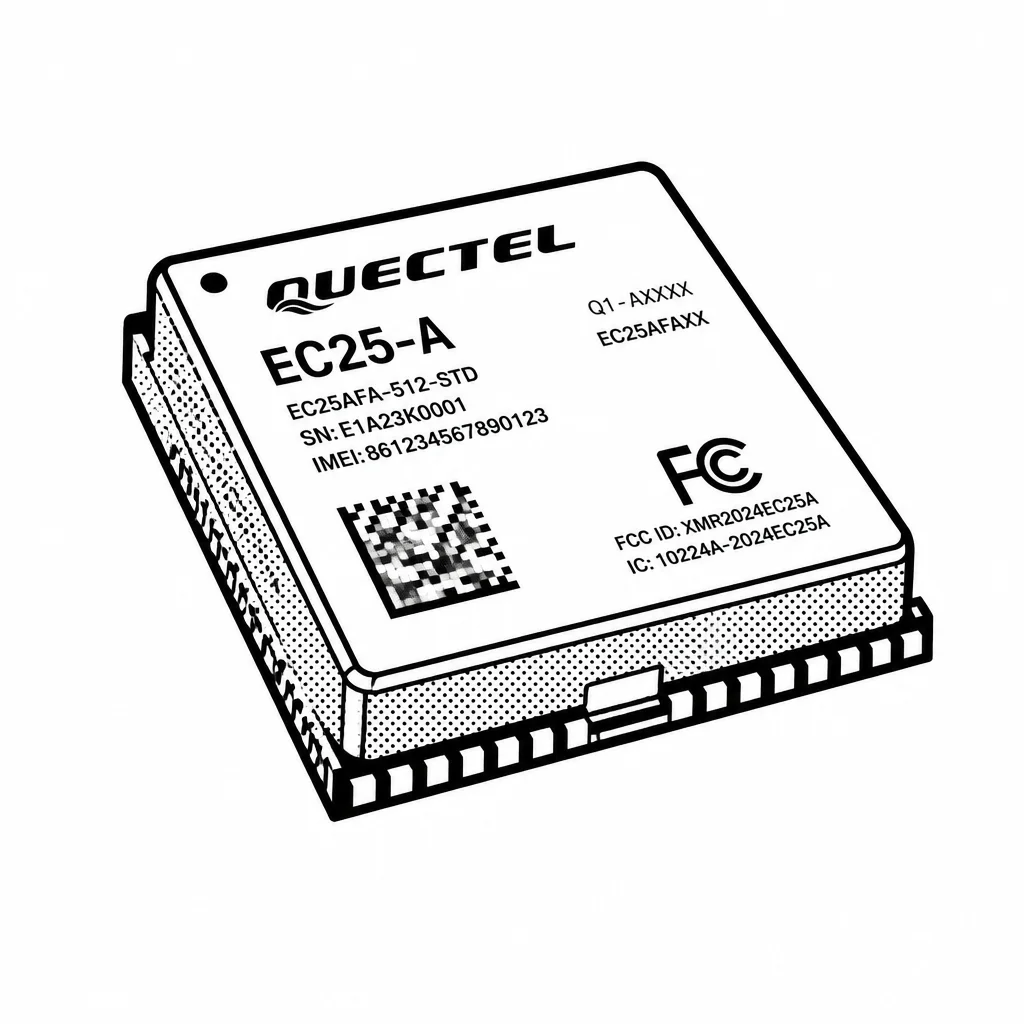
The big sellers are cellular modules. Every mobile generation has a standard, and Quectel builds modules for each, from old 2G hardware still used for cheap tracking to fast 5G modules for cars and fixed wireless gear. A manufacturer that needs its product to work on phone networks can buy a ready-made module instead of designing its own radio, which saves time and money and skips a pile of regulatory testing. The trade-off: modules are a commodity business, and Quectel competes on price, speed to market, and breadth of its catalogue. That catalogue is the company's real edge. Quectel is one of the largest makers of cellular modules and sells hundreds of variants, which means a customer almost always finds a part that fits. It also sells antennas and satellite modules, and it has pushed into automotive, where a single car can carry several modules for connectivity, navigation, and emergency calling — a market that is growing as cars become computers on wheels. The company is headquartered in Shanghai.
But the business has a nasty fault line. Quectel is a Chinese supplier with major sales to customers in the United States and Europe, and Western governments have grown suspicious of connected hardware from China. In 2024, Quectel lost Chinese supplier status in the United States when agencies moved to restrict its modules in government and critical infrastructure, citing national security concerns. The company has fought back, adding a factory in Canada and arguing that it does not give Chinese authorities access to customer data. That fight over trust — not the chips themselves — may be the biggest thing shaping Quectel's future.
Saved answer · last researched 14 Nov 2026