Understand any stock in simple English
Enter a ticker to learn what the company does and how it makes money.
Yangtze Optical Fibre And Cable Joint Stock Limited Company
It makes the glass strands and cables that carry light signals for internet and phone networks.
Yangtze Optical Fibre and Cable makes the physical stuff that the internet runs on: thin strands of ultra-pure glass that carry data as pulses of light, the raw glass preforms those strands are pulled from, and the cables that protect them underground and underwater. Telecom carriers and data center operators buy these products to build and upgrade their networks.
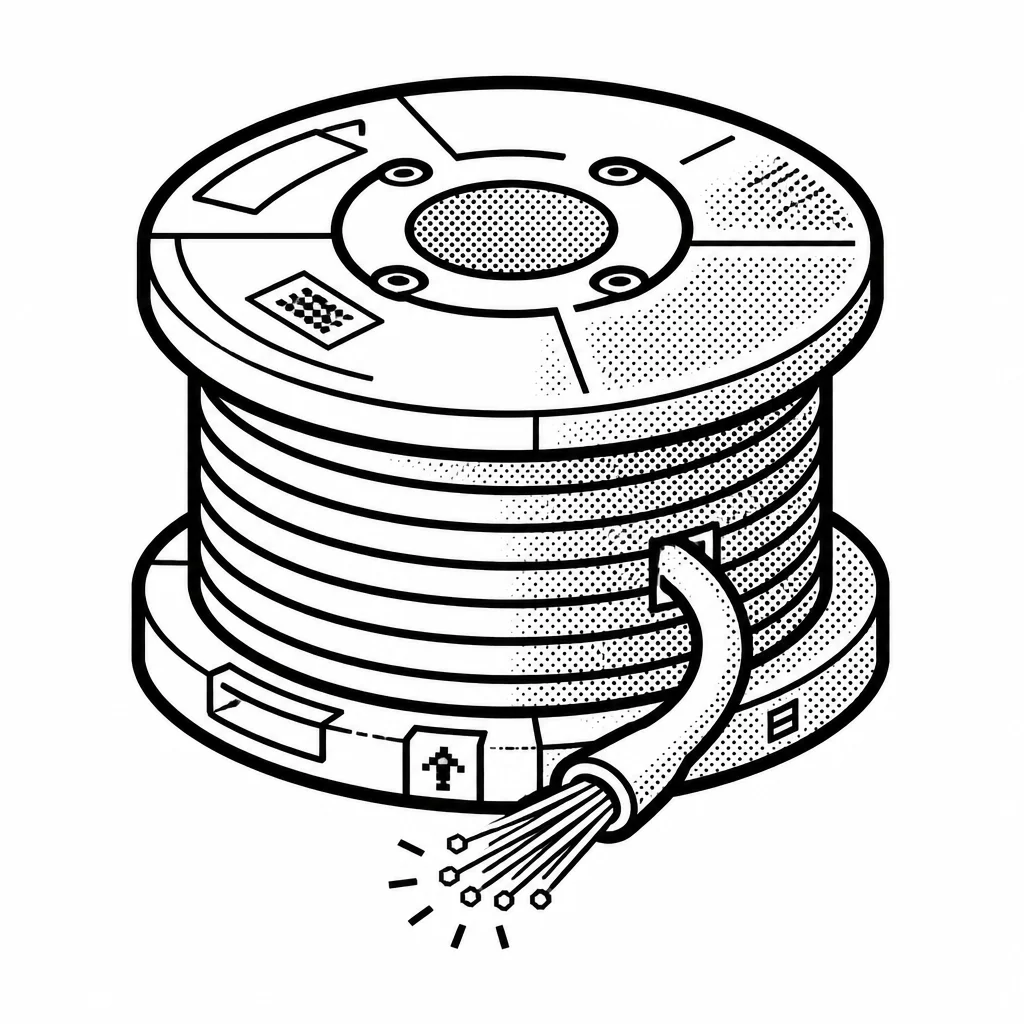
The business starts with a clever trick of chemistry. A glass fiber is basically a hair-thin pipe of glass with a slightly different glass core, so light bounces along inside it for miles without leaking out. The company makes the preform — a solid glass cylinder — then heats and draws it into kilometers of fiber. It sells that fiber, and it also wraps fibers into finished cables for the messy real world of streets, tunnels, and ocean floors. Customers pay for reliability and scale, because a network is only as good as the weakest cable in it. Its home market is China, where the big state carriers have spent years wiring the country with fiber, and where the company is a major supplier. It also sells abroad, including through a joint venture with Prysmian that makes optical cable. The fiber business is cyclical and price-sensitive: carriers build in waves, and when they pause, prices fall. Chinese fiber prices have been weak for years as capacity outran demand, which squeezes margins.
The company's bet for growth is that data centers and AI clusters need far more and faster fiber than old phone networks ever did. It has been pushing higher-value products like multicore fiber, which packs several light paths into one strand, and specialty fiber for sensing and industrial uses. It also invests in overseas manufacturing to sell around trade barriers. The key question is whether those premium products and foreign plants can offset the brutal price wars at home — fiber is, after all, a commodity with a lot of capable competitors.
Saved answer · last researched 12 Nov 2026