Understand any stock in simple English
Enter a ticker to learn what the company does and how it makes money.
PetroChina Company Limited
PetroChina pumps oil and gas out of the ground and turns it into the fuels, chemicals, and materials that keep cars, factories, and everyday products running.
PetroChina is one of the biggest oil and gas companies in the world, and it is basically China's national oil champion. It produces crude oil and natural gas, refines that oil into gasoline and diesel, and sells fuel through a huge network of gas stations across China. It also makes chemicals and new materials — the building blocks for plastics, fabrics, and countless industrial products.
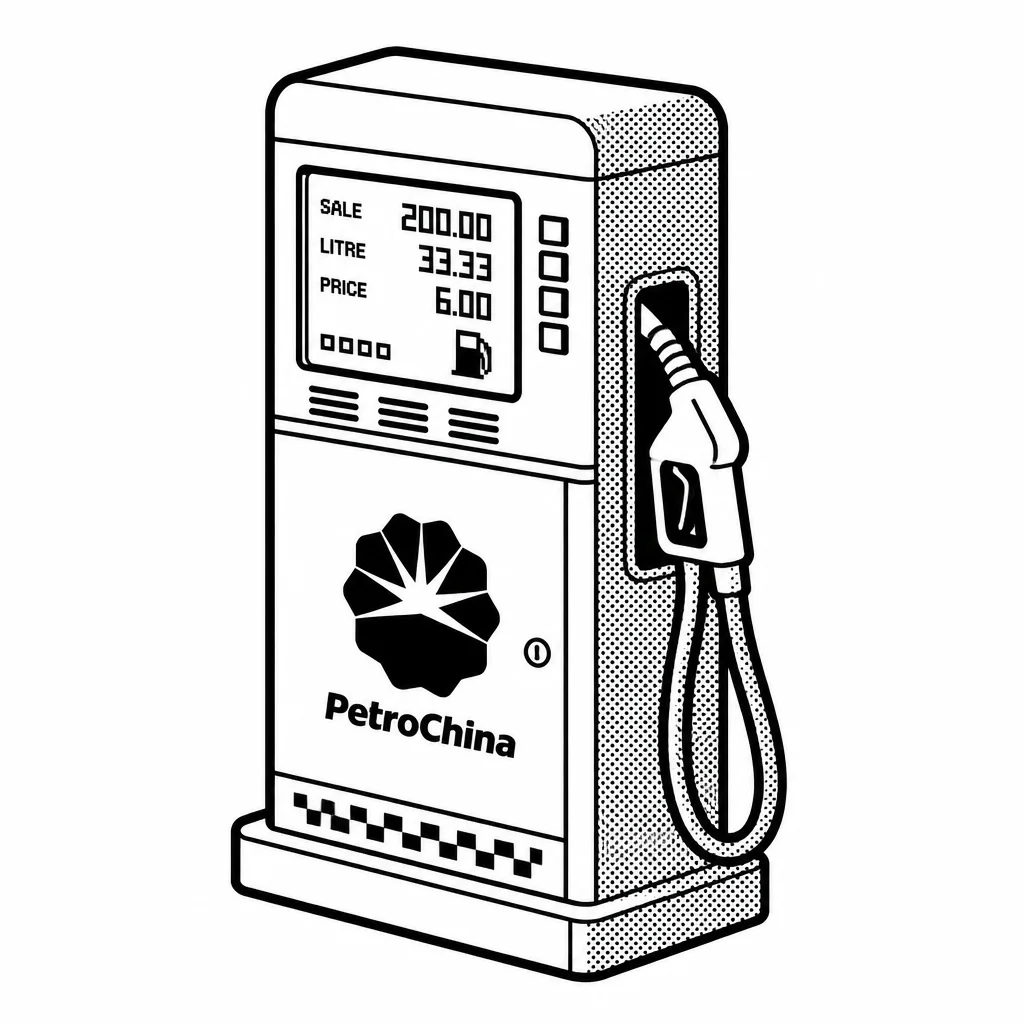
The business runs in segments. Upstream, it finds and pumps oil and gas out of the ground. Downstream, it refines crude into fuels and chemicals, and then sells them — mostly through its vast retail station network, where Chinese drivers fill up every day. It also pipes and sells natural gas, which has become a growing part of the story as China pushes cleaner energy. Most of its revenue comes from selling refined fuels and chemicals, but the oil it pumps itself is the engine behind the profits. PetroChina is controlled by China National Petroleum Corporation, the state-owned giant, which owns the majority of its shares. That gives it a special position: it is both a commercial company and a tool of national energy policy. Its size is a massive advantage — scale lets it spread costs across enormous volumes — but it also means it answers to the government on prices, fuel supplies, and strategic priorities. Fuel prices in China are largely set by regulators, so PetroChina does not always get to charge what the market would bear.
The company's fortunes swing with oil prices, which it cannot control. When crude is expensive, its drilling business makes more money; when it is cheap, refining and chemicals can suffer. It pays substantial dividends and invests heavily in exploration and new energy projects. It is, in short, a giant that keeps China moving — but one whose profits rise and fall with the price of a barrel of oil and the decisions of its government owner.
Saved answer · last researched 12 Nov 2026