Understand any stock in simple English
Enter a ticker to learn what the company does and how it makes money.
Beijing-Shanghai High-Speed Railway Co., Ltd.
It runs the high-speed train line between Beijing and Shanghai and sells tickets to passengers who ride it.
Beijing-Shanghai High-Speed Railway owns and operates the train line connecting two of China's biggest cities, Beijing and Shanghai. If you buy a ticket to ride the roughly 1,300-kilometer route, you are paying this company. It sells passenger tickets and also collects fees from other train operators that run their trains on its tracks, plus small bits of money from things like station advertising and network services.
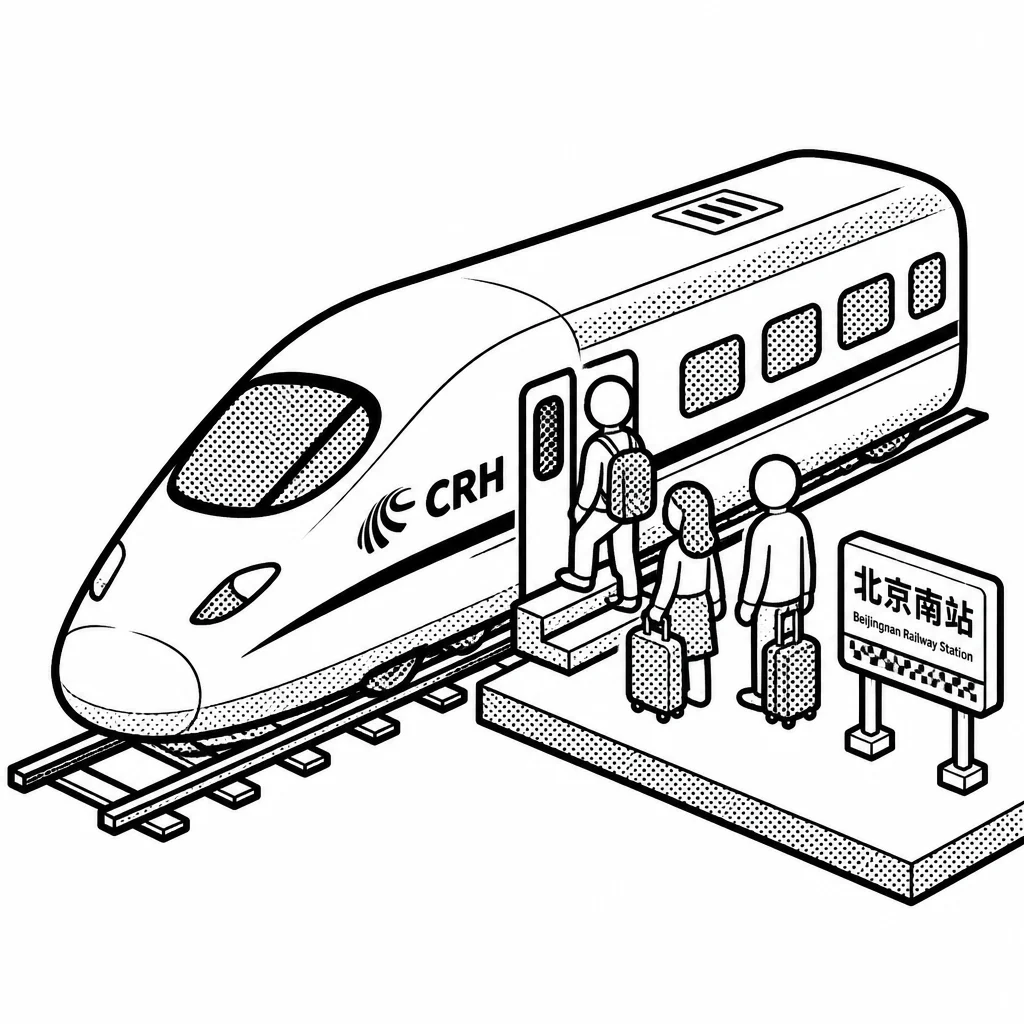
The business is strikingly simple: it built a very expensive piece of infrastructure, and now it collects a toll on every train that uses it. The line opened in 2011 and is one of the busiest high-speed routes in the world, carrying hundreds of millions of passengers a year. This is a "toll road" model with huge fixed costs — the tracks and stations are already paid for — so once the trains run, most of the extra revenue drops toward the bottom line. The main risk is that growth comes mostly from more people riding, since you cannot easily add a second track through dense cities. Demand is tied to China's economy and travel habits, and the company faces competition from airlines and from other rail lines. It also answers to the Chinese state, which sets fares and owns the parent railway group, so pricing is not fully in the company's own hands.
Because the line was built long ago and does not need constant rebuilding, it throws off a lot of cash. The company uses that money to pay down debt from construction, pay dividends to shareholders, and maintain the tracks. Investors treat it less like a growth story and more like a steady, cash-generating utility that happens to run the world's busiest high-speed railway.
Saved answer · last researched 12 Nov 2026