Understand any stock in simple English
Offshore Oil Engineering Co., Ltd.
It builds and installs giant offshore platforms and pipelines that pull oil and gas from under the sea.
Offshore Oil Engineering is the construction crew for the ocean oil business. When an energy company finds oil or gas under the seabed, someone has to design a steel platform, weld it together, float it out, and bolt it to the ocean floor. That someone is usually this company. It also lays the long underwater pipelines that connect wells to platforms and platforms to shore. Almost all its customers are state-owned oil giants and large energy firms, mostly in China, and it earns money through engineering, procurement, and construction contracts, plus installation work done by its fleet of specialized ships.
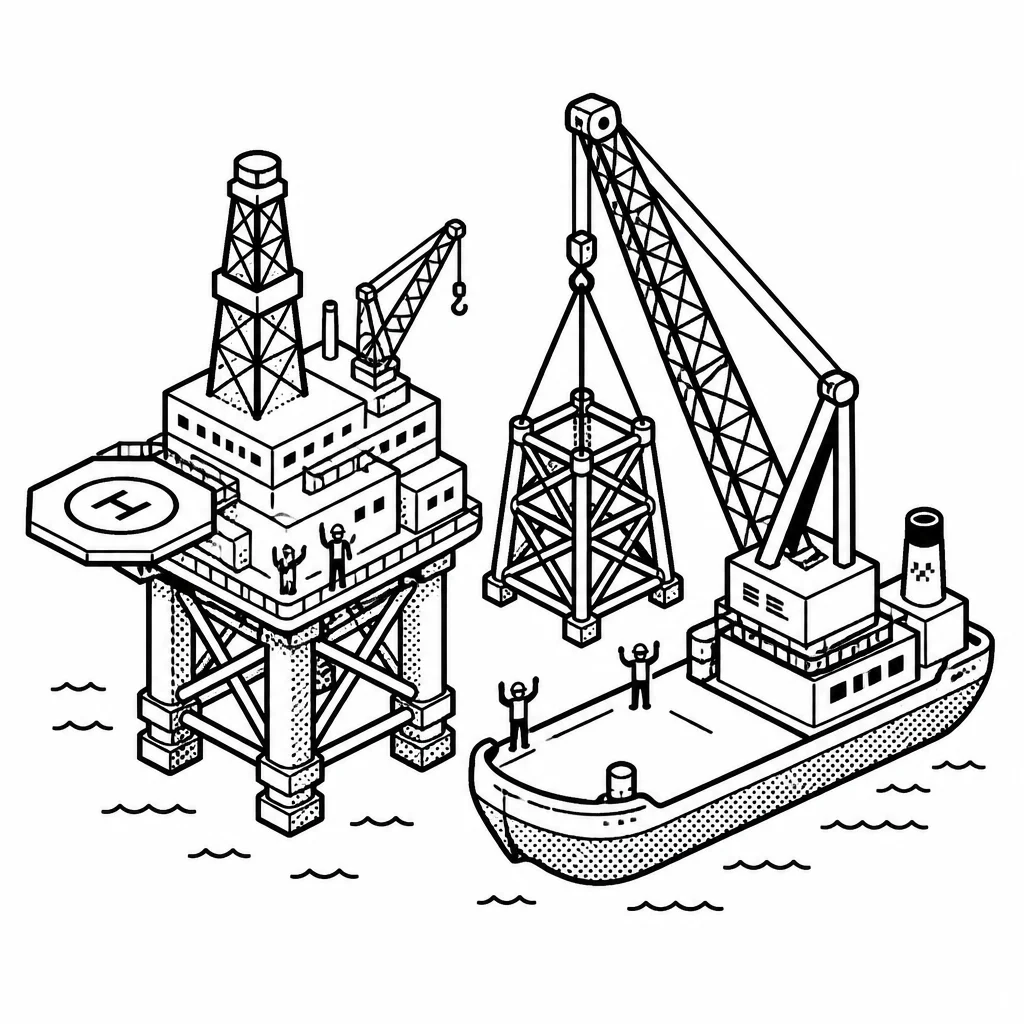
Think of it as the general contractor for a city built in the middle of the sea, except the "buildings" are drilling platforms and the "roads" are pipelines on the ocean floor. The business is lumpy: big projects take years and pay out in stages, so revenue and profit can swing sharply from one year to the next. It is also a deep-cycle business, meaning when oil companies cut spending because prices are low, orders dry up, and when they spend again, the order book refills. Recent years have brought a steady recovery in offshore spending, especially in China's push to develop its own oil and gas reserves, which has kept its project pipeline busy. The company is majority-owned by China National Offshore Oil Corporation, the country's main offshore oil producer, which both anchors it and ties its fortunes closely to that parent's plans.
Because the work is capital-heavy and the customers are few, the company lives and dies by its order backlog, the total value of contracts signed but not yet finished. That backlog is the number to watch, more than any single quarter's profit. Free cash flow tends to get reinvested into ships, equipment, and new yards rather than handed back to shareholders, since staying competitive means owning the specialized vessels that can lift thousand-ton structures onto the seabed. Founded in 2002 and listed in Shanghai, it plays a quiet but essential role: without companies like this, much of the oil and gas the world still burns would stay locked under the sea.
Saved answer · last researched 10 Oct 2026