Understand any stock in simple English
Enter a ticker to learn what the company does and how it makes money.
China Northern Rare Earth (Group) High-Tech Co., Ltd.
It mines and sells rare earth metals and the special materials and products made from them.
China Northern Rare Earth is one of the world's largest producers of rare earth elements — a group of 17 soft, silvery metals with names like neodymium, praseodymium, and lanthanum. These metals are not rare in the jewelry sense; they are the secret ingredients that make modern technology work. A tiny pinch of neodymium turns iron into a magnet powerful enough to spin a wind turbine or drive the motor in an electric car. Europium makes the red glow in older TV screens, and lanthanum helps refine crude oil. Almost every smartphone, fighter jet, and MRI machine depends on them.
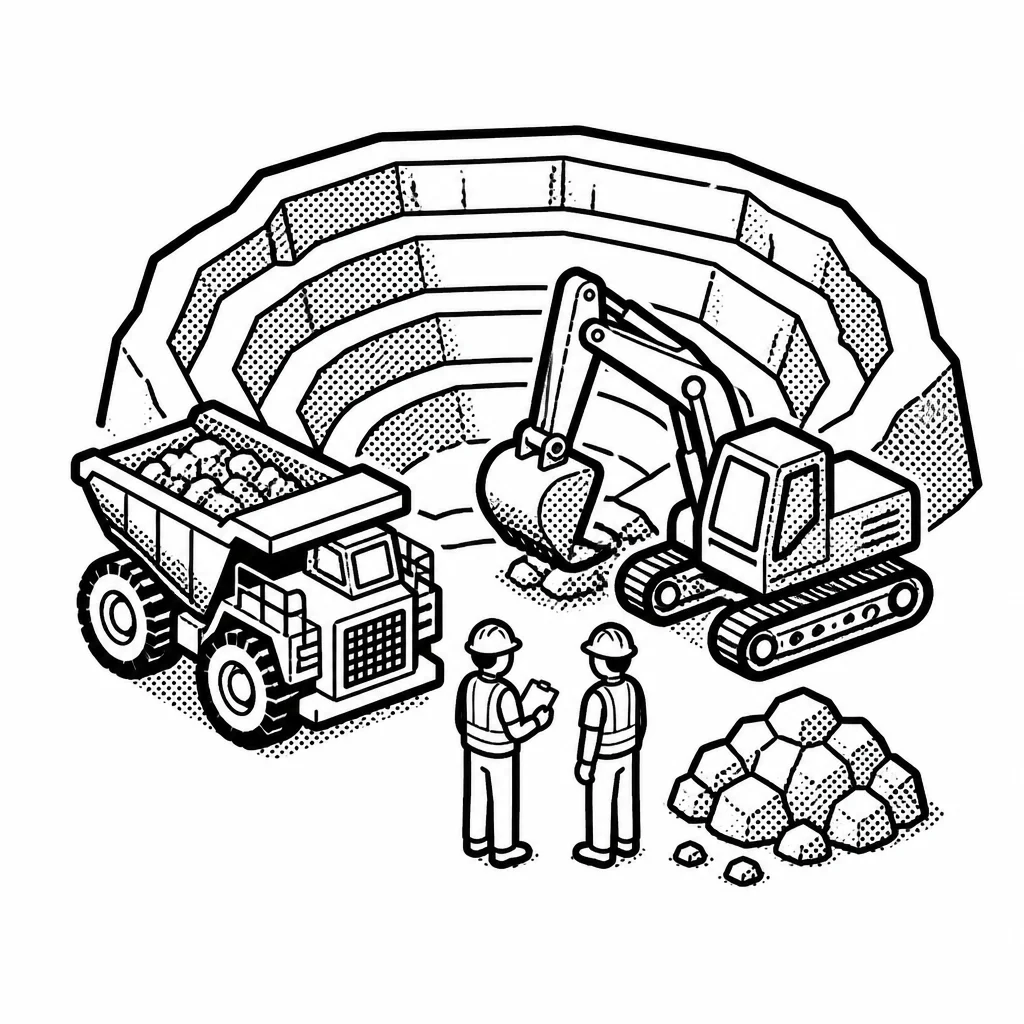
The company digs ore out of a massive mine called Bayan Obo in Inner Mongolia — a site so rich in rare earths that it is considered one of the most important mineral deposits on Earth. It then separates the metals from the surrounding rock, which is a dirty, complicated chemical process, and sells the raw oxides to other companies. But it doesn't stop there. It also turns some of those metals into finished magnets and other functional materials, and makes specialized products that go straight into industrial customers' hands. So its customers range from chemical traders who buy raw oxides to motor manufacturers who need high-performance magnets. Why do customers buy from this company instead of a competitor? Mostly because of cheapness and scale. China controls the vast majority of the world's rare earth refining, and this firm sits at the center of that machine. Its mine produces ore at a low cost, and its refining operations are enormous, which lets it sell at prices that smaller rivals in other countries struggle to match. That dominance has made rare earths a geopolitical flashpoint — the United States, Europe, and Japan have all poured money into building alternative supply chains because they worry about depending so heavily on China. For the company, that is both a strength and a risk: it benefits from China's near-monopoly today, but if other countries succeed in building their own mines and refineries, its pricing power could weaken over time.
Rare earth prices are notoriously volatile. They spiked in 2011 after China briefly restricted exports, then crashed when buyers found substitutes and stockpiled. They jumped again in 2020 and 2021 as electric vehicles and wind farms drove demand for magnets, then softened as new supply came online and economic growth slowed. The company's profits swing with these prices, which makes it a cyclical business rather than a steady one. It pays dividends, and it has used its cash to expand production capacity and move further into higher-value products like magnets, where margins are fatter than in raw ore. The big question for investors is whether that downstream push can offset the inevitable price swings in the commodity at its core.
Saved answer · last researched 12 Nov 2026