Understand any stock in simple English
Toso Company, Limited
Toso makes and sells interior goods like curtain tracks and curtain poles, mainly in Japan.
Toso makes the small, boring hardware that holds up the curtains in your home: the tracks that run across the ceiling, the poles that carry the fabric, and the parts that let everything glide and hang neatly. The company develops, manufactures, and sells these interior goods, and it does most of its business in Japan, where its name is well known in the home-furnishing world.
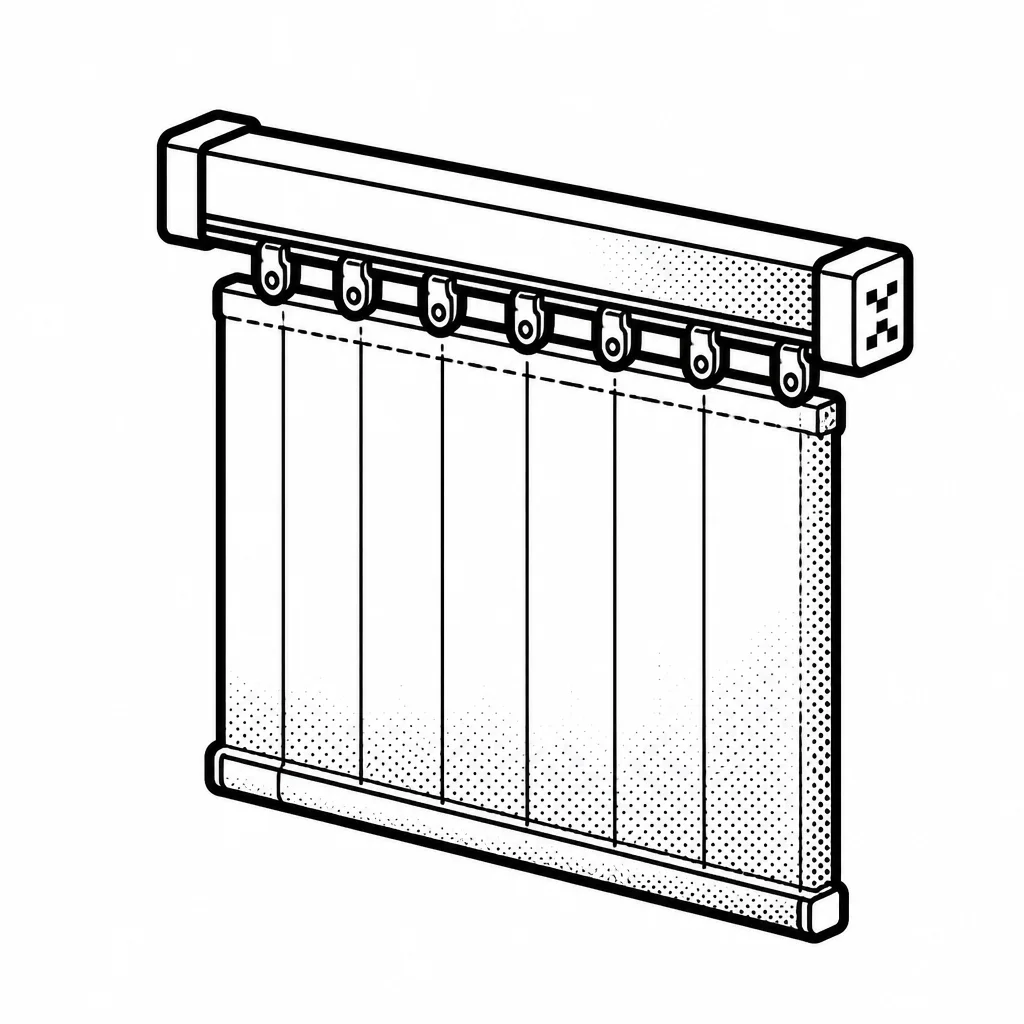
The money comes from selling those products to the people who need them: builders and contractors fitting out new homes and apartments, interior and furniture shops stocking the items, and ordinary consumers buying a new curtain rail or replacing a broken one. Because a curtain track is cheap and easy to overlook, most buyers simply pick whatever is handy at the home center, and Toso's job is to make sure its name is the one they see. It is a quiet, unglamorous business. Nobody gets excited about a curtain pole, but almost every home needs one, so demand is steady and tied to how much housing gets built and how many people move or renovate. That gives Toso a stable base, but it also caps how fast it can grow: the market is mature, and rivals can copy simple hardware.
Toso's real edge is its specialty and its local reputation, which make it a trusted supplier to Japanese builders and shops that want parts that fit and work without fuss. The flip side is that it depends heavily on one country and one narrow category, so a slowdown in Japanese homebuilding hurts, and growth means finding new products or new markets.
Saved answer · last researched 20 Nov 2026
BIG PICTURE
Toso is Japan's top curtain-rail maker, a title that matters in a market where it sells to builders and contractors
- 1% Toso
- 99% Others
Toso is Japan's top curtain-rail maker. Its rails, poles, and blinds reach builders, interior contractors, and retailers, and the company makes nearly all of its money from interior decoration. That marketshare puts it at the center of a quiet business: a company that most shoppers never think about but that sits in millions of Japanese homes. Source: Nikkei, data from 2026
Timeline
A Company Built Around Curtains
In 1949, a small Tokyo company called Tokyo Sobi Kogyo started making interior products, mainly the tracks that curtains hang from and the blinds that cover windows. It was a simple idea about a simple thing, but it gave the company a clear place to stand.
The C Type Curtain Track
A few years later, the company launched its C Type metallic curtain track, an early product that became a core part of the business. Curtain rails were the category it would come to lead at home, and this was where that base was laid.
The Name Becomes TOSO
In 1961 the company changed its trade name to TOSO, and in 1972 it settled on the name it still uses today. A new name was a small thing on paper, but it marked a company growing past its founding identity.
Japan's First Free-Size Curtain Track
The next big step in its core line came in 1971, when it introduced Japan's first free-size, extendable curtain track, the Adjusta-101 Sets. It was a genuine innovation in a humble product, and it kept the company ahead of its rivals.
Fuji Home Joins the Group
In 1976, Fuji Home became a subsidiary, pushing the company beyond curtain hardware into a wider range of home interior products. The move hinted that its ambitions reached past the window.
A Swiss Partner for Curtain Tracks
A few years later it set up a joint venture with Silent Gliss of Switzerland, bringing a European curtain-track partner into its product and technology base. The tie-up showed the company was now looking abroad for know-how, not just selling at home.
Onto the Stock Exchange
In 1996 the company listed on the Second Section of the Tokyo Stock Exchange. That gave it access to public capital and a much broader set of investors, a sign it had grown into a serious public company.
Reaching into Europe
In 2011 the company established TOSO Europe, extending its presence onto the continent. That same year, Fuji Home was established, keeping the home-interior side of the business growing alongside the push overseas.
A New President
In June 2024, Makoto Yaeshima became president, succeeding Keiji Maekawa. Yaeshima had been a director since 2019 and had run administration before taking the top job, so he knew the company from the inside.
The Challenge Beyond Housing
In the final phase of its Vision2025 plan, running through 2026, the company pushed growth in non-residential, overseas and new businesses while trying to earn higher margins. Sales in Japanese housing held up, and price revisions lifted gross margin to about 41 percent in the year ended March 2026, with return on equity at 4.4 percent. But the housing market at home keeps shrinking, and the central challenge remains the same: building a future beyond housing.