Understand any stock in simple English
Innodisk Corporation
Innodisk makes rugged flash storage and memory products for industrial and enterprise customers.
Innodisk makes the memory and storage that go inside machines that are not allowed to fail. Think factory robots, medical scanners, cell towers, and airplane systems. These are tough environments where a normal consumer hard drive would die fast from heat, vibration, or constant use. Innodisk sells small flash storage modules and memory chips engineered to survive that punishment.
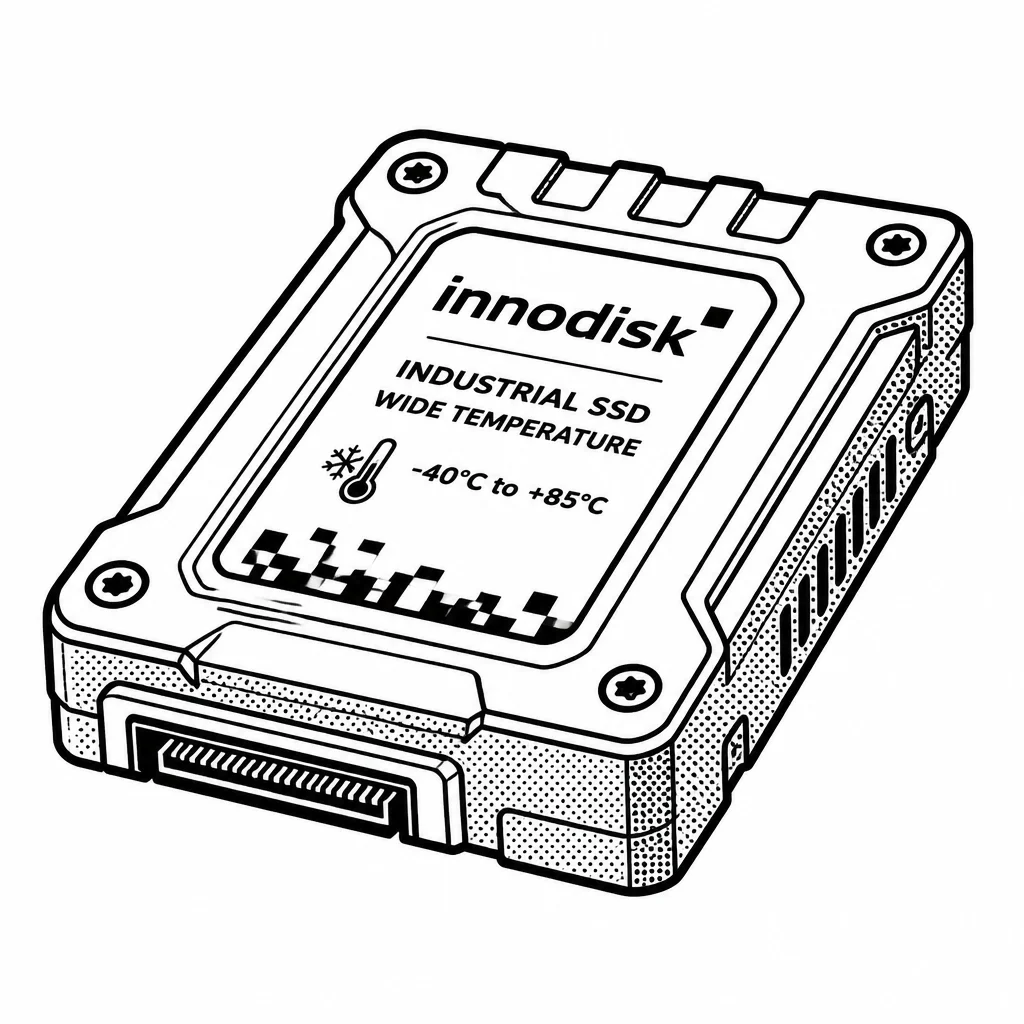
The company is headquartered in Taiwan and listed on the Taipei Exchange, which is where smaller and mid-sized Taiwanese companies often trade. Its customers are device makers and system builders, not consumers. Innodisk builds storage into their products, and those customers pay for reliability rather than the lowest price. That is the core of the business: you are not buying a commodity part, you are buying a part that keeps a hospital machine or a train control system from crashing. The products come in several forms. There are flash storage modules in many shapes and sizes, plus memory modules. Innodisk also develops its own software that helps manage how storage wears out, and it bundles in extra features like remote monitoring. That matters because industrial gadgets are often far away and expensive to physically inspect. A storage product that reports its own health is more valuable than one that simply dies quietly. Innodisk has pushed into newer areas like AI and edge computing, where machines process data on the spot instead of sending everything to a data center. That trend is a tailwind for anyone selling rugged storage. But the flash and memory chip industry is deeply cyclical, and memory pricing swings hard. Innodisk does not make the memory chips themselves. It buys them, assembles them into custom products, and adds toughness and software. That means it is exposed to chip prices while its real edge is reliability engineering and long-term customer relationships.
The biggest risks are straightforward. Memory chips are a boom-and-bust market, and a shortage or price spike squeezes margins. Competition is real, including from bigger storage makers and other Taiwanese and Japanese rivals. But industrial customers lock in designs for years and rarely switch suppliers over a few cents, since a failure is far costlier than the part. That stickiness is the foundation of the business.
Saved answer · last researched 17 Nov 2026