Understand any stock in simple English
Enter a ticker to learn what the company does and how it makes money.
SAL Saudi Logistics Services Company
SAL handles the cargo that moves through Saudi Arabia's airports and runs the warehouses and supply-chain systems behind it.
SAL is the company that makes air cargo actually move in Saudi Arabia. When a plane lands loaded with boxes, mail, medical supplies, or electronics, SAL's people and machines take that freight off the aircraft, sort it, store it, clear it through customs, and send it on its way to the consignee. It also runs the big cargo terminals at the kingdom's main airports, including King Abdulaziz International in Jeddah and King Khalid International in Riyadh, and adds warehousing and supply-chain services on top. Think of it as the airport's cargo department plus the warehouse brain behind it.
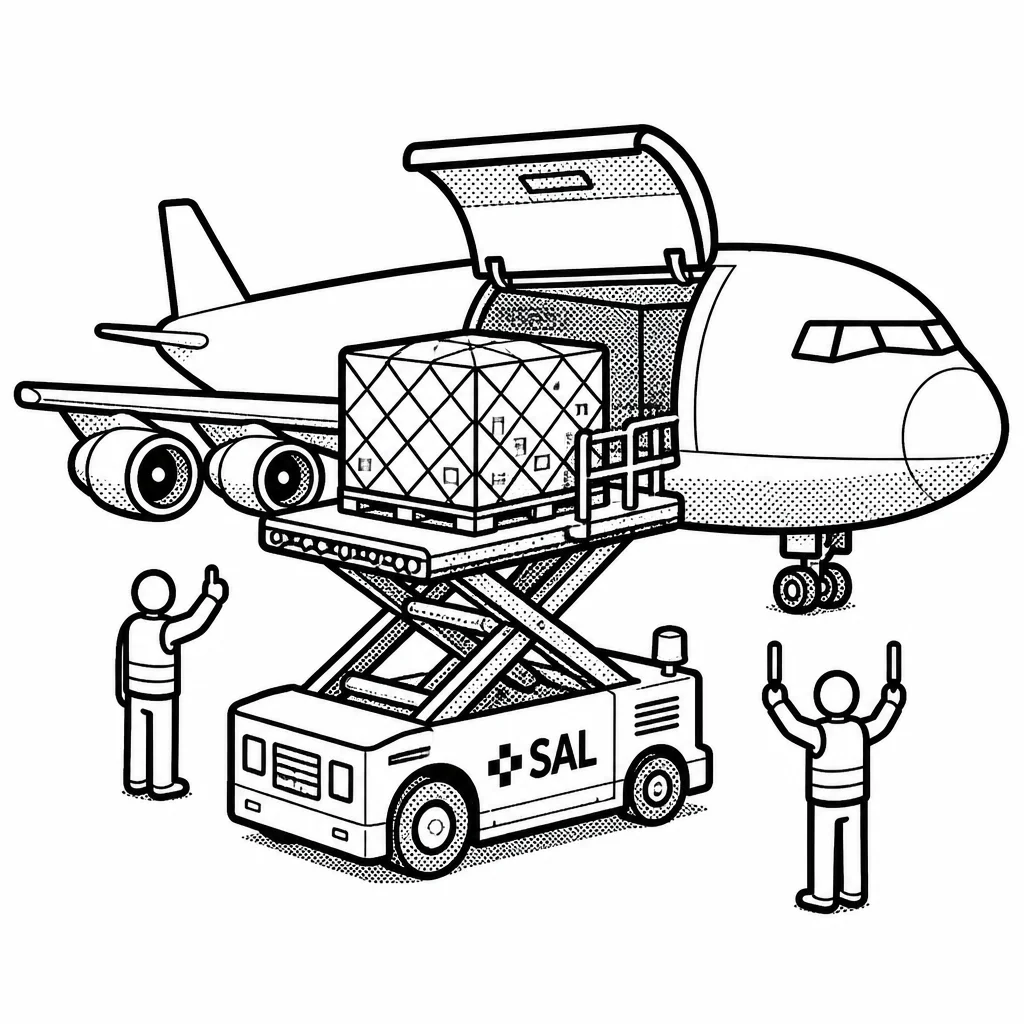
It earns money by charging airlines and freight forwarders for ground handling — unloading, loading, screening, and storing cargo — and by charging consignees and shippers for logistics services: warehousing, transport, customs support, and supply-chain management. Airlines choose SAL because they need a licensed, airport-anchored operator with the equipment and manpower to turn a plane around quickly, and because in Saudi Arabia there are limited alternatives for this kind of cargo handling. The business is deeply tied to air cargo volumes, and it sits at a crossroads of two strong forces: e-commerce and Saudi Arabia's push to become a regional logistics hub under Vision 2030. The company listed on the Saudi stock exchange in 2024 through an IPO that drew heavy demand from investors, with the proceeds going partly to the government and to fund growth. Its closest global cousins are handlers like Swissport-owned operations — though Swissport is privately held, so no ticker applies — and DHL Group in logistics, while in Saudi Arabia it competes with other ground-handling and logistics providers. The bigger point: SAL is a bit of a toll booth on the kingdom's air trade. As more cargo flies in and out, SAL gets paid for handling it, and its main risks are swings in trade volumes, airline customers cutting back, and capacity constraints at its terminals.
The company has been investing in expanding capacity and automation to keep up with rising e-commerce volumes, and it pays out dividends — a steady return for a business with fairly predictable, contract-based cash flow. It is not a glamorous business, but it is an essential one: the quiet machinery that turns a landed plane full of cargo into goods on shelves.
Saved answer · last researched 12 Nov 2026