Understand any stock in simple English
Enter a ticker to learn what the company does and how it makes money.
Saudi Ground Services Company
Saudi Ground Services handles the everyday work on the ground at Saudi airports — bags, passengers, planes, cargo and fleets — for airlines that pay it to do so.
Saudi Ground Services is the company that makes an airport actually work. When your plane lands, someone has to unload the bags, drive the stairs or jet bridge to the door, refuel and clean the cabin, push the aircraft back from the gate, and get passengers checked in and boarded. That someone, at Saudi commercial airports, is very often Saudi Ground Services. It is the ground handler: airlines hire it so they don't have to employ and coordinate all those people and machines themselves at every airport they fly to.
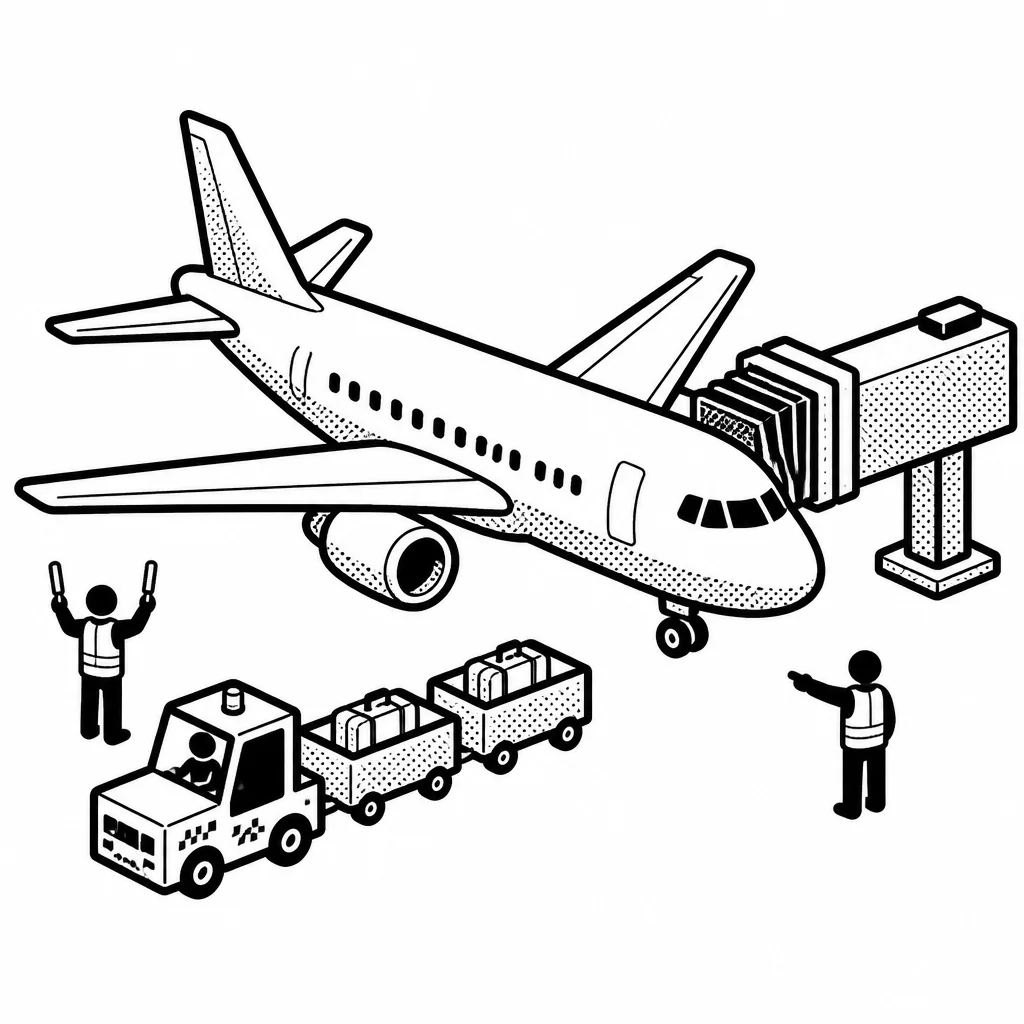
The business splits into a few practical pieces. On the ramp, the company moves baggage and cargo, tows and pushes aircraft, and runs the vehicles and equipment around the plane. On the passenger side, it handles check-in, boarding, and the desks and gates you walk past. It also runs fleet services — things like transporting crews and passengers around the airport. Airlines pay for these services per flight or per task, so the company's revenue rises and falls with how many planes land and take off at the airports it serves. Why do airlines hand this work over instead of doing it in-house? Because ground handling is labor-heavy, equipment-heavy, and full of tight timing. A late bag or a slow pushback delays the whole flight and cascades through the airline's schedule. A specialist that runs the same crews and equipment for many airlines at one airport can spread the cost and keep the operation moving. Saudi Ground Services is the big incumbent at Saudi airports, which gives it scale and a relationship with nearly every carrier that flies there.
That also points to what makes it vulnerable. Its fortunes are tied to air traffic in Saudi Arabia and to the country's push to grow tourism and aviation, which is a tailwind. But the work is contract-based, wages are a huge cost, and competitors — including airlines that decide to self-handle — can chip away at margins. Still, as long as planes keep landing in Saudi Arabia, the bags have to come off and the planes have to be pushed back, and that is the business.
Saved answer · last researched 12 Nov 2026