Understand any stock in simple English
Enter a ticker to learn what the company does and how it makes money.
Rokae (Shandong) Robotics Group Inc.
Rokae makes industrial, collaborative, and embodied intelligent robots and robotic solutions, mainly for customers in China.
Rokae is a Chinese robot maker. It builds the machines that work in factories and labs — robotic arms that weld, move parts, assemble things, and increasingly machines with enough sensing and software to handle tasks that used to need a human hand and eye. Its customers are mostly manufacturers and industrial firms in China who want to automate work that is repetitive, precise, or physically demanding.
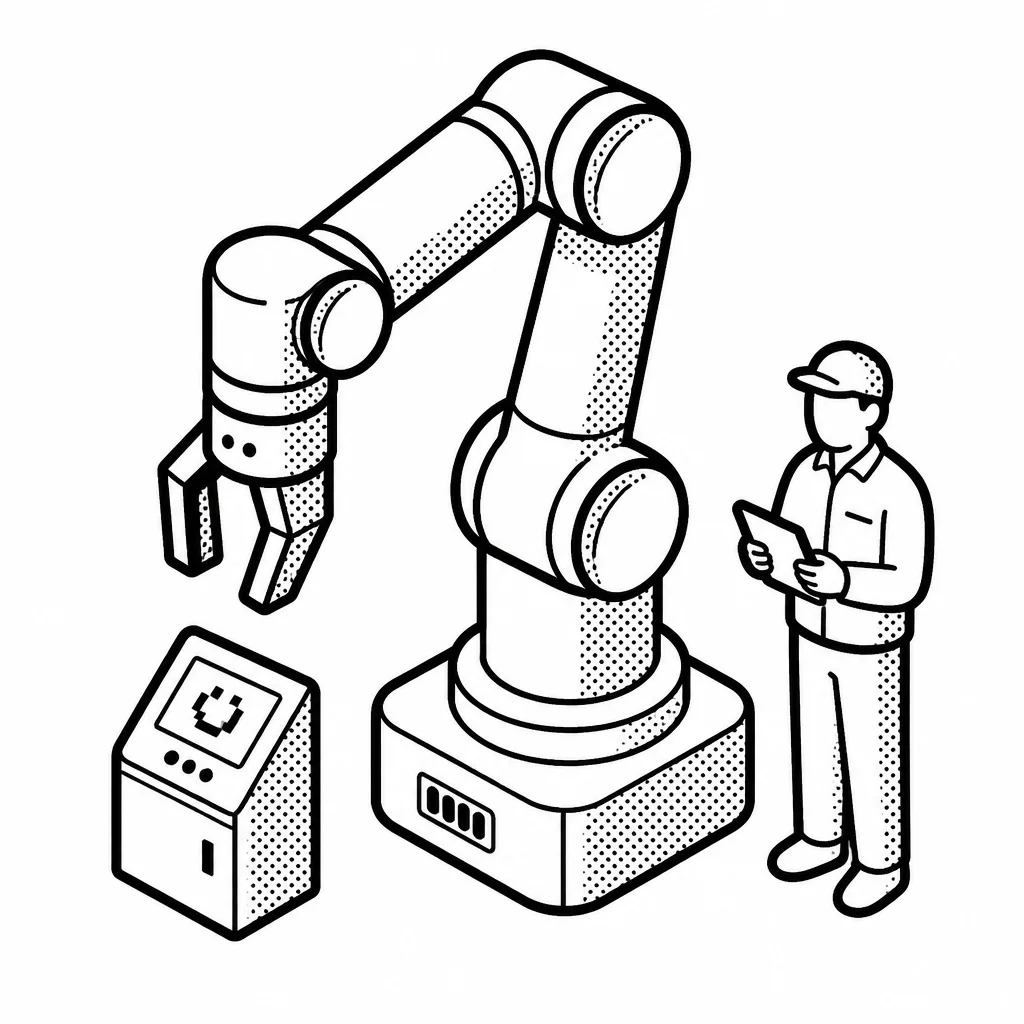
The company sells two broad kinds of hardware. Industrial robots are the heavy, fast, caged machines that do one job over and over on a production line. Collaborative robots — often called cobots — are smaller and designed to work safely alongside people, without a big steel cage between them. Rokae also pushes into what the industry calls embodied intelligent robots: machines that combine a body with sensing and AI-style software so they can adapt to messier, less scripted tasks. On top of the hardware, it sells robotic solutions — the integration, programming, and setup that turn a robot arm into a working station. The pitch to a factory is simple math. A robot doesn't get tired, doesn't call in sick, and holds the same tolerance on hour ten as on hour one. China's manufacturing base is huge and its wages have climbed for years, so the case for automation keeps getting stronger. Rokae's edge is being a local player in that market: closer to customers, tuned to their needs, and competing on price and service against larger global robot makers.
It is a young, fast-moving corner of the market, and that cuts both ways. Collaborative and AI-driven robotics are crowded with rivals, price pressure is real, and the technology is still maturing — a robot that "adapts" is much harder to build reliably than one that repeats a single motion. Rokae's bet is that Chinese factories will keep buying, and that the companies who pair solid hardware with smarter software will win the next wave of automation.
Saved answer · last researched 17 Nov 2026