Understand any stock in simple English
Enter a ticker to learn what the company does and how it makes money.
WIN Semiconductors Corp.
WIN Semiconductors makes the special compound semiconductor wafers and chips that power smartphone radios, Wi-Fi, and radar systems, mostly for other chip companies that design but don't build their own.
WIN Semiconductors is a contract chipmaker, but not the kind that makes the brains of computers. It makes the chips that handle radio waves — the parts inside a phone that send and receive signals, the guts of a Wi-Fi router, the radar sensor in a car. Its factories crank out wafers made of gallium arsenide and similar exotic materials, which are much better than ordinary silicon at handling high-frequency signals. Customers design these chips, and WIN builds them.
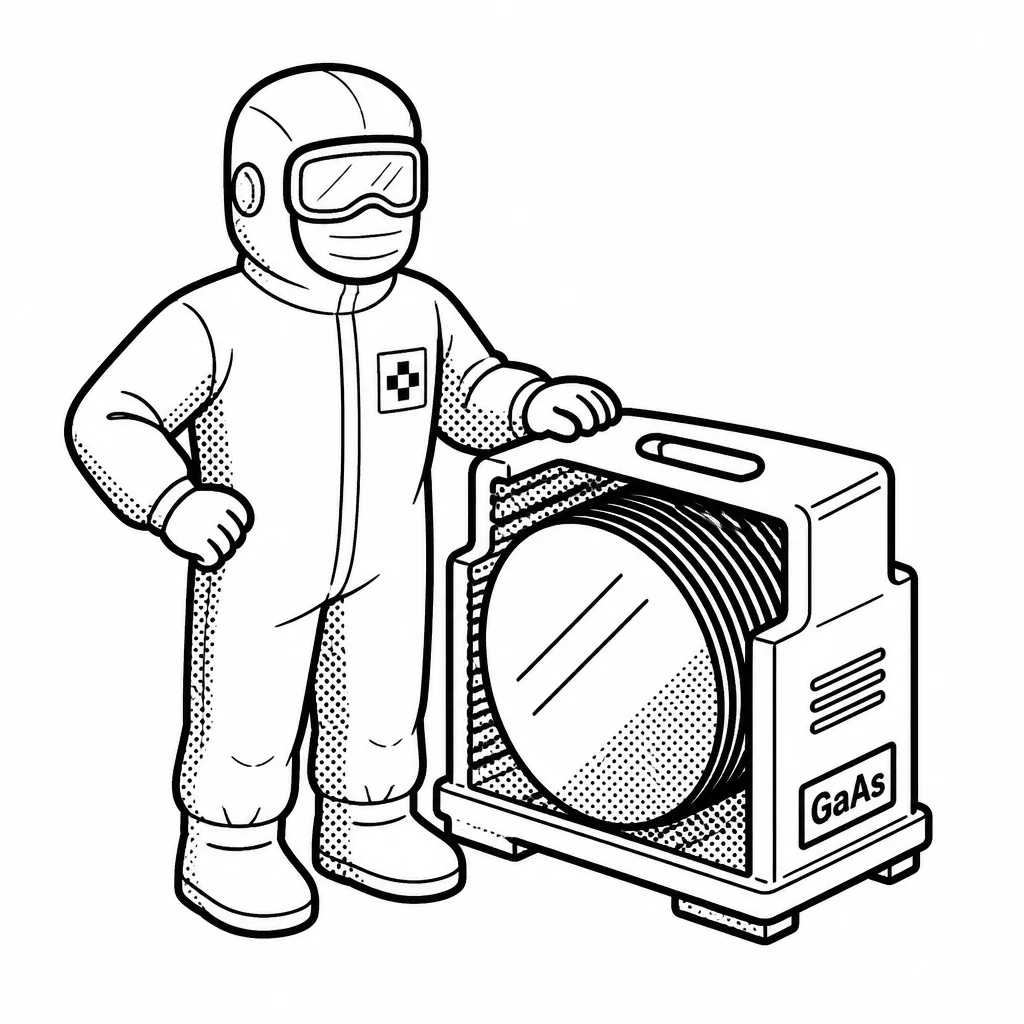
The business is a foundry, which means WIN doesn't sell chips under its own brand. It sells manufacturing capacity. Companies that design radio chips but don't want to spend billions building their own fabs hand their designs to WIN, which turns them into finished wafers. That makes WIN a quiet gatekeeper for a huge slice of the world's wireless gear — the smartphone in your pocket likely contains a chip or two that passed through one of its factories in Taiwan. The tricky part is that this is a feast-or-famine business. WIN has to spend heavily on factories and equipment before it knows exactly how much demand will show up. When phone sales boom and new wireless standards roll out, the fabs run hot and profits gush. When demand cools or customers build up too much inventory, the same factories sit half-empty and the fixed costs bite. It also faces competition from other compound-semiconductor foundries and from big chipmakers that sometimes bring work in-house.
So the real story with WIN is leverage: a narrow but essential niche, a heavy asset base, and a customer list that rises and falls with the global appetite for wireless gadgets. When the radio-chip cycle is strong, WIN is one of the best-positioned suppliers in the world. When it turns, the same specialization that makes it valuable also makes it exposed.
Saved answer · last researched 15 Nov 2026