Understand any stock in simple English
MatsukiyoCocokara & Co.
It runs drugstores and pharmacy counters across Japan, selling medicines, cosmetics, snacks, and everyday health products to shoppers.
MatsukiyoCocokara runs one of Japan's biggest drugstore chains, the kind of brightly lit neighborhood shop where you can pick up toothpaste, a bag of rice crackers, cheap makeup, and a prescription refill all in the same visit. Walk into a Matsumoto Kiyoshi store and you see shelves packed with medicine, skincare, and daily essentials. Walk into a Cocokara Fine store and you get much the same thing under a different sign. The company was formed by merging those two chains, and it also runs insurance dispensing pharmacies — the counters that fill doctor's prescriptions and get paid partly by Japan's national health insurance system.
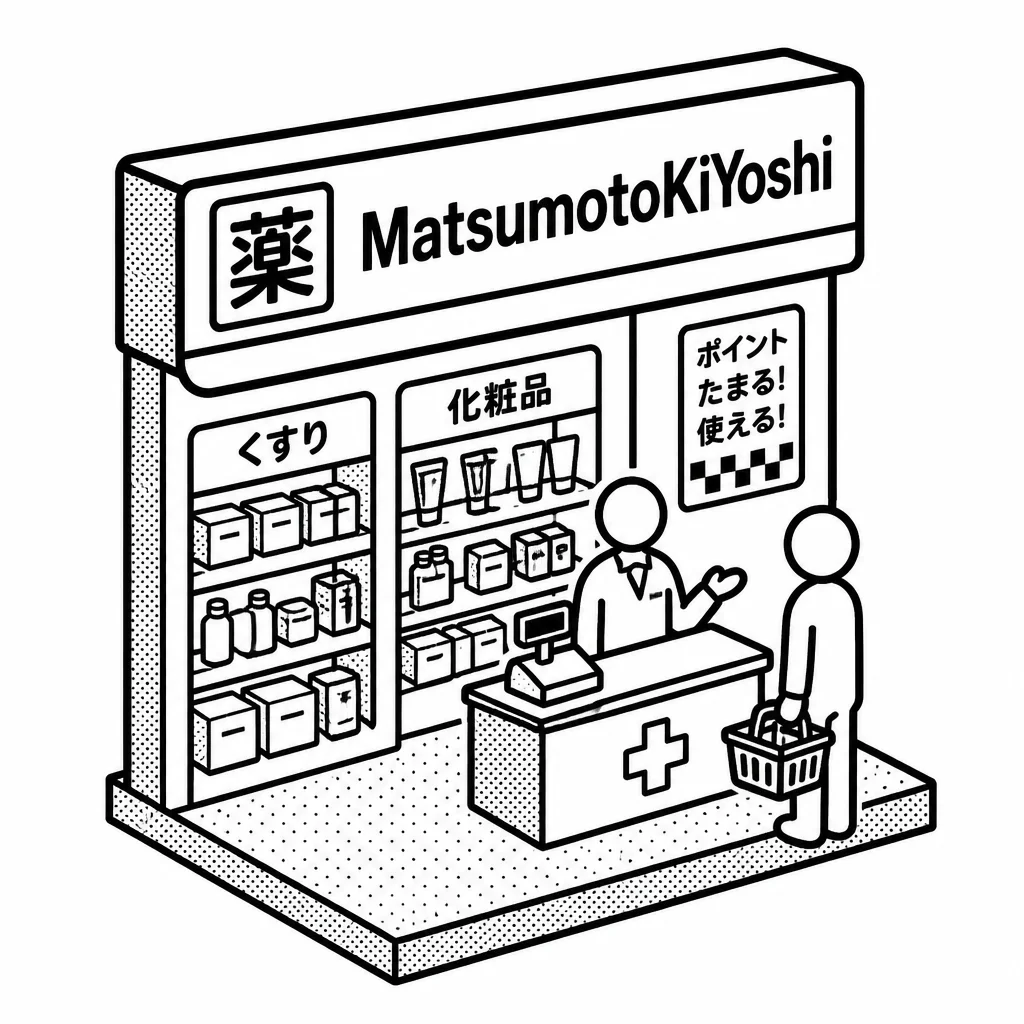
The business makes money at the cash register. Shoppers pay for the goods; for prescription dispensing, the health insurance system reimburses the pharmacy for its work. Drugstores in Japan are a crowded, low-margin game, so the real lever is scale: buy in huge volumes to keep prices low, run stores efficiently, and build a loyal base through private-label products and membership points. Matsumoto Kiyoshi is the brand most shoppers recognize, helped by heavy TV advertising and a long history of promoting its own-brand goods. The merger that created this company was a defensive move as much as a growth one. Japan's population is shrinking and aging, and drugstore rivals keep consolidating to survive. By combining forces, the two chains gained purchasing power and a bigger national footprint, and the pharmacy side gets a lift from an aging population that fills more prescriptions. Competition is fierce, though: rivals like Welcia Holdings and Sugi Holdings fight for the same street corners, and discount chains and convenience stores keep nibbling at the everyday-goods business. The company also has to keep up with Japan's shifting rules on how pharmacies are paid and how medicines are sold. A few things make it stronger than it looks. Its store network is enormous and reaches deep into local neighborhoods, and its private-label lines carry better margins than branded goods. But it is still a retailer selling other people's products in a country with fewer shoppers each year, so growth has to come from grabbing share, expanding pharmacy services, and squeezing costs. It is a steady, cash-generating business rather than a fast-growing one.
Worth knowing: the company has been buying back its own shares in recent years, a sign that management sees the stock as cheap and has spare cash after funding stores. That is the kind of quiet decision that tells you something about a mature retailer — it is not pouring everything into new stores, because the market does not reward endless expansion anymore.
Saved answer · last researched 17 Nov 2026