Understand any stock in simple English
Enter a ticker to learn what the company does and how it makes money.
Southern Province Cement Company
Southern Province Cement makes and sells cement and clinker, the basic ingredients of concrete, mostly to builders in southern Saudi Arabia.
Southern Province Cement is a Saudi cement maker. It turns limestone and other raw materials into clinker and cement, the powder that gets mixed with water, sand, and gravel to become concrete. If you have seen a building, a road, or a bridge go up in southern Saudi Arabia, there is a good chance its bones came from a company like this one. Cement is not glamorous, but it is the foundation of everything else.
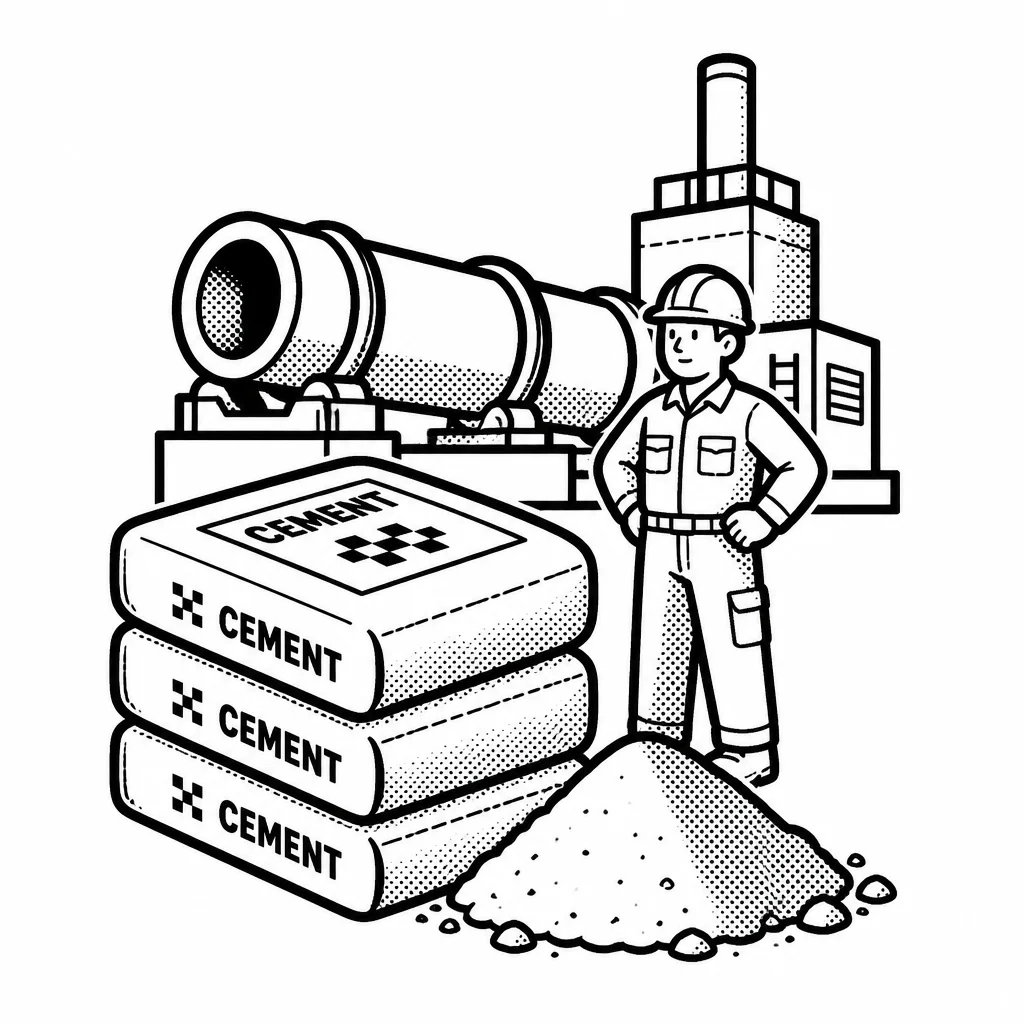
The company runs cement plants in the south of the country, serving construction companies, contractors, and concrete plants rather than individual homeowners. Its customers buy in bulk, and they choose a supplier mostly on price, reliability, and location. Cement is heavy and cheap per ton, so shipping it far eats the profit. That is why cement businesses tend to be regional. A plant near the customer wins on freight costs, and that natural moat is one of the quiet strengths of the industry. Cement in Saudi Arabia is also a boom-and-bust business. The government's big spending on infrastructure, housing, and mega-projects such as NEOM has kept demand for building materials strong in recent years, while the industry as a whole has wrestled with oversupply and price competition. The company earns money by selling cement and clinker, and its profits rise and fall with construction activity, energy costs, and the price it can charge per ton. Energy is a huge expense in cement making, because the kilns that turn raw materials into clinker run extremely hot.
Like most large Saudi cement producers, Southern Province Cement pays out a meaningful share of its profits to shareholders as dividends, which is one reason income-focused investors follow the stock. The business is capital-heavy and fairly simple: build plants, keep them running efficiently, sell as much cement as the local market will absorb, and return the leftover cash. Its fortunes depend less on clever strategy than on the health of the Saudi construction market and on how well it controls costs at its kilns.
Saved answer · last researched 12 Nov 2026