Understand any stock in simple English
Enter a ticker to learn what the company does and how it makes money.
Tripod Technology Corporation
Tripod Technology makes printed circuit boards — the thin boards that connect and hold the chips inside electronics — for memory modules, displays, servers, cars, and phones around the world.
Tripod Technology makes printed circuit boards, the green or blue slabs inside almost every electronic device that hold the chips and carry the electrical signals between them. If you open up a laptop, a server, a phone, or a car's control unit, there is a good chance a board made by Tripod is sitting inside, quietly doing the wiring job that makes everything else work.
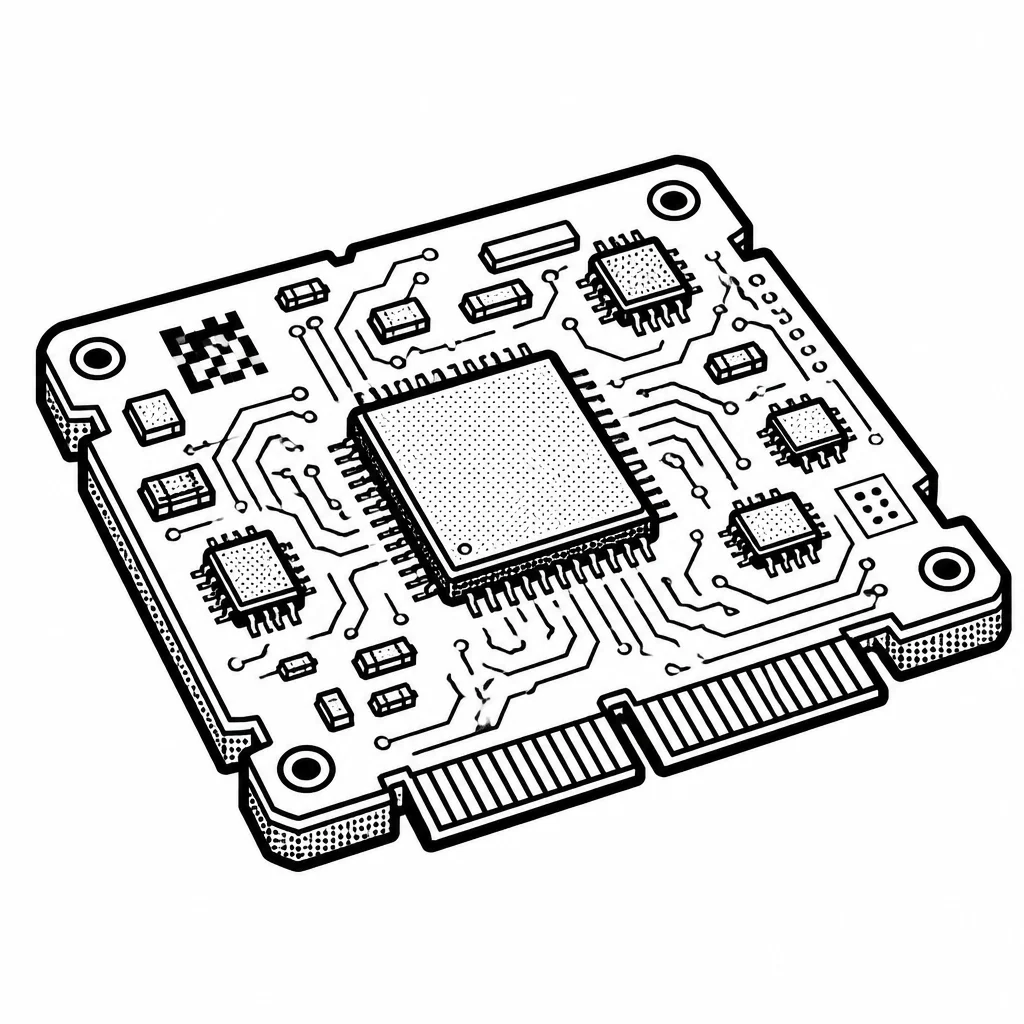
The company is based in Taiwan, the island that has become the world's densest cluster of electronics manufacturing. Tripod does not sell to you or me. It sells to the companies that build memory modules, display panels, servers, cars, and handsets, and those customers buy from Tripod because PCB manufacturing is a hard, precise, capital-heavy job that rewards scale and reliability. A board with a flaw can ruin an entire expensive device, so customers stick with suppliers they trust. Its boards go into several different worlds. Memory modules and displays are the older, steadier business. Servers are the fast-growing one, because the artificial intelligence boom has data centers buying enormous amounts of computing hardware, and every server needs boards. Automotive is the demanding one, since a car part has to survive heat, vibration, and years of use. Handling all of these at once spreads Tripod's risk: when phone demand sags, server demand can pick up the slack.
The PCB business is brutally competitive. Rivals across Taiwan, China, and Korea fight over the same orders, and customers push hard on price. Tripod's defense is scale, manufacturing know-how, and the willingness to build plants and invest in capacity ahead of demand. The catch is that building factories is expensive, so profits swing with how well those bets on future demand turn out. When the AI server wave is rolling, that looks smart; when demand cools, the fixed costs bite.
Saved answer · last researched 12 Nov 2026