Understand any stock in simple English
Enter a ticker to learn what the company does and how it makes money.
Anker Innovations Technology Co., Ltd.
Anker makes and sells its own branded consumer electronics — phone chargers, power banks, speakers, security cameras, and more — mostly to shoppers in the US, Europe, and Japan.
Anker is a consumer electronics company that sells its own brands, not a factory making stuff for other labels. You have probably seen its gear without registering the name: the compact wall charger that fits in a pocket, the power bank in a backpack, the little Bluetooth speaker on a kitchen counter. It started with charging accessories and is now a small family of brands aimed at slightly different shoppers — Anker for charging and power, Soundcore for audio, Eufy for smart home and security, and Nebula for portable projectors.
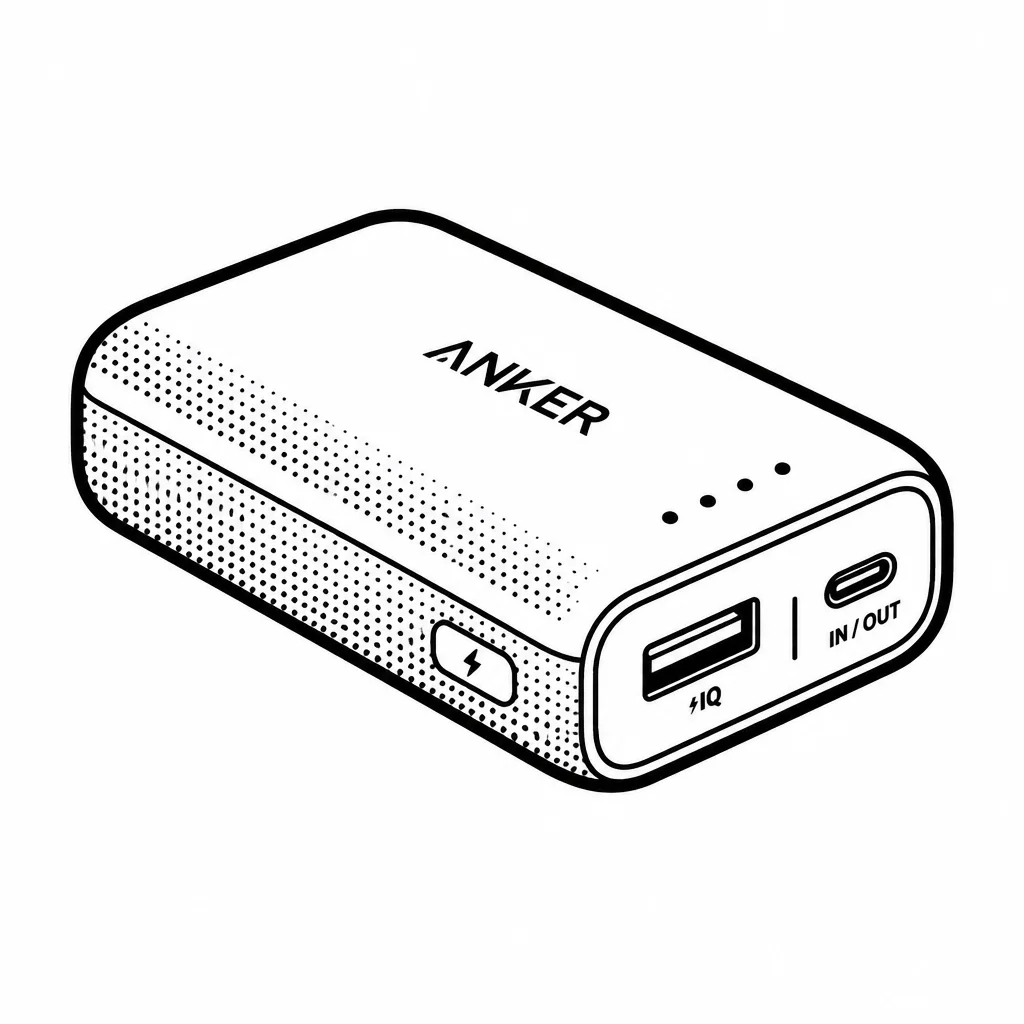
The core business is refreshingly plain. Anker designs the products, has factories build them, and sells them directly to shoppers — mostly through marketplaces like Amazon, plus its own websites and some retail partners. Customers pick Anker for the same reason they pick any good accessory brand: the product works, the price is reasonable, and it has thousands of reviews saying so. That review pile and the brand trust behind it are the real moat. Anker is not competing on a clever patent; it is competing on being the safe, well-liked choice in a crowded ocean of lookalike gadgets. The pressure comes from everywhere. Chinese rivals copy popular designs fast and undercut on price, and buyers can switch in seconds on an app. That is why Anker keeps pushing into new categories beyond charging — robot vacuums, security cameras, portable projectors, even 3D printers — where it can charge more and where the brand still helps. It is a treadmill: to keep growing, it has to keep finding new things to sell to roughly the same loyal customers.
The company is headquartered in Shenzhen, China's electronics manufacturing heartland, and listed on the Shenzhen Stock Exchange in 2020. Its annual revenue has grown to the multi-billion-dollar range, with most of the money coming from outside China — the US and Europe are its biggest markets. That makes trade policy a real risk for Anker, since tariffs on Chinese-made goods go straight to its costs and prices. Its size is also its cushion: a broad catalog and loyal buyer base give it room to absorb shocks that would sink a smaller accessory brand.
Saved answer · last researched 15 Nov 2026
BIG PICTURE
Anker's Solarbank holds 55% of Germany's balcony solar-storage market
- 55% German balcony solar-storage market held by Anker
- 45% All other sellers combined
Anker started with phone chargers, yet its Solarbank battery systems now hold 55% of the balcony solar-storage market in Germany, where renters and apartment dwellers can plug them in without an installer. Chasing that kind of niche, where a plug-and-play product fits a real gap, is how a charger brand stretches into home energy. Source: 华创证券 (Hua Chuang Securities), data from 2026
Timeline
A Battery Problem Starts Anker
A former Google engineer named Yang Meng went looking for a replacement laptop battery and could not find a good one. That frustration became a company: he founded Hunan Haiyi E-commerce and registered the Anker brand in California, selling a well-made replacement battery through Amazon into the US and Europe. The idea was simple and stubborn: build reliable, well-designed products instead of cheap goods that die fast. Monthly sales soon passed a million dollars, a hint that shoppers were hungry for exactly that.
The First Power Bank
The company opened a research center in Shenzhen and launched its first product designed in-house: an ultra-thin power bank. It also pushed into Japan, Spain and Canada through Amazon, testing how far the same playbook could travel.
PowerIQ and a Global Footprint
Anker built its own fast-charging technology, PowerIQ, which it says pushed the whole industry forward a step. It also set up subsidiaries in Japan, Hong Kong and the UK, creating a structure where one headquarters coordinates many local outposts.
One Brand Becomes Four
Anker started growing new brands from the inside: Nebula for projectors, Eufy for smart home gadgets, and Soundcore for audio. It was no longer just a charging company. It also opened stores on JD and Tmall to finally sell to shoppers at home in China.
A Big Bet From IDG
The company reorganized as a joint-stock company and listed on the New Third Board, a small market for young firms. Then IDG led a first financing round of 327 million yuan, valuing Anker at 3.6 billion yuan — real outside money betting the brand had room to grow.
A New Name and GaN Chargers
The company renamed itself Anker Innovations Technology, shedding its e-commerce label for a brand-company identity, and delisted from the New Third Board to chase better financing options. That same year it showed off chargers built with gallium nitride, a material that lets chargers run smaller and cooler — an early jump on a technology that would soon sweep the industry.
Anker Goes Public in Shenzhen
Anker listed on the Shenzhen Stock Exchange's ChiNext board. The shares more than doubled on the first day, pushing the company's market value to roughly 60 billion yuan. The battery hunter from a decade earlier was now a public company.
Anker SOLIX and Home Energy
Anker launched SOLIX, a brand for home energy products like a balcony solar system and a portable power station. Energy storage became a fast-growing second engine, with revenue climbing from under half a billion yuan to several billion in just a few years.
The Power Bank Recall
A supplier changed a core battery material without permission, creating safety hazards, and Anker had to recall millions of power banks around the world. The damage went beyond the recall itself: operating cash flow fell sharply and the company set aside about 100 million yuan for quality warranty. A brand built on trust had to earn it back.
A Second Listing in Hong Kong
Anker listed in Hong Kong, completing a dual listing and raising about 4.5 billion Hong Kong dollars. But the debut opened below the issue price and slid as much as 9% that day, while the Shenzhen shares also fell — investors were split on what the company was worth. The new money is meant for research, global branding and supply-chain upgrades as Anker pushes into AI, robotics and energy storage.