Understand any stock in simple English
Enter a ticker to learn what the company does and how it makes money.
Synspective Inc.
Synspective builds and operates small radar satellites and sells the pictures and monitoring data they produce to businesses and governments.
Synspective is a Japanese space company that puts small radar satellites into orbit and sells what they see. Its satellites use a technology called synthetic aperture radar, or SAR. Unlike a normal camera, SAR sends down its own radio pulses and listens for the echoes, so it can make images of the ground through clouds and in the dark. That matters because plenty of the places people want to watch — coastlines, farmland, forests, cities after a storm — are cloudy or unlit much of the time. A regular satellite camera is blind exactly when you need it most; Synspective's satellites keep working.
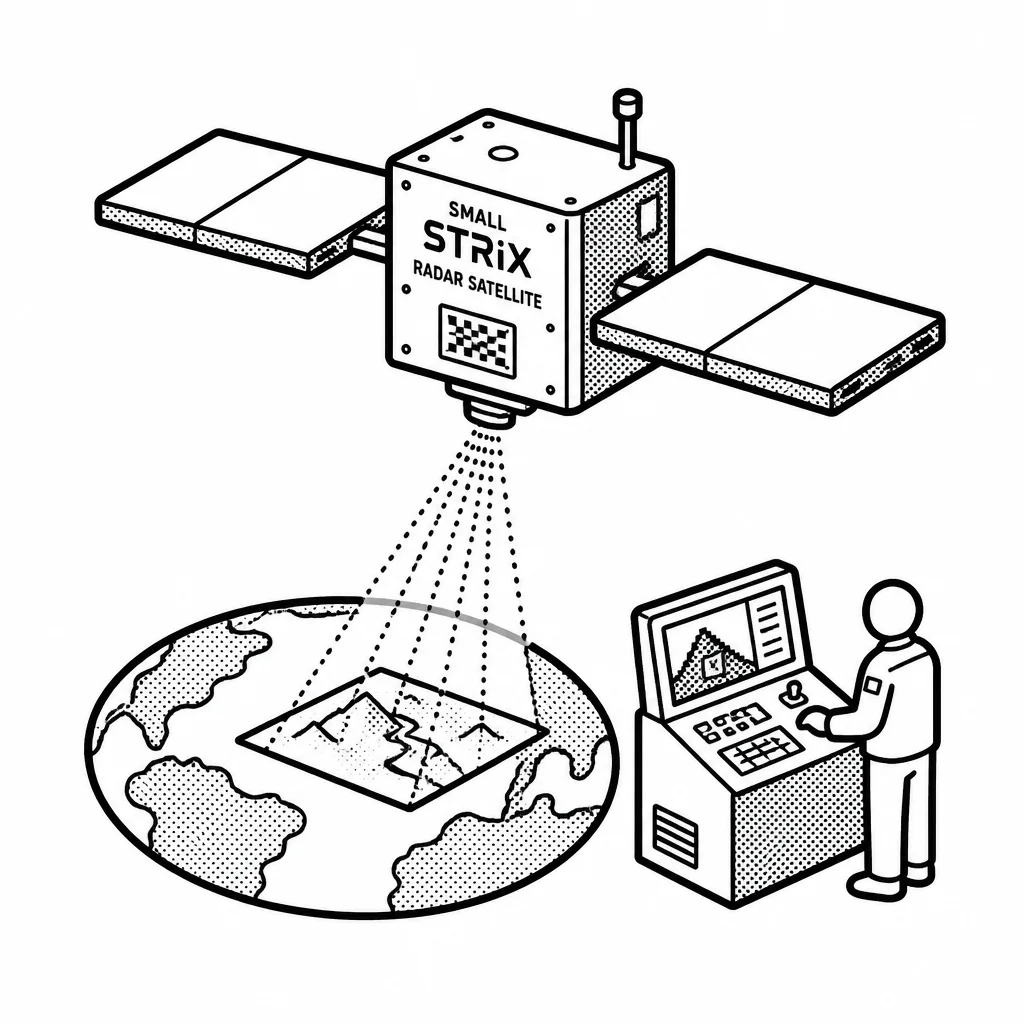
The company makes money in a few connected ways. It sells access to the imagery itself, and it sells monitoring services on top: software and analysis that watch a specific patch of ground over time and flag changes. A customer might use it to check whether a mine is sinking, whether a dam is stable, whether illegal logging is creeping into a forest, or how much damage a flood or earthquake caused. Those customers are typically governments, insurers, infrastructure operators, and big industrial firms — organizations that care about what is happening on the ground and are willing to pay for a regular, reliable look. Synspective also sells its own small satellites, which widens the business beyond just data. Its edge comes from the small-satellite approach. Traditional radar satellites are huge and expensive; Synspective builds compact ones and plans to fly a constellation of them, so it can revisit the same spot frequently rather than once in a blue moon. Speed and frequency of coverage are the product. The company listed on the Tokyo Stock Exchange's Growth market in 2024, raising money to keep building out that constellation. It is still a young, money-losing business — the classic space bet where you spend heavily on satellites and launches now and hope the data subscriptions pile up later.
The risks are real and worth saying plainly. Launching and operating satellites is capital-hungry and unforgiving; a failed rocket or a dead satellite is money gone. Competition in Earth-observation data is crowded, with well-funded rivals and cheaper alternatives, and turning raw imagery into recurring subscription revenue takes time. Synspective's whole story rests on whether enough customers decide that a frequent, cloud-proof view of their assets is worth paying for every month. If they do, the constellation becomes a valuable utility. If they don't, it's an expensive hobby in orbit.
Saved answer · last researched 14 Nov 2026