Understand any stock in simple English
Enter a ticker to learn what the company does and how it makes money.
E.SUN Financial Holding Company, Ltd.
E.SUN Financial is a Taiwanese financial group that runs a big bank plus securities, insurance, and venture capital businesses, earning money from lending, fees, and financial services.
E.SUN Financial is one of Taiwan's large financial groups, and its center of gravity is a commercial bank. Most people meet it as a bank: they open a savings account, take out a mortgage, swipe an E.SUN credit card, or borrow money as a small business. The group also runs securities brokerage, insurance, and venture capital arms, so it can serve a customer's basic banking needs and their investing and protection needs too. It serves both ordinary individuals and companies in Taiwan, and it has been expanding overseas.
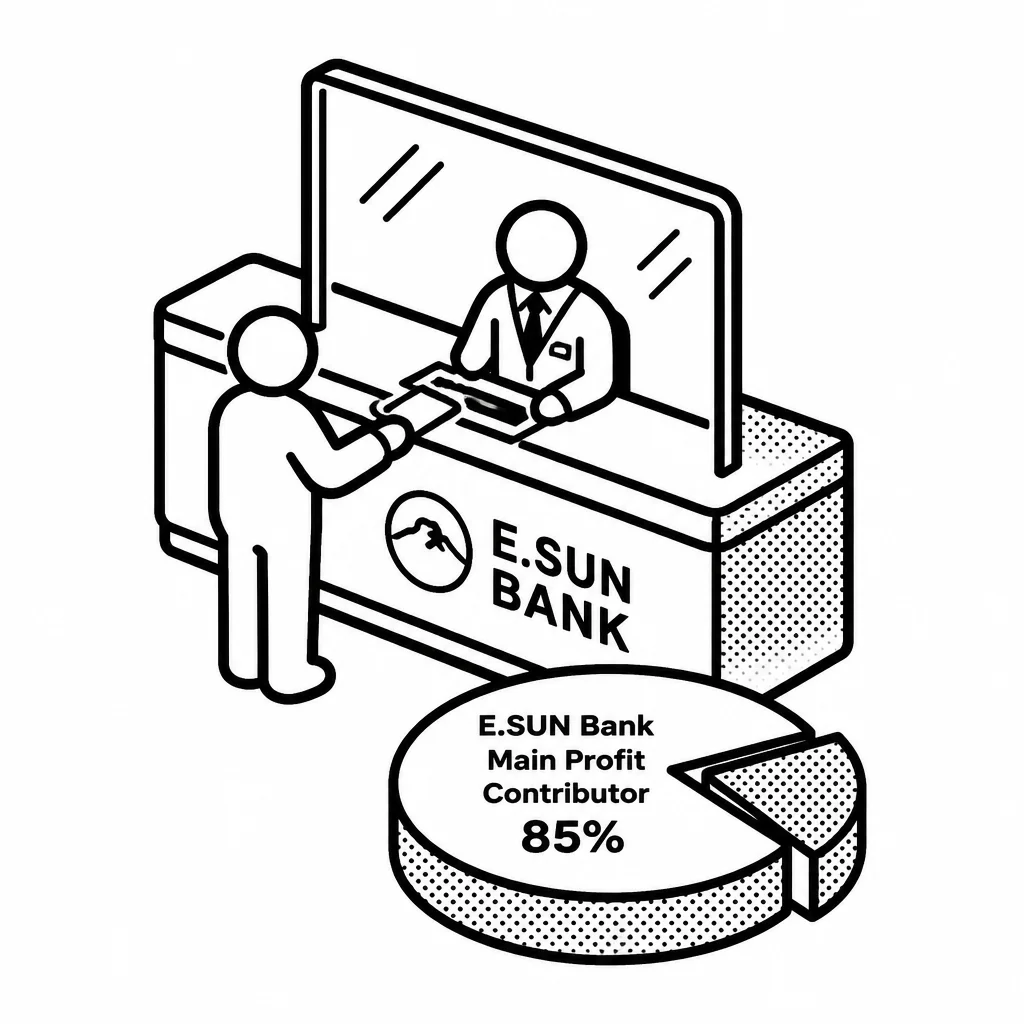
The money engine is straightforward. E.SUN takes deposits at low rates and lends at higher rates, keeping the spread. It also earns fees from credit cards, wealth management products, and brokerage, and its insurance arm collects premiums. Why do customers pick it? Mostly convenience and trust in a crowded market. Taiwan has many banks, and the big fights are over deposits, card usage, and wealth management. E.SUN built its reputation on service and a strong consumer brand rather than sheer size — it is not the island's largest lender, but it competes hard on cards, digital banking, and customer experience. Like all banks, its profits depend heavily on interest rates and credit quality: when rates rise, lending margins often widen, but loans can go bad in a weak economy, and regulators watch capital levels closely.
The group's free cash flow mostly feeds its lending machine: it needs capital to support loan growth, and it has historically paid steady stock dividends to shareholders. It has also pushed into overseas markets, which adds growth but also new risks and regulation. The simple takeaway: E.SUN is a well-run Taiwanese bank with extra financial businesses attached, making money by lending and selling financial services, and sensitive to rates and the health of Taiwan's economy.
Saved answer · last researched 12 Nov 2026