Understand any stock in simple English
Enter a ticker to learn what the company does and how it makes money.
Z.AI Co., Ltd.
Z.ai builds customized large-scale AI models for Chinese companies and runs them either on the customer's own servers or through the cloud.
Z.ai is an artificial intelligence company that sells customized large language models to businesses in China. Instead of offering one general-purpose chatbot to everyone, it works with each customer to adapt a big AI model to that customer's own data and industry, then runs the finished model either on the customer's own computers (on-premise) or over the internet from the cloud.
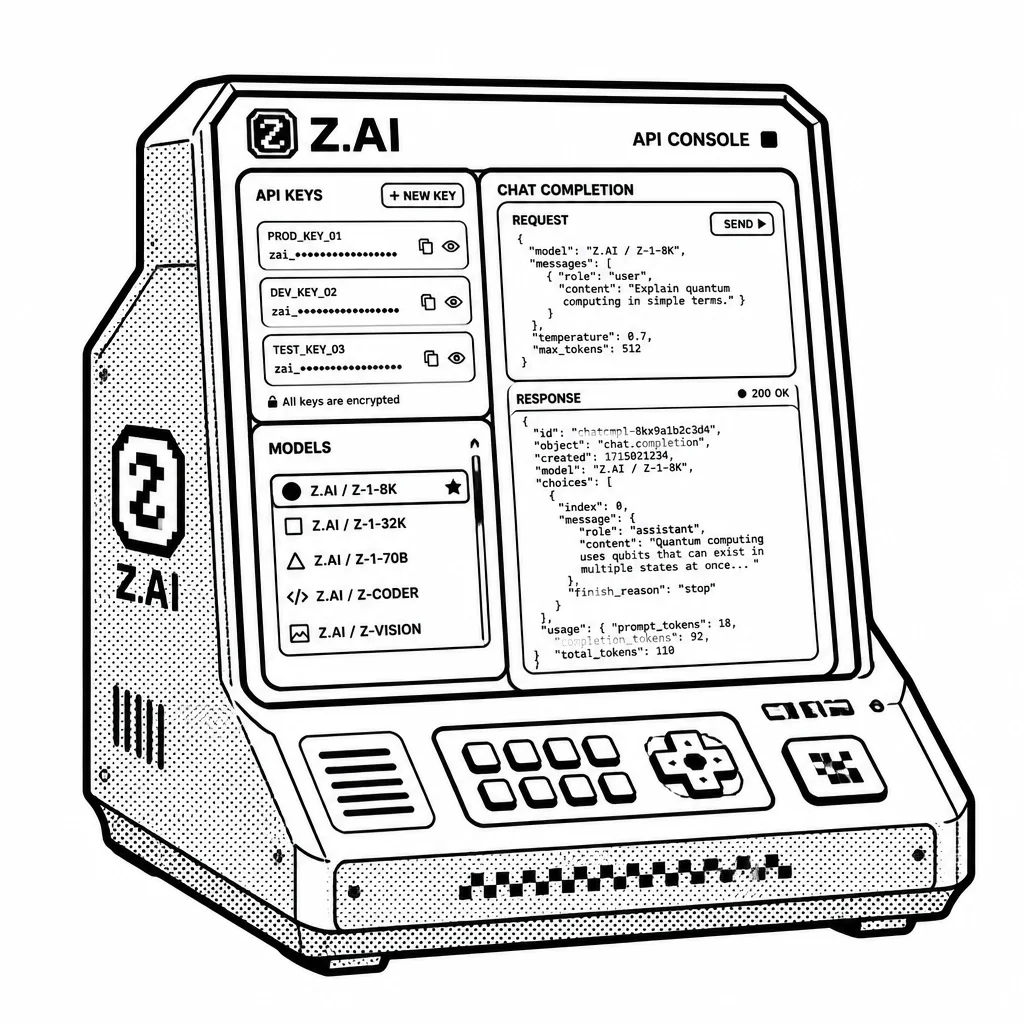
That on-premise option matters a lot in China. Many large enterprises, especially state-owned and regulated ones, are uneasy about sending sensitive data to a public AI service. Z.ai's pitch is essentially: you get a powerful model tuned for your business, but it can live inside your own walls. Customers pay for the customization work and for ongoing use, and the choice between on-premise and cloud deployment lets Z.ai serve both cautious giants and smaller firms that just want to rent the model. The company did not start out this way. It was formerly called Knowledge Atlas Technology JSC Ltd., and it spent years as a research-heavy lab chasing the frontier of AI models. The shift toward selling tailored, enterprise-ready AI is the classic research-lab-to-business pivot: the model is the product, and the money comes from putting it to work for customers rather than from a public consumer app.
The bigger picture is that Z.ai sits in one of the most crowded and brutal fights in global technology. It competes with China's own AI champions and with American frontier labs, and Chinese enterprise AI is turning into a price war as model makers slash rates to win contracts. Z.ai's bet is that deep customization and private deployment keep it valuable even when raw model access gets cheap — the moat is the work of fitting AI into a specific company's messy reality, not just the model's benchmark scores.
Saved answer · last researched 12 Nov 2026