Understand any stock in simple English
Enter a ticker to learn what the company does and how it makes money.
Compal Electronics, Inc.
Compal Electronics builds laptops, monitors, and other electronics for big brand-name companies that sell them under their own labels.
Compal Electronics is a contract manufacturer, which means it builds gadgets that someone else slaps their brand on. When you buy a Dell laptop or an Acer notebook, there is a decent chance Compal's factories in China, Vietnam, or elsewhere actually assembled it. The company makes notebook computers, monitors, LCD screens, and a wide range of other computer products for equipment manufacturers around the world.
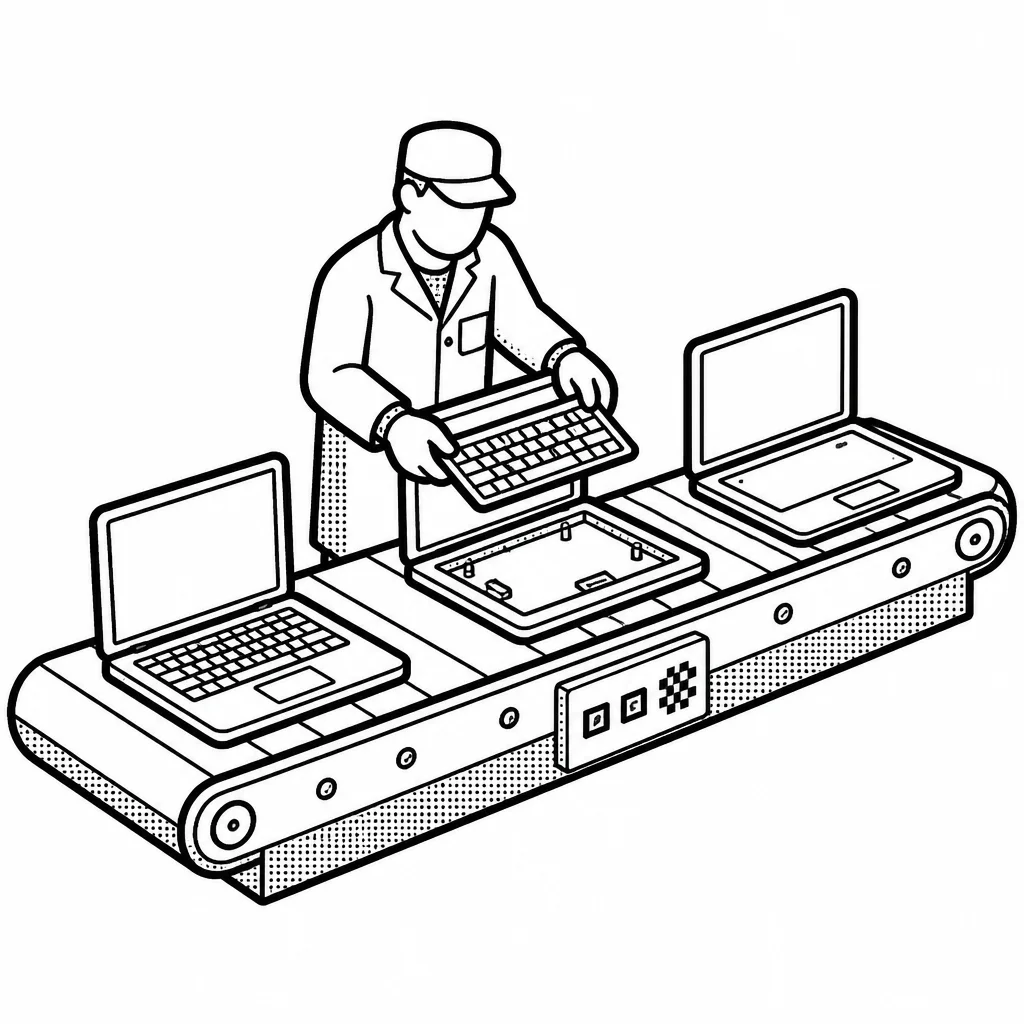
The business works like a giant, precise custom factory. Brand companies design and market the products, then hand Compal the job of actually manufacturing them at scale, on time, and at a competitive price. Compal gets paid for the manufacturing work, not for the brand prestige, so its margins are thin and its fortunes rise and fall with how many PCs the world wants to buy. Being one of the largest notebook makers on the planet gives it huge purchasing power for parts and the ability to keep factories humming, which is how it wins against rivals like Quanta Computer and Wistron. Compal sits inside a brutally competitive industry. PC demand boomed during the pandemic as people outfitted home offices, then cooled sharply as that replacement cycle ended. Contract manufacturers have little pricing power because brands can shop around, and a single lost contract can dent revenue. At the same time, Compal has been pushing beyond plain notebooks into servers, automotive electronics, and medical devices, hoping to find growth in markets that are less of a race to the bottom than building laptops.
The company was founded in 1984 and grew alongside Taiwan's rise as the world's electronics factory. It also owns a stake in the display maker AUO, which ties it to the screen supply chain. For investors, Compal is a bet on global PC demand and on whether the company can shift its mix toward higher-value products before the notebook business gets even tougher.
Saved answer · last researched 12 Nov 2026