Understand any stock in simple English
Enter a ticker to learn what the company does and how it makes money.
Power and Water Utility Company for Jubail and Yanbu
Marafiq supplies electricity, desalinated water, and sales gas to industrial and residential customers in two big Saudi industrial cities.
Marafiq is the utility company that keeps two giant Saudi industrial cities running. It makes electricity, turns seawater into drinking and factory-grade water, and sells gas, then delivers all of it to government buildings, factories, shops, and homes in Jubail on the Gulf coast and Yanbu on the Red Sea coast.
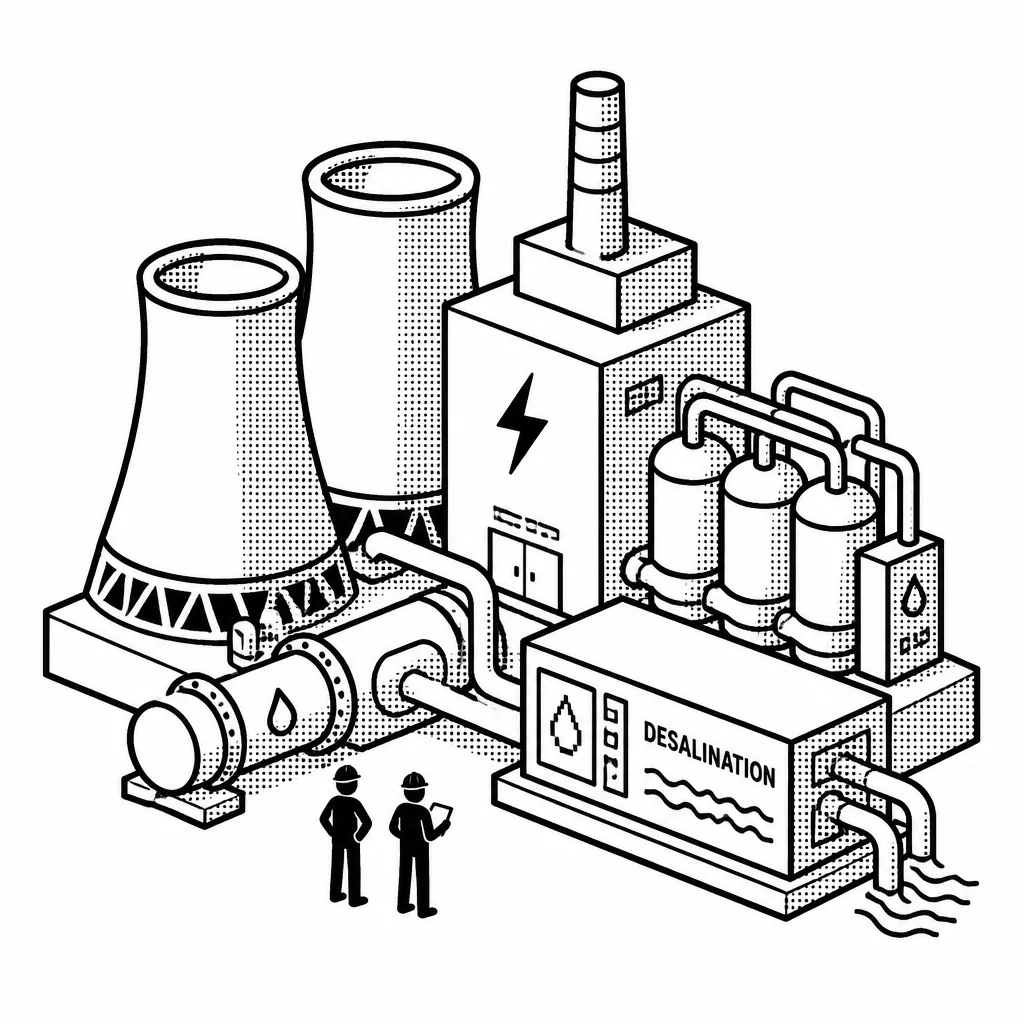
The business exists because those two cities are built around heavy industry — petrochemical plants, refineries, steel mills — that need enormous amounts of power and water every hour of the day. Marafiq runs the desalination plants, power plants, and pipe networks that feed them, and it also treats the wastewater those plants produce. Customers pay for what they consume, which makes revenue mostly recurring and tied to how busy the industrial base is rather than to winning new contracts. The model is simple but capital-hungry. Building a desalination plant or a power station costs a fortune up front, so Marafiq carries meaningful debt and spends heavily on maintaining and expanding its network. Its biggest shareholders include Saudi Aramco and the Royal Commission for Jubail and Yanbu, which ties its fate closely to Saudi industrial policy and to the two cities' expansion plans. That backing helps it win long-term supply agreements, but it also means its growth depends on how much new industry Saudi Arabia builds there.
The company listed on the Saudi Exchange in 2022, selling shares to the public while the government and industrial giants kept large stakes. For investors, the appeal is a steady, regulated utility with predictable demand; the risk is that big capital projects and debt can eat into cash returns, and that its fortunes rise and fall with the industrial cycle in just two locations.
Saved answer · last researched 12 Nov 2026