Understand any stock in simple English
Enter a ticker to learn what the company does and how it makes money.
COSCO SHIPPING Holdings Co., Ltd.
It runs giant container ships that carry cargo across the world's oceans and operates the port terminals where those boxes are loaded and unloaded.
COSCO SHIPPING Holdings is one of the world's largest container shipping companies. It owns and operates a fleet of huge ships that carry steel boxes — containers — packed with everything from electronics and furniture to clothes and car parts. Its customers are the importers, exporters, and freight forwarders who need to move goods between countries, and it also runs port terminals where those containers are lifted on and off ships.
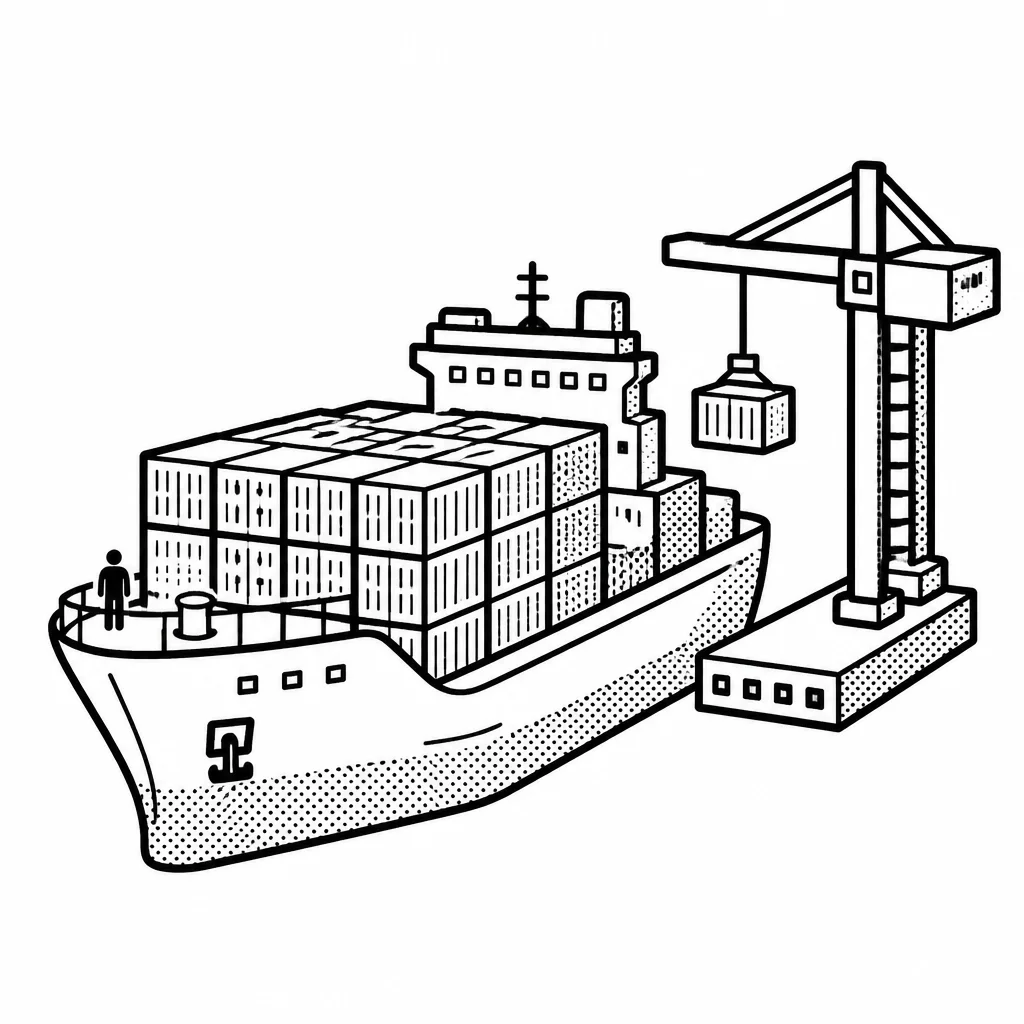
The core of the business is simple: a shipper pays the company to move a container from one port to another. On a single voyage a ship can carry thousands of these boxes, so the money adds up fast. But the shipping industry is brutally cyclical. When global trade booms and ships are full, freight rates can spike and profits gush. When trade slows or too many new ships join the water, rates crash and the same ships lose money. This means COSCO's earnings swing wildly from year to year, and its revenue is tied closely to the health of world trade. That volatility is why scale matters so much. COSCO is part of a small club of global carriers, alongside A.P. Moller-Maersk, CMA CGM, and others, that control most of the world's container capacity. Being huge lets it spread fixed costs across more ships and routes and gives it bargaining power with ports and customers. Its ownership of terminals adds a second, steadier stream of income, and it aligns with China's role as the world's factory — a large share of the goods leaving China move on ships like these.
The industry's big twists matter here. A pandemic-era surge in demand sent freight rates to extraordinary highs, then rates collapsed as trade normalized and new vessels arrived. Shipping alliances — groups of carriers that share ships and routes — shape who can offer what service, and regulators watch them closely. On the environmental side, rules to cut ship emissions are pushing carriers to buy cleaner, more expensive vessels. All of this means COSCO's fortunes ride on forces far bigger than itself: the pulse of global trade, the supply of ships, and the rules that govern the sea.
Saved answer · last researched 12 Nov 2026